Agua Verde – You need a tidebook here! – Hier braucht man einen Tidenatlas!

(Deutsche Version weiter unten!)

Twenty years ago we drove to la Paz with a 1976 Chevy pick up, in those days all we had  was an air mattress and a camp stove. Compared to that our XP Camper is a luxury vehicle.

With that truck we drove a 40 km road to Agua Verde, a small fishing village on the east coast of the Baja. We liked it a lot 20 years ago, so we turned off from the Mex1  again this time  and drove down to the sea.
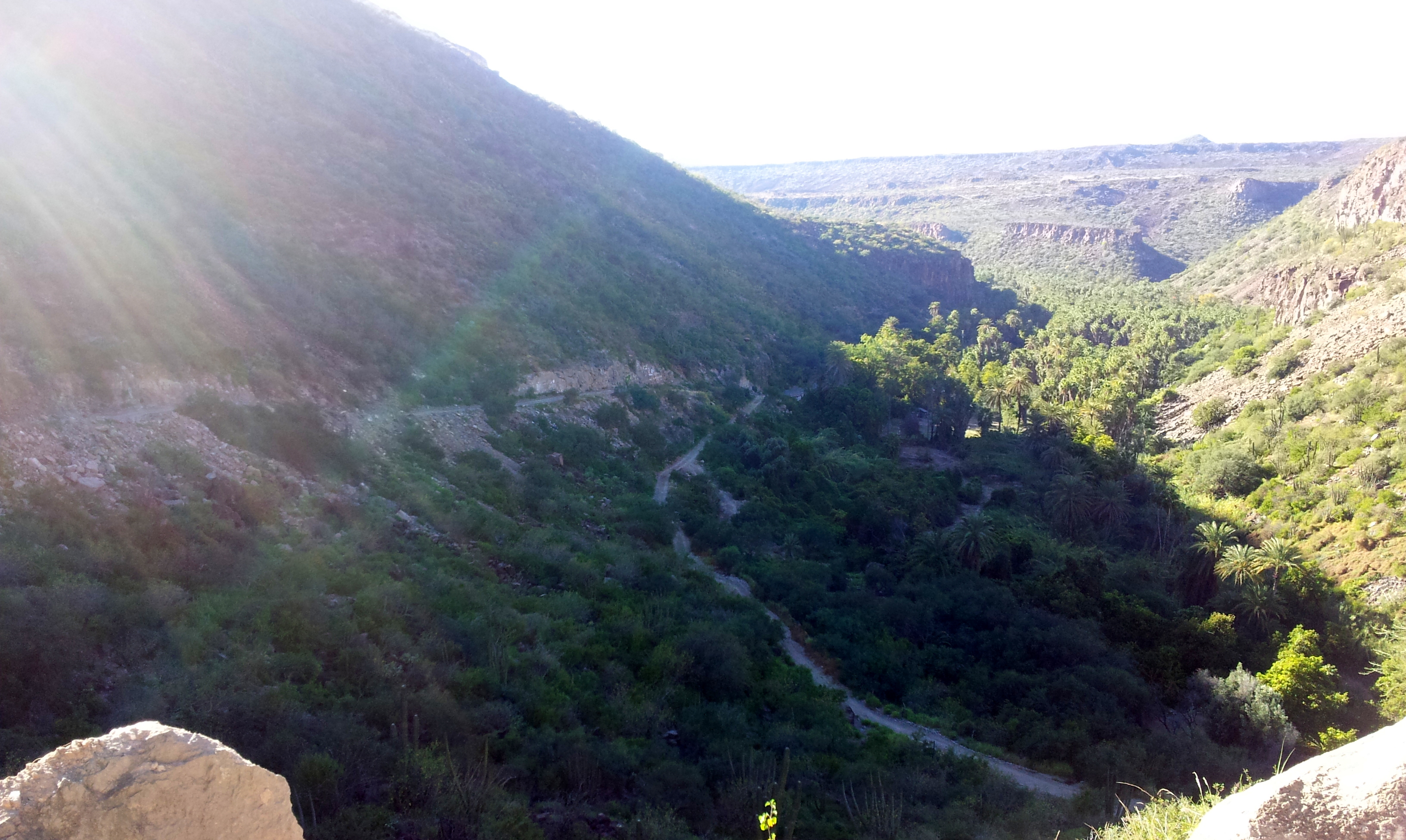
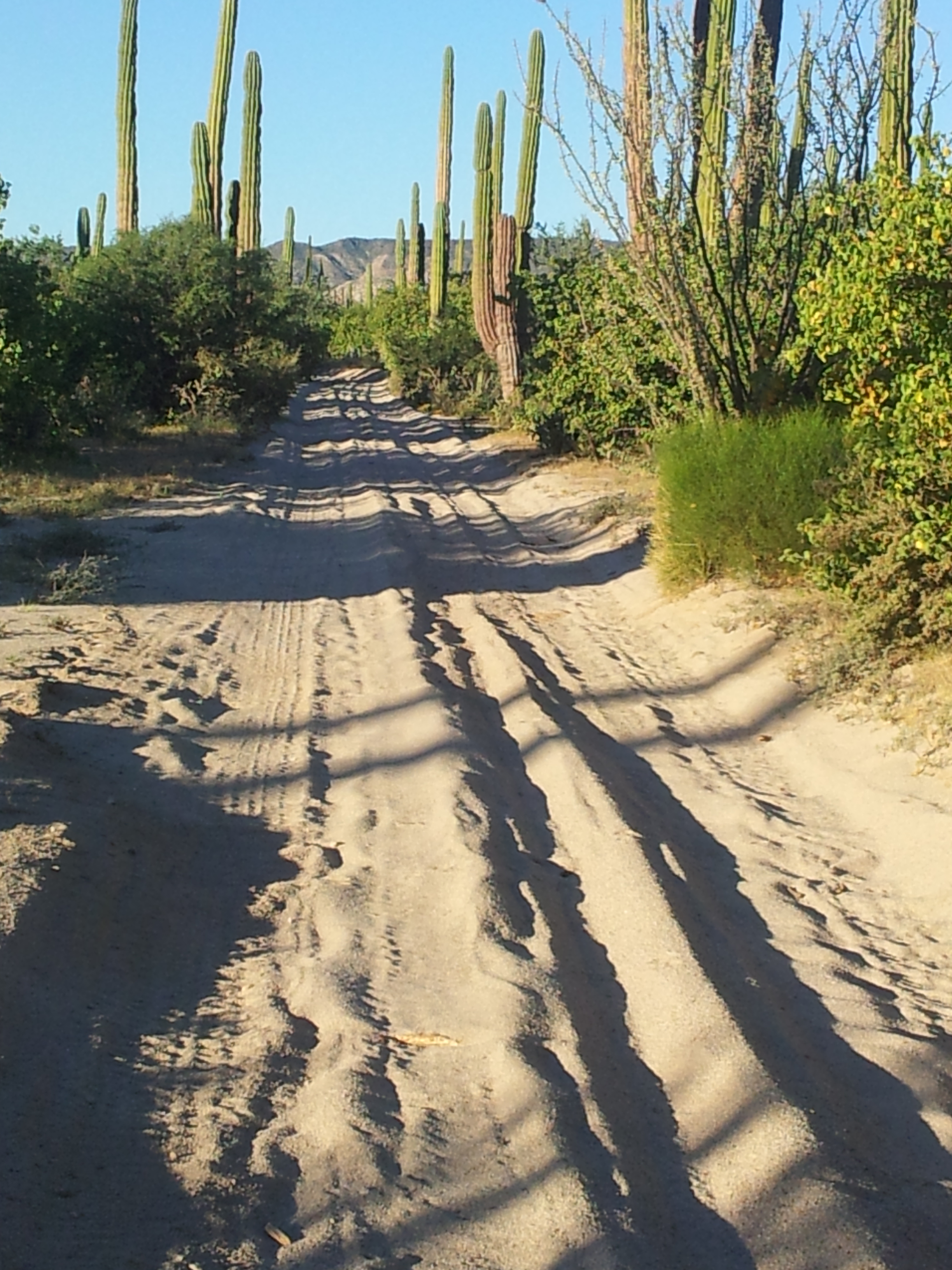
The road was pretty much like back then,harrowing  in a few places , but driveable , we are slowly getting used to some of the country roads in Mexico.
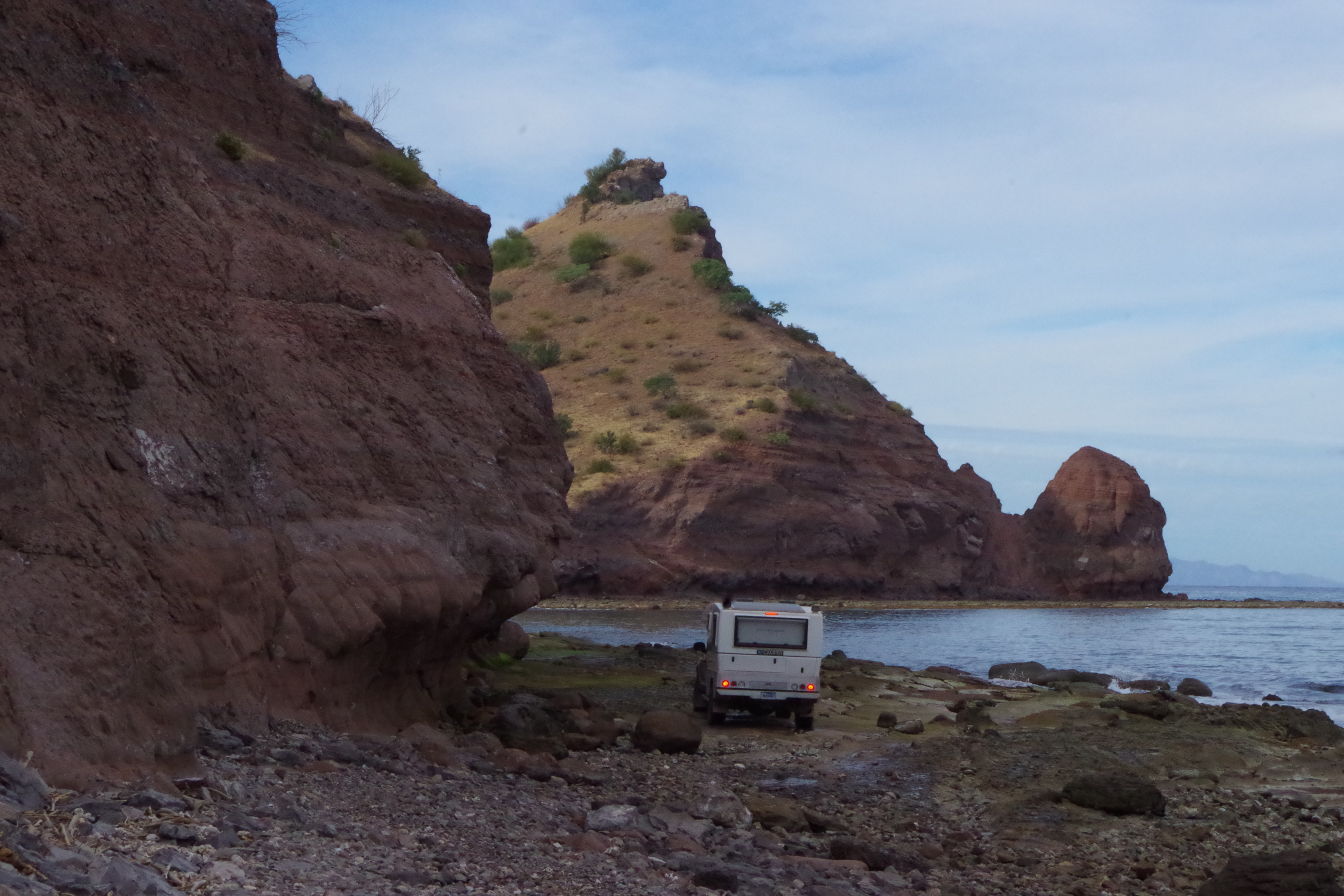
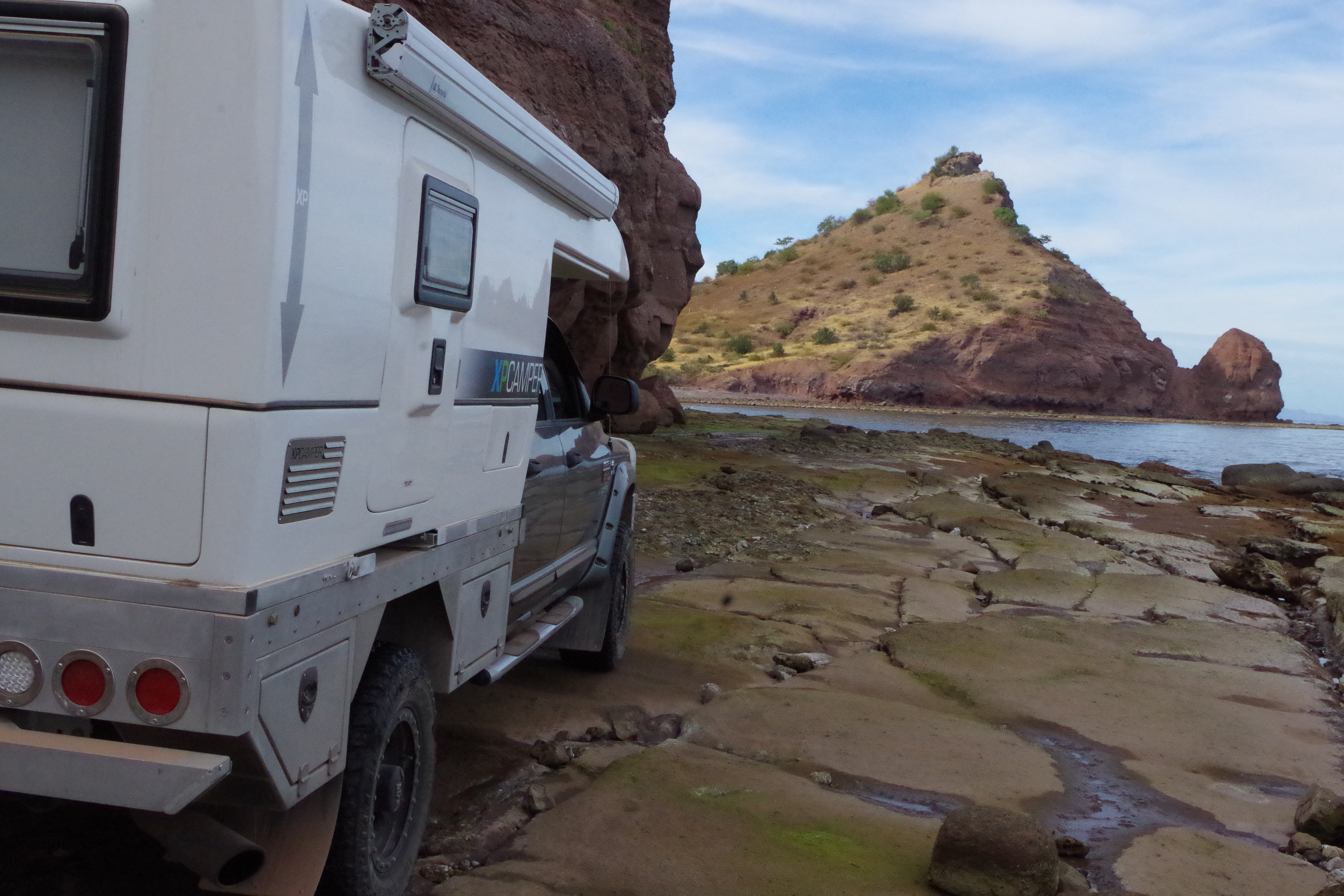
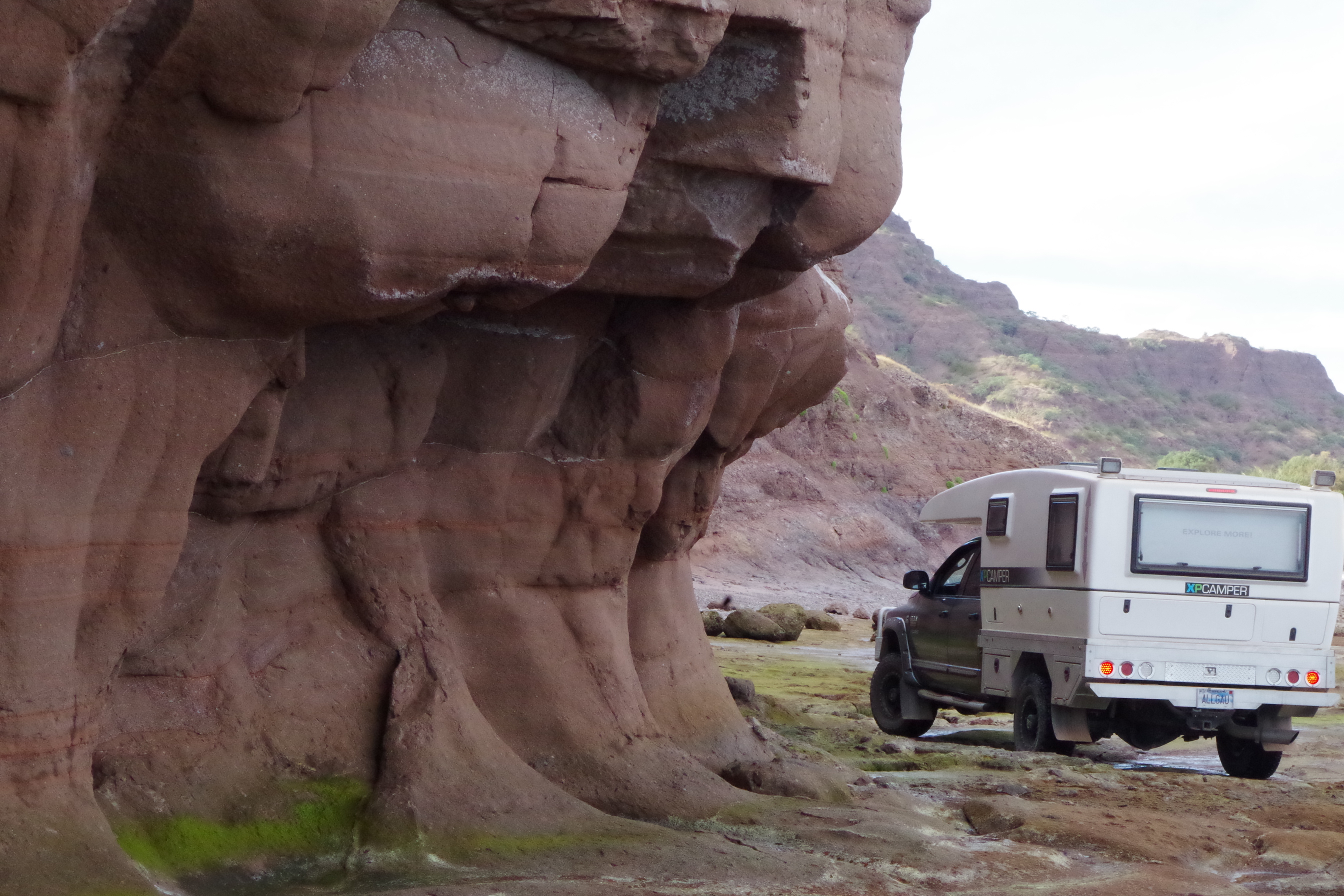
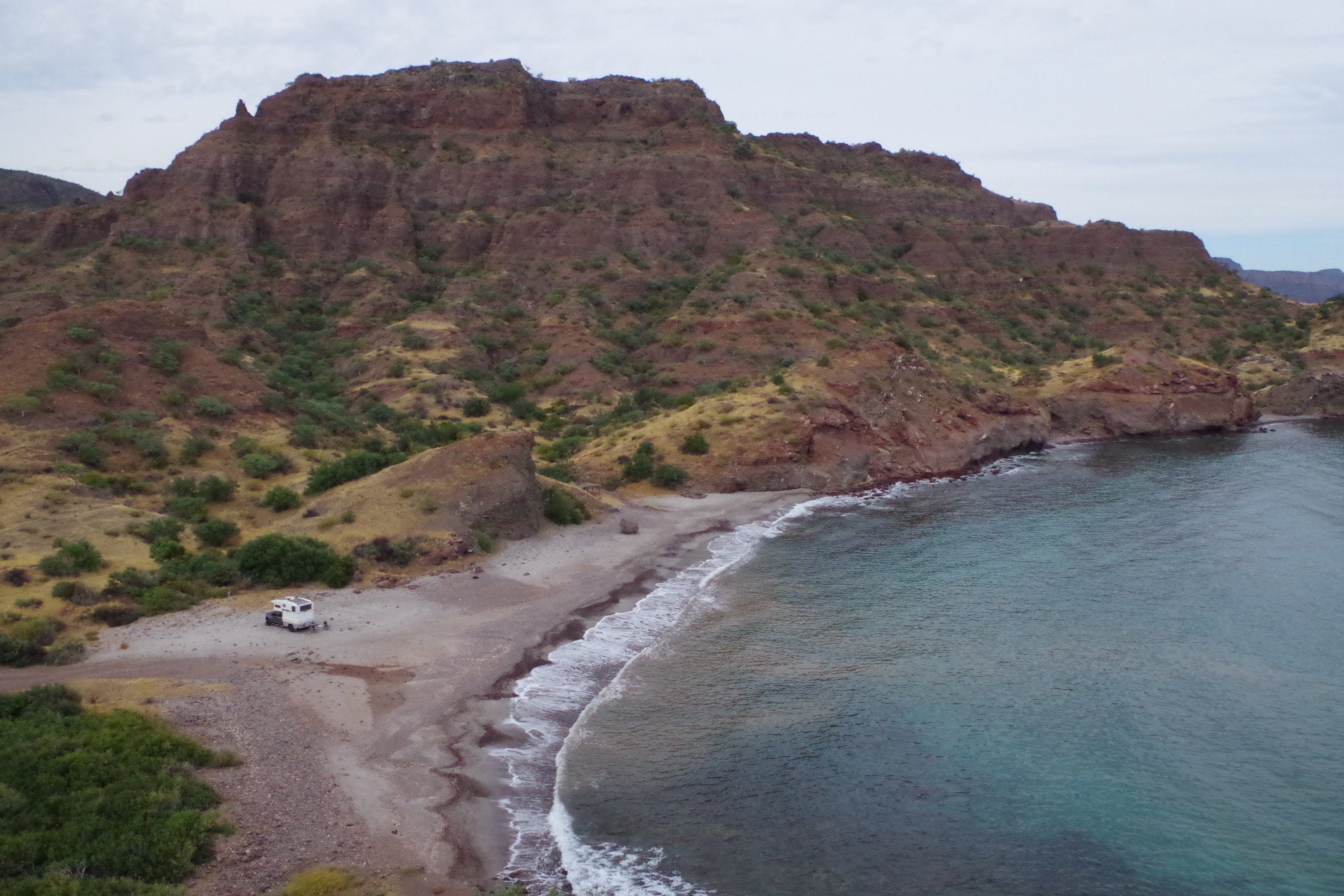
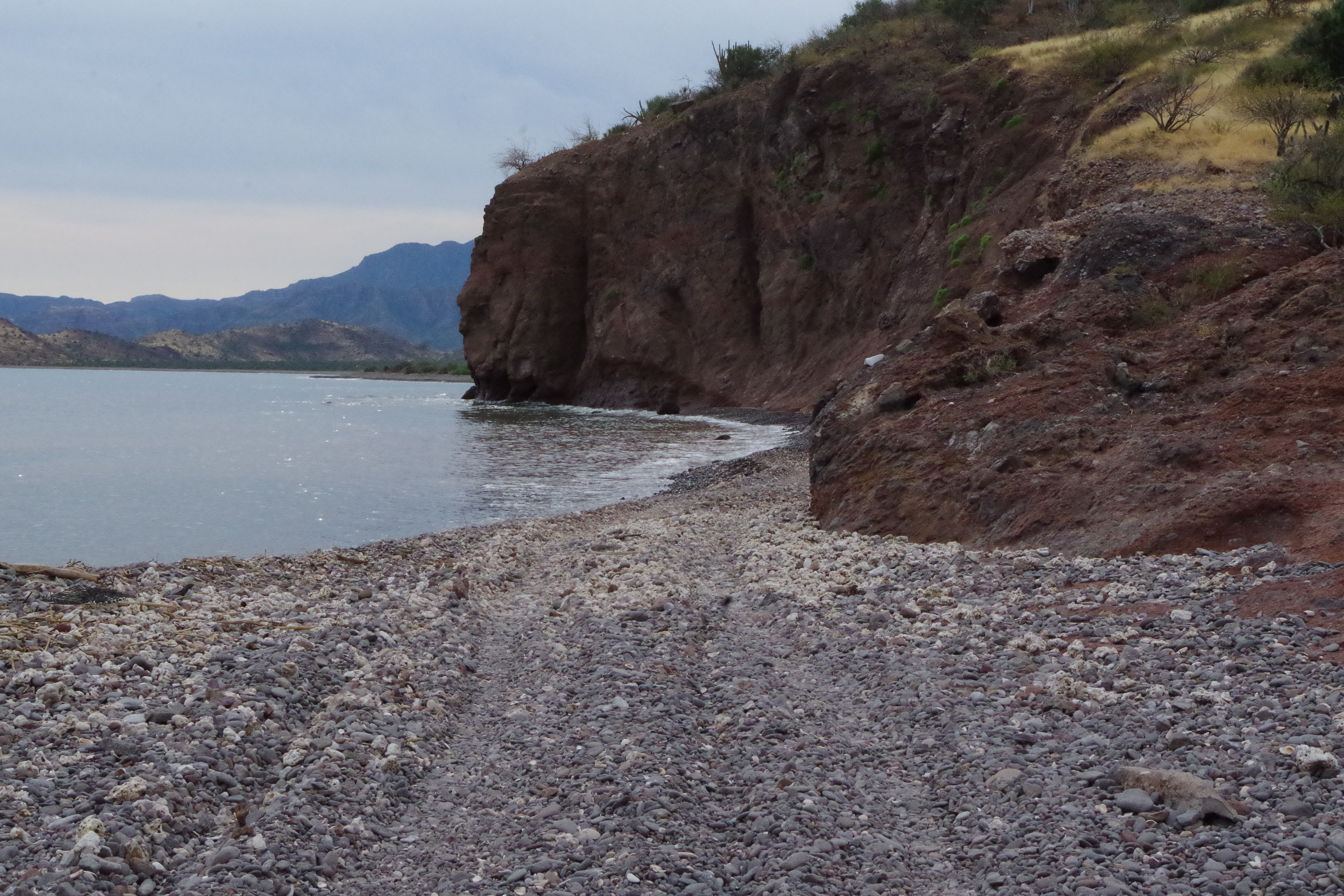
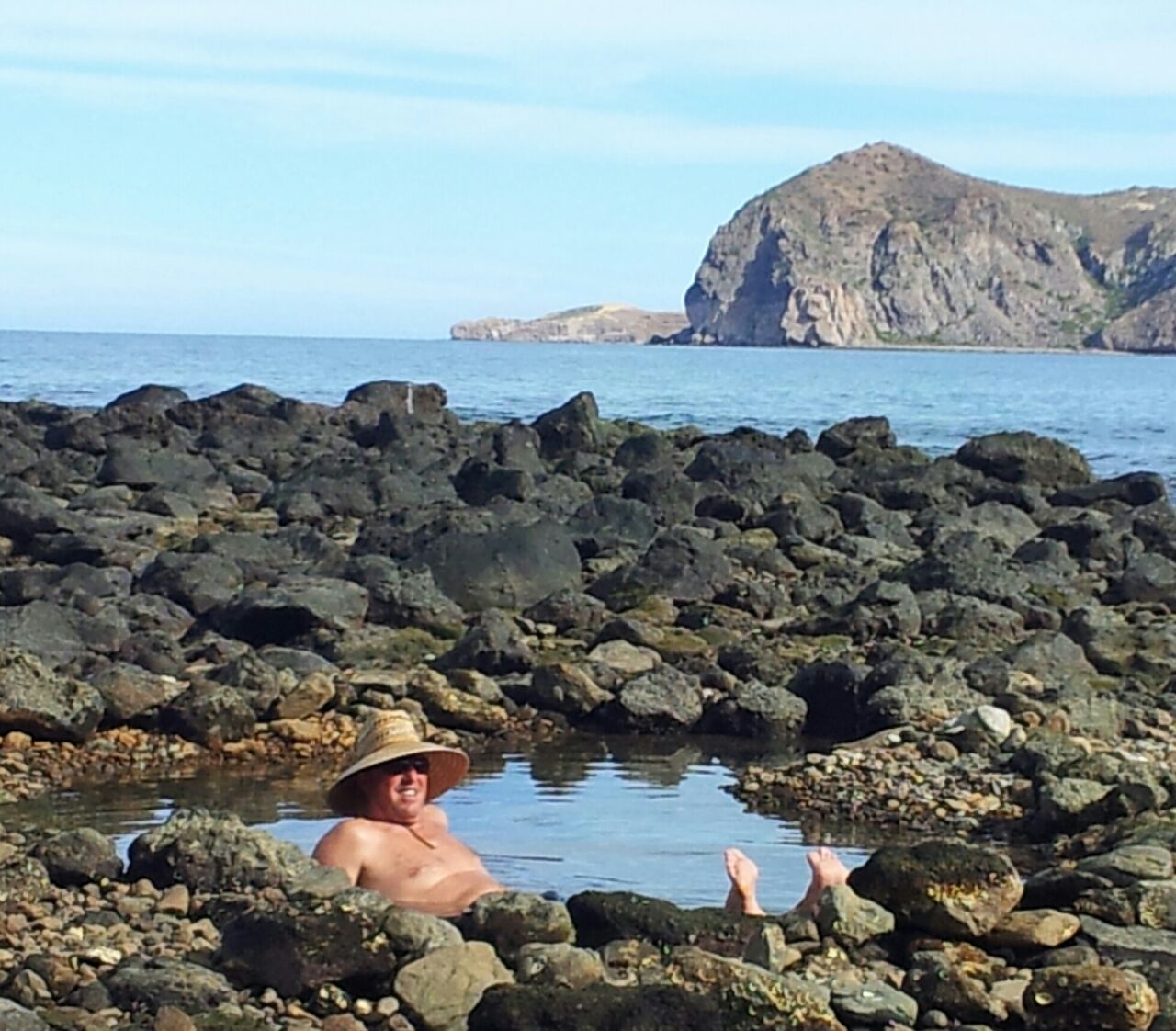
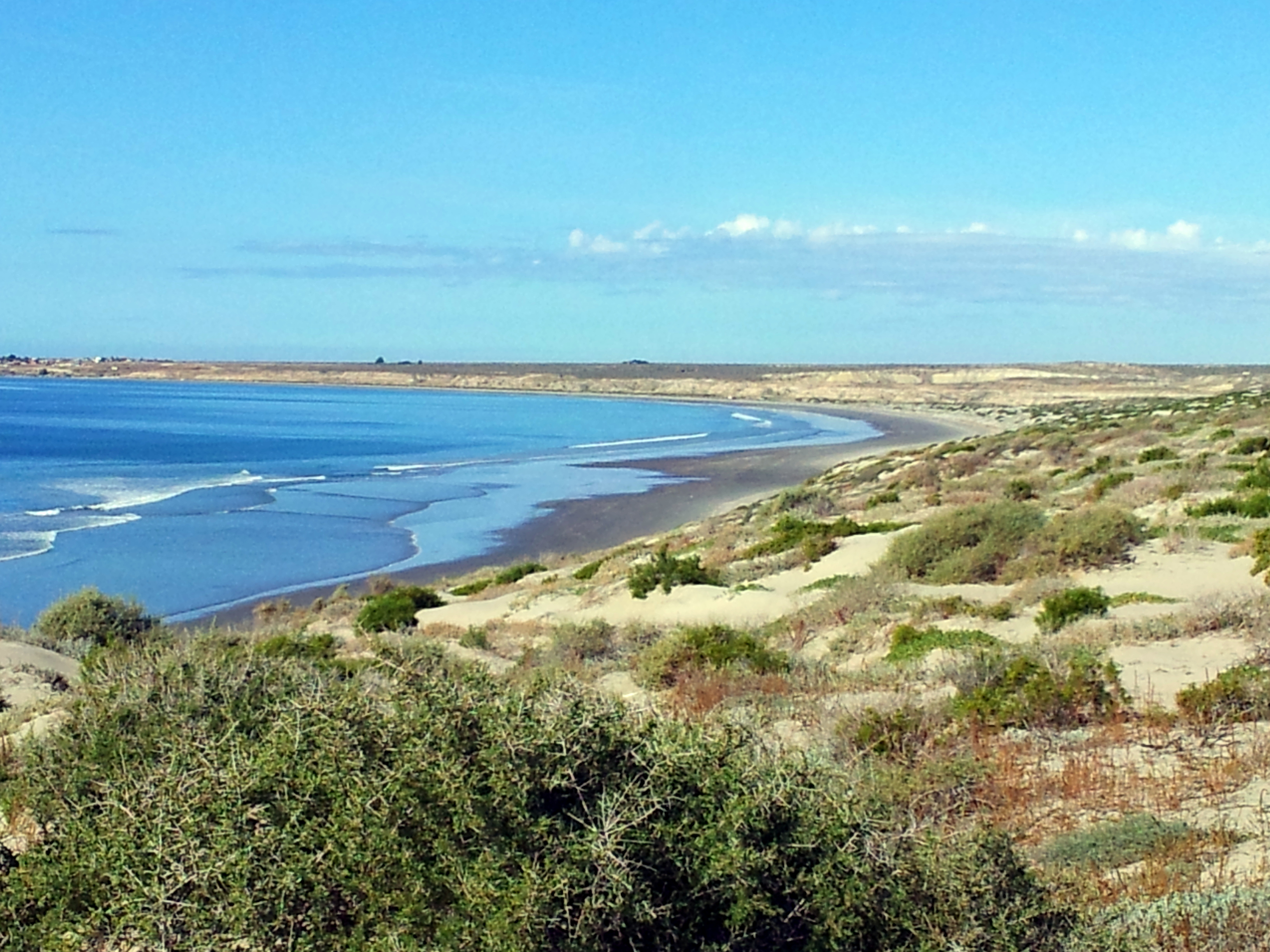
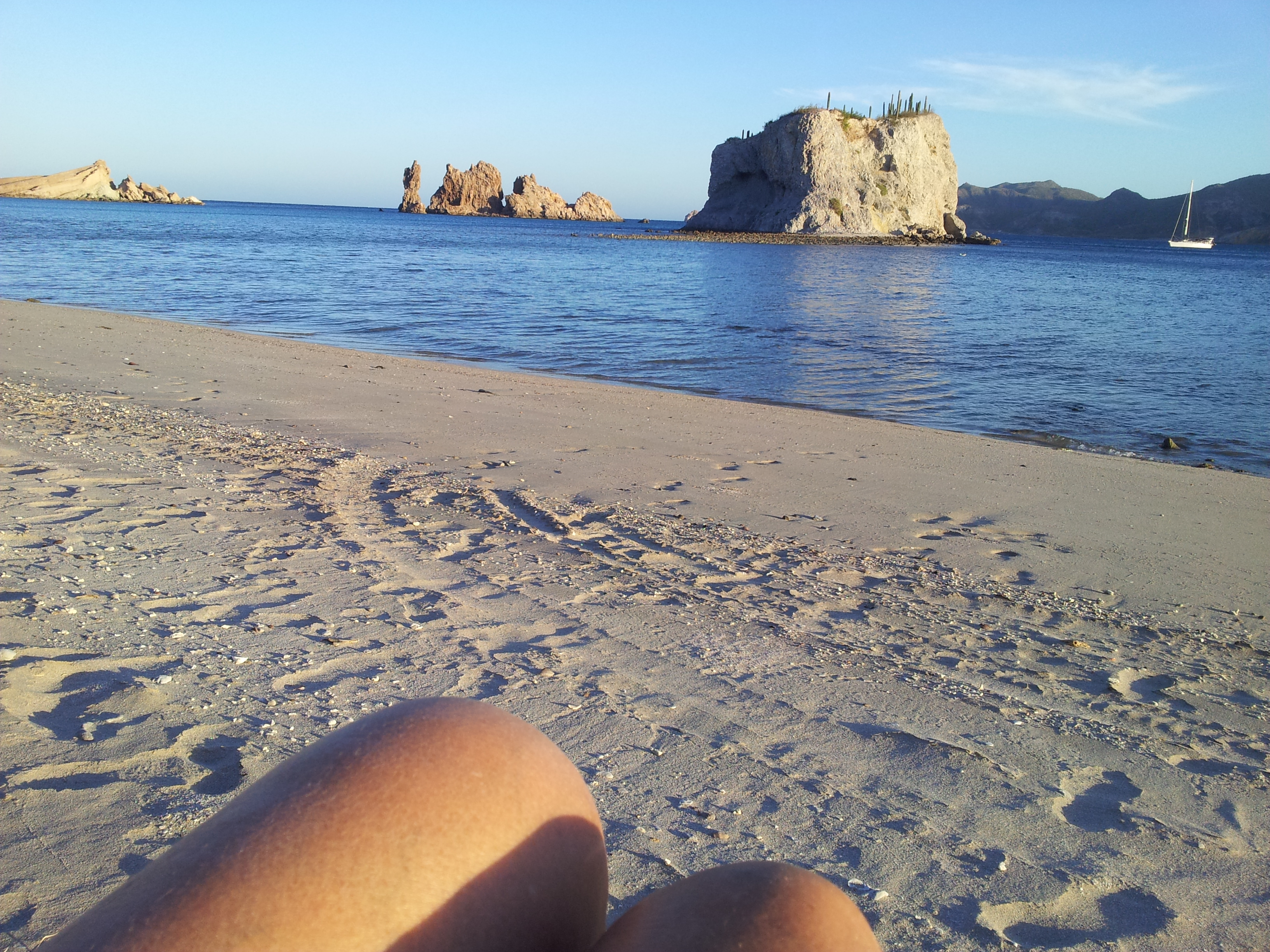
At the bottom we arrived in the small settlement San Cosme,  with free roaming goats, mules and pigs. A ranchero waved us over and we inquired where the hot springs are and he showed us the way, but  there was no road. You have to drive 1 km on a beach  along a rock wall, over gravel and mossy rocks. This is possible only at half – and low tide, at high tide the waves here crash high up on the cliff. I did not even want to think about what could happen if we had a breakdown  before the tide comes in. Günter did great, drove carefully to the other side, over the gravel piles, mossy rock slabs and between large stones. On the other side we found a beautiful little bay and the hot springs. Hot water is bubbling between stones and gravel on the beach, again you have to wait until the tide goes out, at high tide the springs are under water. We parked at the beach and once again enjoyed the peace and quiet of nature. Hiking in the morning, before it gets too hot, and lounging in the hot spring in the late afternoon, that was our daily routine. The days flew by, we sometimes lose track of time and finally we realized that it was time to move on.

We had planned to spend the Christmas holidays with our friends Leon and Rosa who had invited us to come to their nice beachfront home in Los Barriles.

°°°°°°°°°°°°°°°°°°°°°°°°°°°°°°°°°°°°°°°°°°°°°°°°°°

Go back

Your message has been sent

Warning
Warning
Warning
Warning

Warning.

Vor zwanzig Jahren sind wir mit einem alten Chevy Pickup Truck nach La Paz gefahren, damals mit Luftmatratze und Campingherd. Dagegen ist unser XP Camper eine Luxuskarosse.

Wir fuhren damal auf einer 40 km langen Strasse nach Agua Verde, einem kleinen Fischerdorf an der Ostküste der Baja.

Es hat uns dort sehr gut gefallen und so wollten wir auch dismal wieder von der Mex1 abzweigen und hinunter fahren ans Meer.

Die Strasse war wie damals an ein paar Stellen haarsträubend, aber langsam gewöhnen wir uns daran.

Unten angekommen in einer kleinen Siedlung in der Geissen, Mulis und Schweine frei herumlaufen fragten wir einen Ranchero wo die heissen Quellen sind. Er zeigte uns den Weg, da war jedoch kein Weg. Man muss auf dem Strand ca 1 km unter einer Felswand auf die andere Seite einer Landzunge fahren. Dies ist nur bei Ebbe möglich, bei Flut schlagen hier die Wellen hoch hinauf an die Felswand. Ich wollte gar nicht daran denken, was passieren könnte, wenn man da eine Panne hat und vor die Flut kommt nicht mehr weiterfahren kann. Günter hat das prima gemacht, ist vorsichtig über Kieshaufen und moosige Felsplatten zwischen grossen Steinen  auf die andere Seite gefahren.

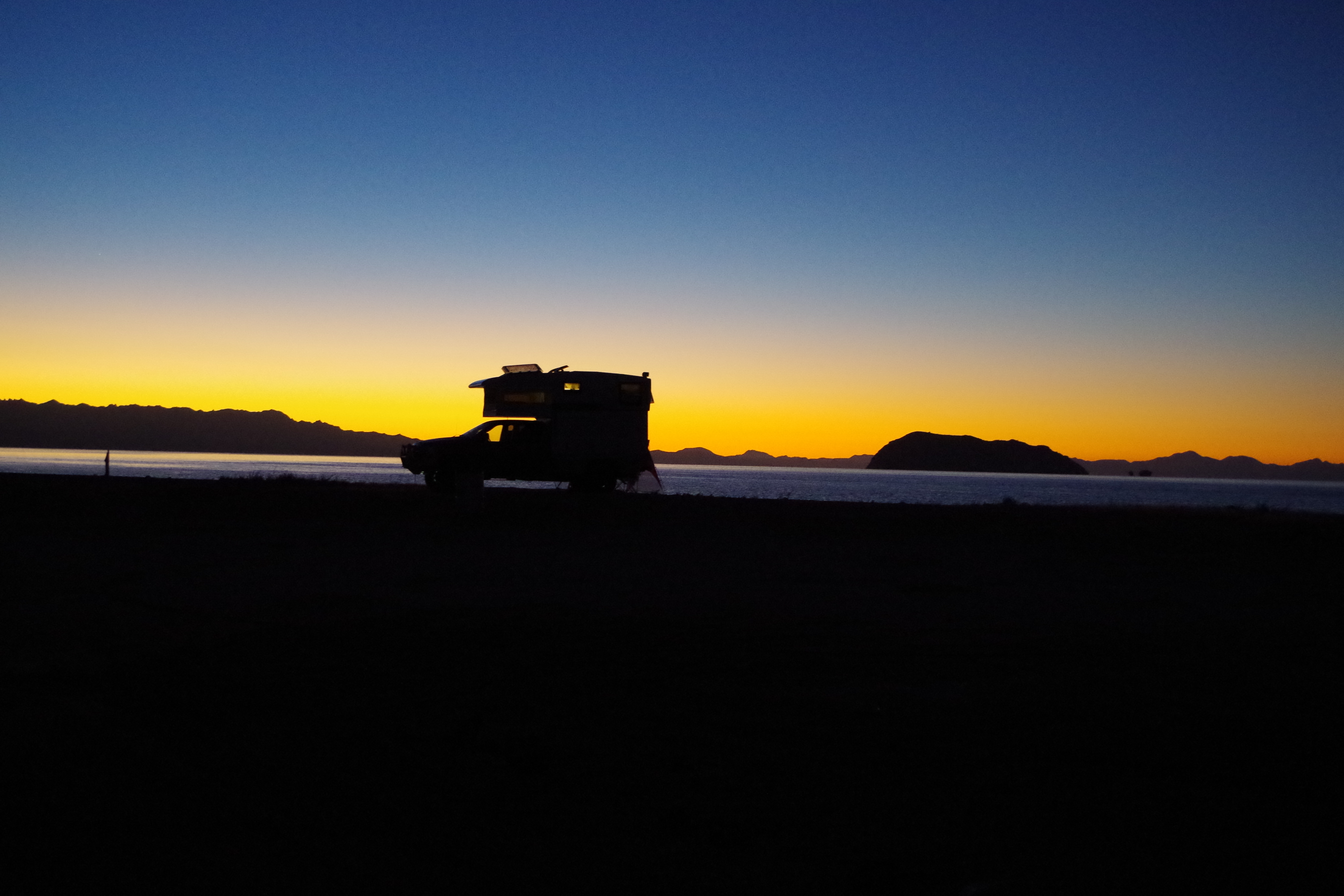
Dort erwartete uns eine schöne kleine Bucht und die heissen Quellen. Sie blubbern zwischen Steinen und Kies aus dem Strand, auch hier muss man warten, bis die Ebbe kommt, bei Flut sind sie unter Wasse. Wir parkten am Strand und genossen wiedereinmal die Ruhe und die Natur. Wanderungen am Vormittag, vor es zu heiss wird, und rekeln in der heissen Quelle am späten Nachmittag, das war unser Tagesablauf. Die Tage vergingen wie im Flug und wir beschlossen, weiterzufahren.

In Los Barriles wollten wir die Weihnachtsfeiertage verbringen, dort hatten uns Leon und Rosa eingeladen.


IMGP0998

Zufahrt bei Ebbe – access at low tide.

IMGP1002


IMGP1009

IMGP1059

Unser Standplatz bei den heissen Quellen.

IMGP1055

Die Zufahrt bei Flut ist unter Wasser – access at high tide is under the water.

IMG-20141212-WA0001

Hot springs with neptun – Heisse Quellen mit Neptun – agua caliente con neptuno!

Posted in Mexico | 5 Comments

Patrozinium – San Javier- Festival

La Purisima to San javier 2014-004

Auf der Strasse von San Miguel de Comondu nach San Javier

  Scroll down for the English version! Unser Freund Leon “El Pescador” in Los Barriles erzählte uns von den  Gemeinden und Ranchen in den Bergen östlich von Loreto und auf der anderen Seite der Halbinsel. Die Städte von San Miguel de Comondu / San Jose de Comondu sowie Purisima und ein paar andere wurden von den Missionaren, die in San Javier ihre Mission hatten, gegründet. Die Rancheros in den Bergen leben noch immer einfach, sie pflanzen Mais und Kuerbisse an und züchten Maultiere, Pferde, Kühe und Ziegen. Sie produzieren sehr gute Ziegenkäse. Ihre Maultiere und Pferde und hi und da ein Truck sind ihre Fortbewegungsmittel. Die Straßen zu diesen Örtchen sind manchmal asphaltiert und manchmal existieren sie gar nicht. Auf diesen wenig befahrenen Strassen geht man immer ein Risiko ein wenn man losfährt.                      

San Juanico 2014-001

Scorpion Bay – könnt ihr unseren Camper sehen? Can you see our camper?

So verließen  wir also Loreto und fuhren nach Scorpion Bay auf der pazifischen Seite der Halbinsel, das Fischerdorf San Juanico liegt dort an einem Strand, der sich über viele Meilen hinzieht. Da hatten wir kein Problem ein Plätzchen zum Campen zu finden. Der Sand an diesem Strand ist sehr kompakt und befahrbar. Fischerdorf bedeutet für uns Fisch zum Abendessen. Wir hatten Serrano Chilis, Knoblauch, Koriander, Zwiebeln und Limetten gekauft und ich freute mich schon darauf Ceviche zu machen. Aber nein. Die Fischer sind als  CO OP organisiert und es ist ihnen nicht erlaubt, ihre Fische anderweitig  zu verkaufen. Sie waren irgendwie mürrisch als wir fragten, und unsere schlechten  Spanischkenntnisse haben auch nicht gerade  geholfen. (Zurück zu Rosetta Stone Lernprogramm!) Sie fingen auch Langusten , na ja. So wanderten wir die 2 km wieder zurück zu unserem Camper und ich machte eine Bohnensuppe mit allen Zutaten, die ich in der Ceviche verwendet wollte. Es wurde eine prima  Suppe . Es gefiel uns gut dort, der Pazifik fühlt sich anders an, es ist kühler und wilder, Wellenreiter strömen  im Sommer hierher, wenn die Wellen hoch sind.


Odile Sept 14 2014 1755Z (alternate).jpg

Hurrikan Odile 14 September 2014

Nach ein paar Tagen beschlossen wir, nach San Javier zum jährliche Festival des heiligen Xaver zu fahren. Der Schutzpatron dieser Kirche. Als wir in  La Purisima nach der Strasse nach San Jose de Comondu fragten wurde uns gesagt, dass sie  wegen dem  Hurrikanschäden nicht befahrbar war .


La Purisima to San javier 2014

San Miguel de Comondu

Malo! Malo” sagt der Mann, den wir im Dorf ansprachen  immer wieder, und dieses Wort verstehn wir. So drehten wir um, machten einen  Rückzieher und nahm den langen Weg zu den Comondu Dörfern. Von dort fuhren wir in die Berge  Richtung San Javier. Der erste Teil der Strasse war sehr schmal, steil und felsig, unsere Dodge kämpfte sich brav hinauf machte es gut, der Fahrer auch.  Es gab grosse Felsbrocken und Abrisse in diesem Teil der Strasse.


San Javier 2014-010

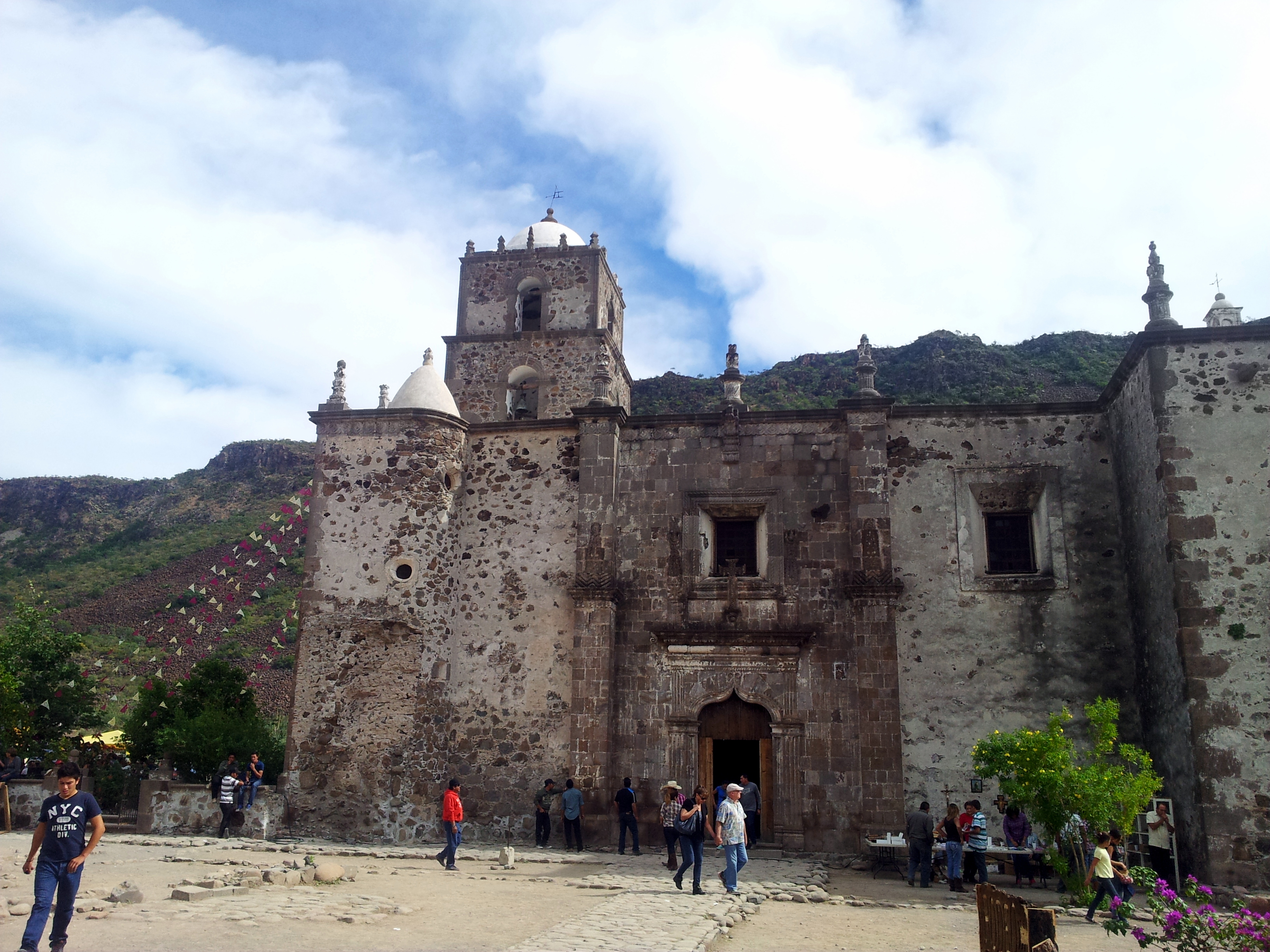
Misión San Francisco Javier de Viggé-Biaundó

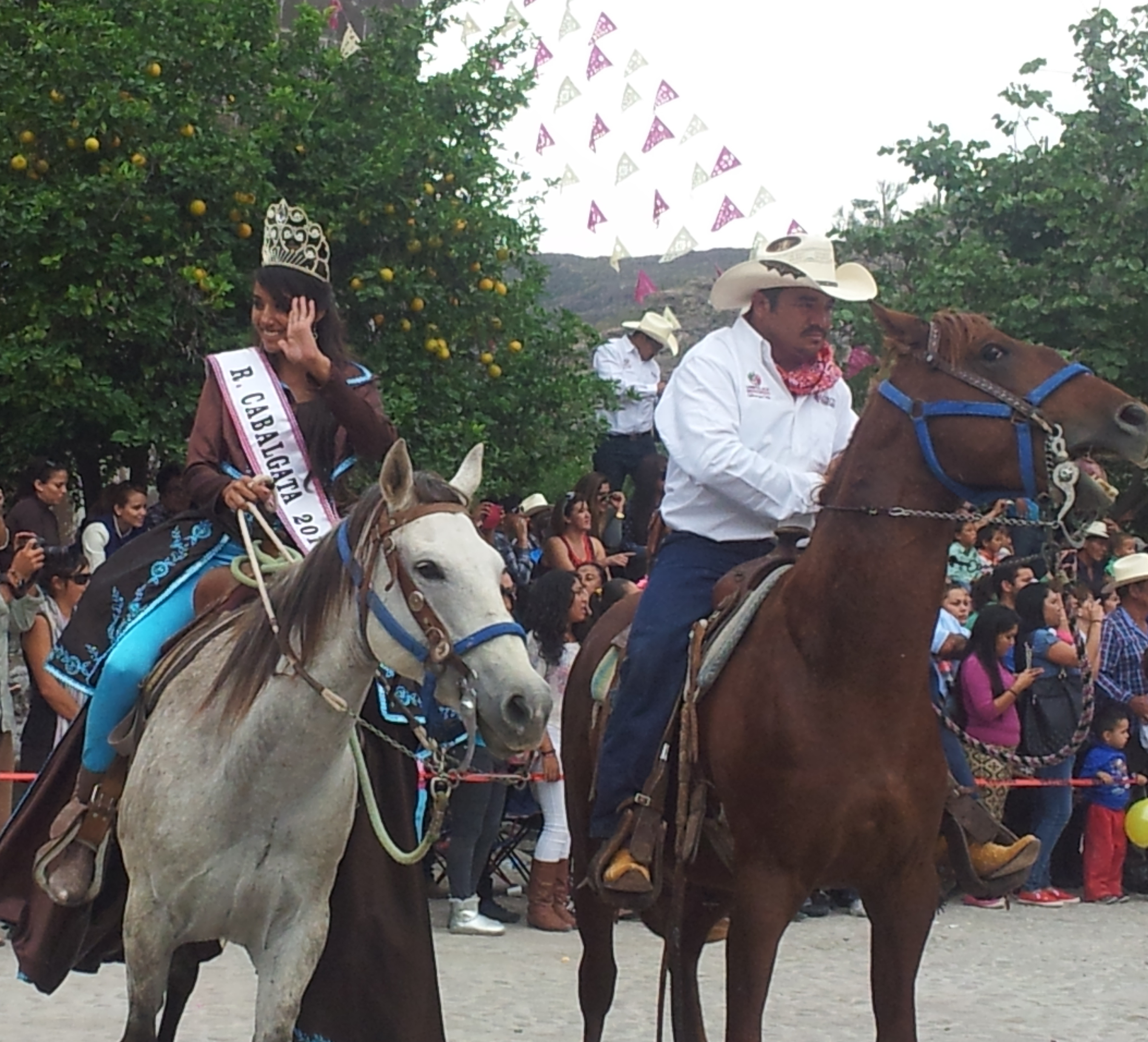
Aber als wir dann auf der Höhe ankamen wurde die Straße besser und wir genossen die Fahrt durch die schöne Landschaft. Wir verbrachten die Nacht an einem Ort namens Er Horno, er bestand aus einer Steinruine und einer kleinen Rancho (bei km 17,5). Keiner war da, wir nehmen an die Rancheros waren alle unterwegs zum großen Festival in San Javier. Wir auch! So brachen wir früh am Morgen auf, ich in der Regel laufe ich voraus während Günter alles zusammen packt. Diese Morgenwanderung ist immer eine besonder Zeit für mich. Ich gehe allein, bewundere  Blumen und Schmetterlinge, genießen die Ruhe und Gerüche. Wir haben CB-Funkgeräte und können auf diese Art in Kontakt bleiben wenn ich mal abseits wandere. Auf dem Weg nach San Javier passierten wir einige Pilger, die zu Fuß oder auf ihren Pferden zum Festival unterwegs waren, manche waren schon mehrere Tage unterwegs. Die Barrancas (Pferdeprozession) kommen aus den benachbarten Orten, und es ist ein großes Ereignis wenn sie in San Javier eintreffen. San Javier Cabalgata Queen Das Festival ist eine große Party, es ist eine Gelegenheit für sie ihre Pferde und Maultiere herzuzeigen, um zu sehen und gesehen zu werden und  mit Freunden und Familie zu feiern. Stände verkaufen Tacos  und es gab jede Menge bunte Süßigkeiten  und kandierte Früchte. Im Dorf stehen unzählige Zelte und Verschläge. Es wurde uns gesagt, dass 2000 bis 3000 Menschen da seien. Überall wird Musik gemacht, manche singen Volkslieder vor ihren Zelten (sehr schön), Bands spielen “Musica Nortena”  manchmal sogar mit Bongotrommeln, die der Musik einen karibischen Sound geben.


La Purisima to San javier 2014-006

Hochebene in den Sierra Gigantas. Highland.

Ich ging mehrmals in die Kirche , wo die Pilger Schlange standen um eine Chance zu bekommen, die Statue von San Javier berühren zu können. Schließlich ging ich auch hin und tat das gleiche. Der Priester legte seine Hand auf meine Schulter, als er die Kirche verließ um die Pferde zu segnen,  es fühlte sich gut an. Man vergisst fast, dass der Grund für das Festival das Patrozinium der Missionskirche ist, aber am dritten Tag ist dann die Messe  und der Umzug. Wir verließen das Dorf vorher, es war einfach zu viel des Guten (Rummel).

ENGLISH VERSION      ~~~~~~~~~~~~~~~~~~~~~~~~~~~~~~~~~~~~~~~~~~~~~~~~~~~~~~~~~~~~

Our friend Leon “El Pescador”  in Los Barrilles told us about the mountains east of Loreto and the communities and ranches in the hills and on the other side of the peninsula. The towns of San Miguel de Commondu/San Jose de Commondu, as well as Purisima and a few others were established by the missionaries that were based in San Javier, the main mission. The ranchers in the mountains still live simply, they grow corn and raise cows and goats. They make very good goat cheese.  Mules and horses are their transportation, as well as the odd truck. The roads to these towns are sometimes paved and sometimes not there. You take your chances when you take the road less traveled.


So we left Loreto and drove to Scorpion Bay on the Pacific Side, the fishing town of San Juanico is located on a beach that stretches for many miles and we did not have a hard time finding a spot to camp. You can drive on that beach, the sand is very compact. Fishing town means fish for dinner for us. We had bought  serrano chilis, garlic, cilantro, onions and limes and I was looking forward to make some ceviche. But no. The fishermen are in a coop an are not allowed to sell to anybody else. They were kind of grumpy when we asked and our Spanish language skills did not help. (Back to Rosetta stone!) They were bringing in spiny lobsters and we were drooling, oh well. We hiked back to 2 km to our camper and I made bean soup instead, with all the ingredients that should have been used in the ceviche. It was a great soup anyway. We liked it there, the Pacific has a different feel, it is cooler and wilder, surfers flock here when the waves are good in summer.

La Purisima 2014-004

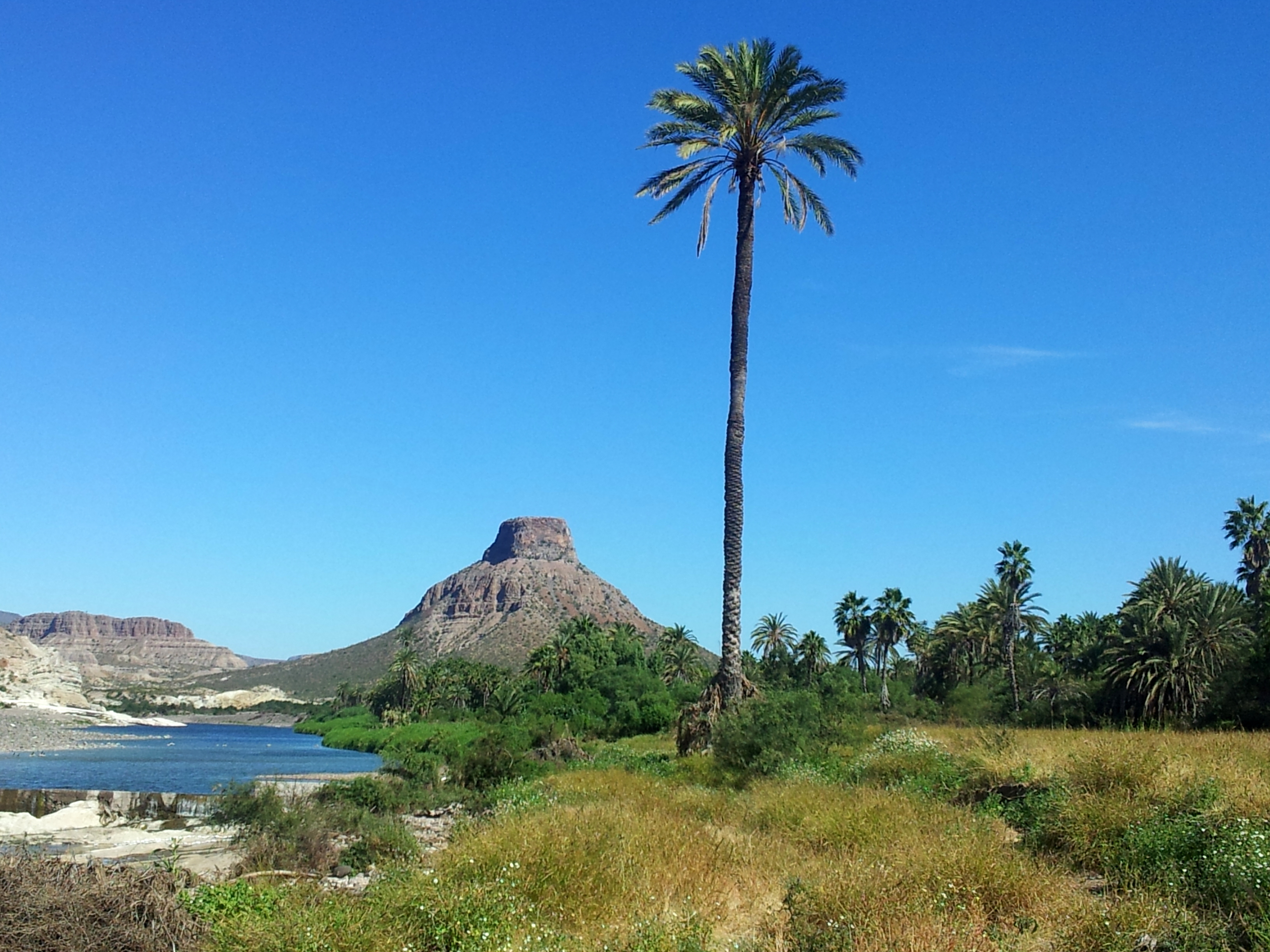
La Purisima on the Purisima river.


After a few days we decided to drive to San Javier for the annual festival of San Javier. The patron saint of that church. When we made it to La Purisima we were told that the road to San Jose de Commondu is out because of the recent hurricane. “Malo! malo!” is all the guy we stopped in town kept saying, well we DO know that word. So we turned around, backtracked and took the long way to the Commondu towns. From there we took the road up into the mountains toward San Javier. The first part was quite narrow, rocky and steep, our Dodge did a good job climbing up there, so did the driver, negotiating big boulders and breaks in the road. This was all still damage from the flooding  hurricane “Odile” brought with it in September.. But once we got up to the higher elevation the road was better and we enjoyed the drive through beautiful countryside. We spent the night at a place called Er Horno, a stone ruin and a rancho (at km 17,5). Nobody was there because all the rancheros go to the big festival in San Javier. So did we! We left early in the morning, I usually walk ahead while Günter “breaks camp”, it is a special time for me. Walking alone, looking at flowers and butterflies, enjoying the quiet and smells. We have CB radios and that way we can communicate when I wander about. On the road to San Javier we passed several pilgrims, they walk or ride to this festival, it takes some of them several days. The barancas (horse procession) come from neighboring towns and it is a big event when they arrive. I went to the church several times to see the people, dressed in their best, lining up to get a chance to touch the statue of San Javier. Finally I went ahead and did the same. The priest put his hand on my shoulder as he left the church to bless the horses and it felt right. The festival is one big party, it is an occasion to show off your horses and mules, to see and be seen and for some fun times with friends and family. Stalls sell good food and lots of sweets made from fruit steeped in sugar. You cannot count the tents and make shift shelters all over town, we were told there are 2000 to 3000 people that came for this. There is music everywhere, people singing folk songs in front to their tents (quite beautiful), bands playing “musica nortena”  even with bongo drums that give it a carribean sound. One almost forgets that the reason for the festival is San Javier, but on the third day there is a mass and people get serious. I think! We left before that, it was just too much of the good.

Go back

Your message has been sent

Warning
Warning
Warning
Warning

Warning.

Posted in Mexico | 8 Comments

Weiter nach Loreto – on to Loreto

 Scroll down for the English Version

Heute früh hat uns das Konzert der Gockel in der Nachbarschaft geweckt, dazu gesellten sich dann später noch die Hunde. Nach zwei Wochen am Strand wo uns nur das Wellengeplätscher, Fischadler und Möwen weckten, sind wir nun in einem der ältesten Orte der Baja gelandet. Eine alte Mission, die eine Reihe von Orden gesehen hat seit der Gründung 1697. Wie fast alle Missionen hier, wurde auch Loreto von den Jesuiten erbaut. Sie gründeten von Loreto aus noch weitere 22 Missionen. Die Mitglieder dieses Ordens aber fielen bald in Ungnade bei der spanischen Regierung und wurden von Franziskanern und später von Dominikanern ersetzt.

Die Mission im 18 Jahrhundert. Loreto Mission 18th century.

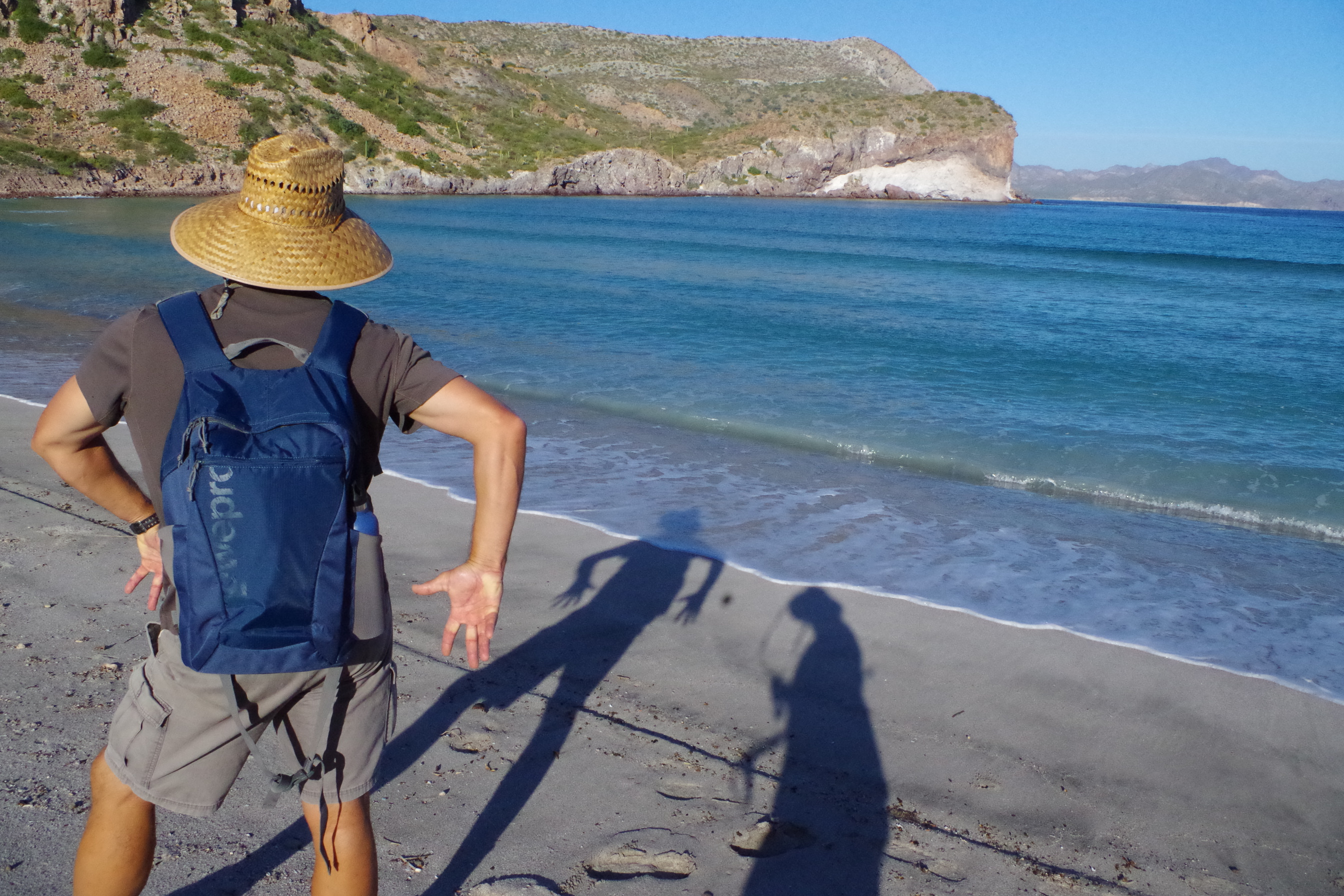
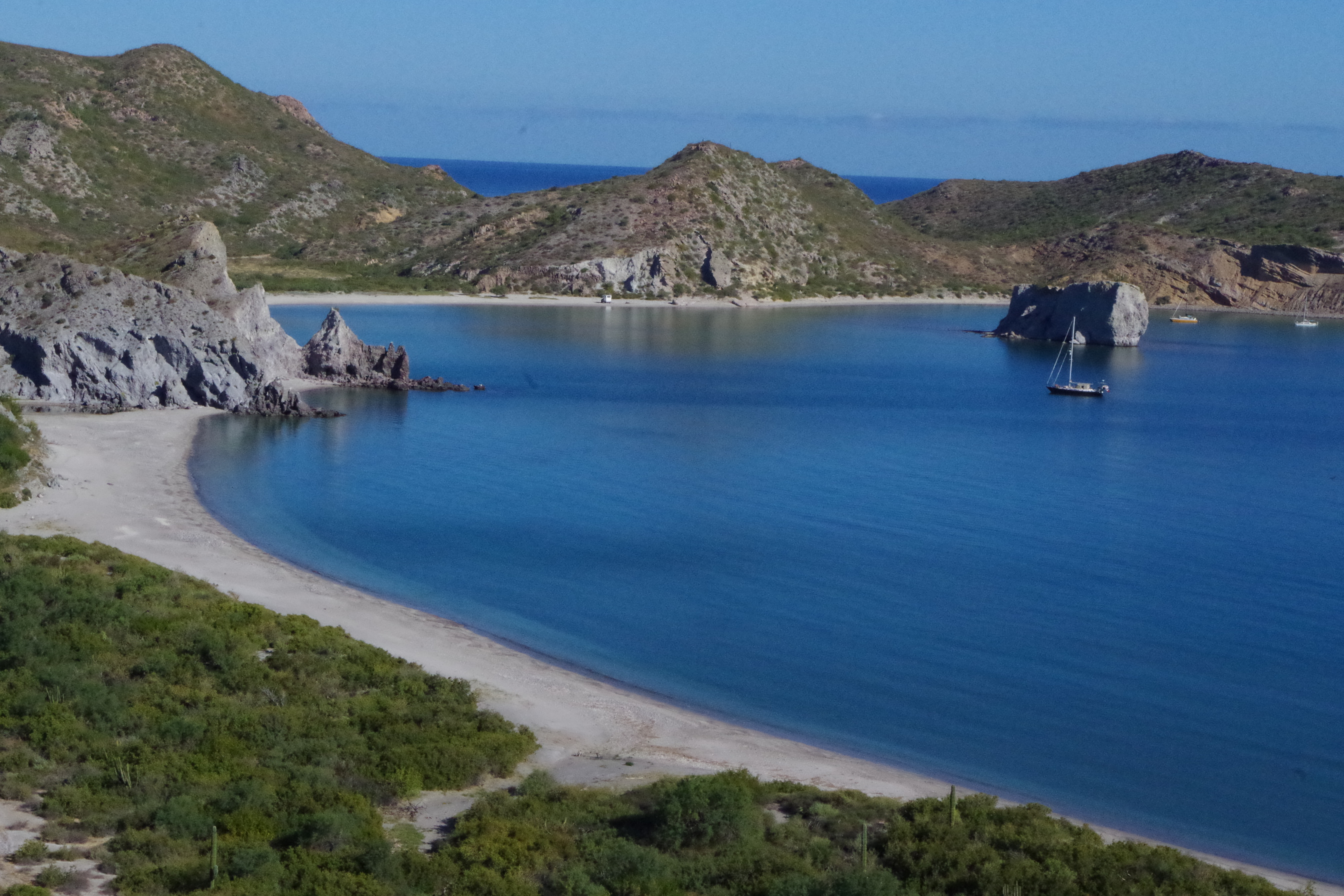
Nur schwer konnten wir uns gestern von unserem Strandplätzchen trennen, es war eine spektakuläre Bucht, nicht leicht zu erreichen. Die Anfahrt, ca 20 km  hauptsächlich in einem Bachbett – mit und ohne Wasser -, steile Hügel und Sand und mehrere Gatter. Die Belohnung war ein Traumplätzchen, die einzige Gesellschaft die wir hatten waren ein paar Segelbooten die dort vor Anker lagen.Wir verbrachten die Tage mit schwimmen und schnorcheln, wander in der Früh und lesen im Schatten am Nachmittag.

IMGP0881

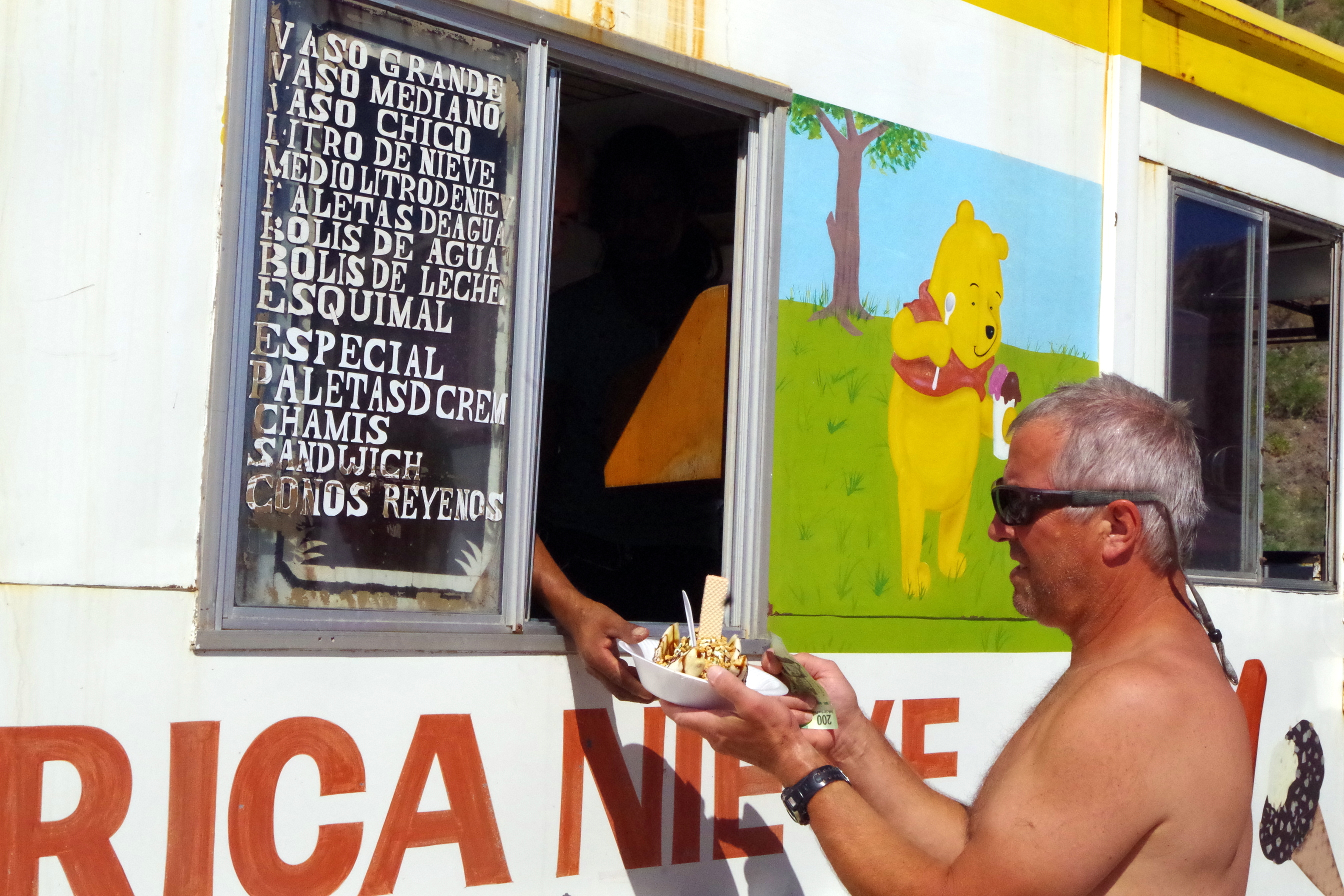
Helado for the esposo!

IMGP0904

Ramada

IMGP0915

Never wanted to leave here …wollten nie mehr gehen. XP Camper in the background.


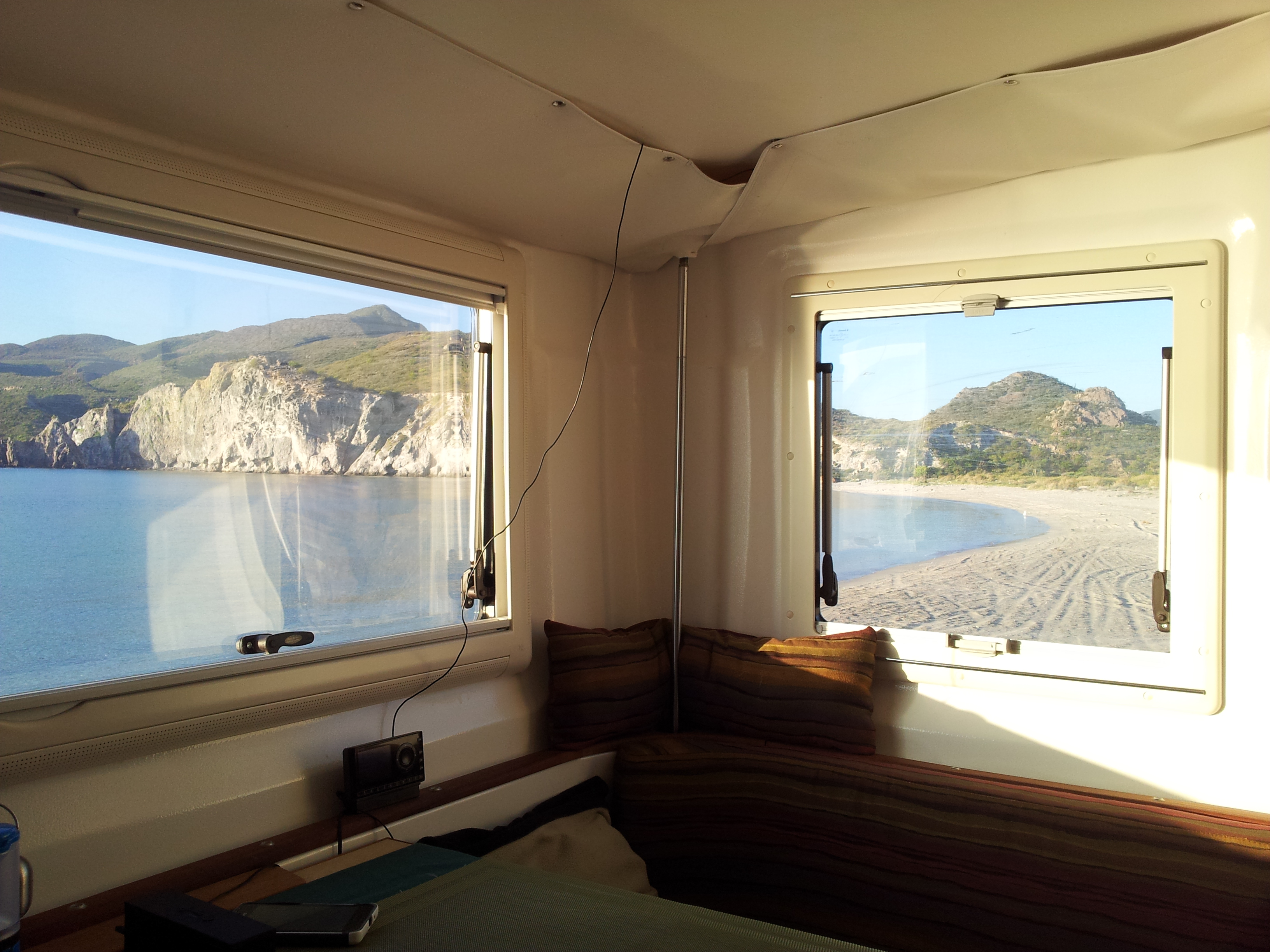
view from two windows

Aber es gingen uns langsam die frischen Lebensmittel aus. Die Segler brachten uns zwar Fische und nahmen Günter mit hinaus zum Fischfang,  jedoch auch das Wasser im Tank wurde langsam weniger. Dazu kam eine Sturmwarnung und da ist es am Strand nicht so angenehm, sandbestrahlte Waden und Sand in Augen, Nase und Ohren sind das Resultat eines Spaziergangs.

20141123_081914

beach knei

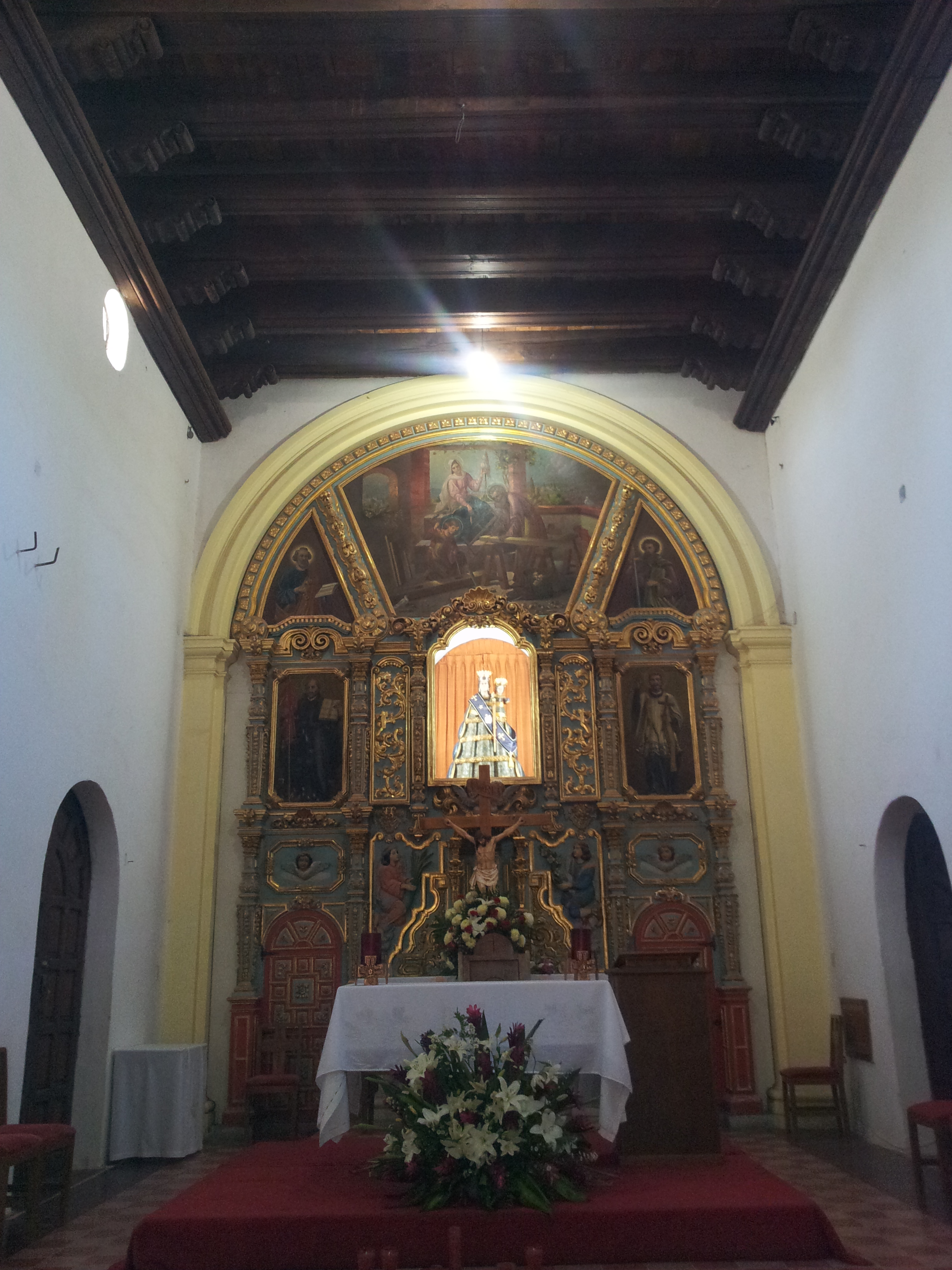
So sind wir gestern nach Loreto gefahren und gingen mit unseren Rädern einkaufen, aßen Burritos in einem Strassenlokal, besuchten die Kirche und das Museum der Mission und sassen am Abend gemütlich unter wiegenden Dattelpalmen vor unserem Camper.


Altar Loreto

Loreto Mission


Der Altar der Missionskirche Loreto. The altar in the mission church Loreto.

Auf der Fahrt gabs wieder einmal eine Militärkontrolle, sie durchsuchen den Camper, sind immer nett und  freundlich.


°°°°°°°°°°°°°°°°°°°°°°°°°°°°°°°°°°°°°°°°°°

IMGP0852

This morning we woke to the concert of the rooster in the neighborhood, to be joined later by the dogs. After two weeks on the beach where we woke only to the sounds of lapping waves, ospreys and gulls, we ended up in one of the oldest settlements of the Baja. An old mission, which has seen a number of religious orders since its founding in 1697. Like most missions,  Loreto was built by the Jesuits. They founded Loreto and  22 more missions. The members of this order soon fell out of favor with the Spanish government and were replaced by the Franciscans and later the Dominicans.

It was not easy to leave our spot and the beach, it was such a spectacular bay, not easy to get there. The drive consisted of a 20 km rough road, mainly in a creek bed with and without water , steep hills, sand and several gates. The reward was a incredible place, the only company we had were a few sailboats that were out in the bay on anchor. We spent the days swimming and snorkeling, hiking in the mornings and reading in the shade in the afternoon.

But we started running out of fresh food. Our friends on the sailboat brought us freshly caught fish and took Günter out to fish, but the water started to get low in the tank s well. In addition there was a storm warning and it is not as comfortable on the beach in a strong wind, sandblasted calves and sand in the eyes, nose and ears can be the result of a beach walk.

So yesterday we drove back through the 3 gates and up the arroyo to the main road that took us Loreto. We went shopping with our bikes, ate burritos from a local street vendor, visited the church and the museum of the Mission and in the evening sat relaxing  under the swaying date palms in front of our camper.

On the way we had another military check point, the usually look through the camper, but they are friendly and polite.

Go back

Your message has been sent

Warning
Warning
Warning
Warning

Warning.

Posted in Mexico | 1 Comment

Strände ohne Ende – Beaches no end

20141109_064444

Road from San Francisquito to El Arcos

 ( Scroll down for the English version )

Wir liessen Ensenada hinter uns, hatten die Nase voll vom „Stadtcampen”. Ein Pazifikstrand südlich von San Quintin war unser erster Übernachtungsplatz, nur Brandung, Sanddünen und Pelikane um uns herum. Zwei Tage lang genossen wir die frische Luft und die Ruhe. Dann gings weiter nach Bahia de Los Angeles.

In den 60er Jahren war das Buch „Die Welt in der wir leben” mein Lieblingsbuch. Meine Geschwister und ich studierten die Bilder oft und gerne, noch heute sehe ich sie vor mir.

Schon damals hat mich die „Fremde“ fasziniert. (Später taten die Karl May Bücher den Rest, I sometimes read them under the blanket late at night – with the flash light.)

20141109_061459

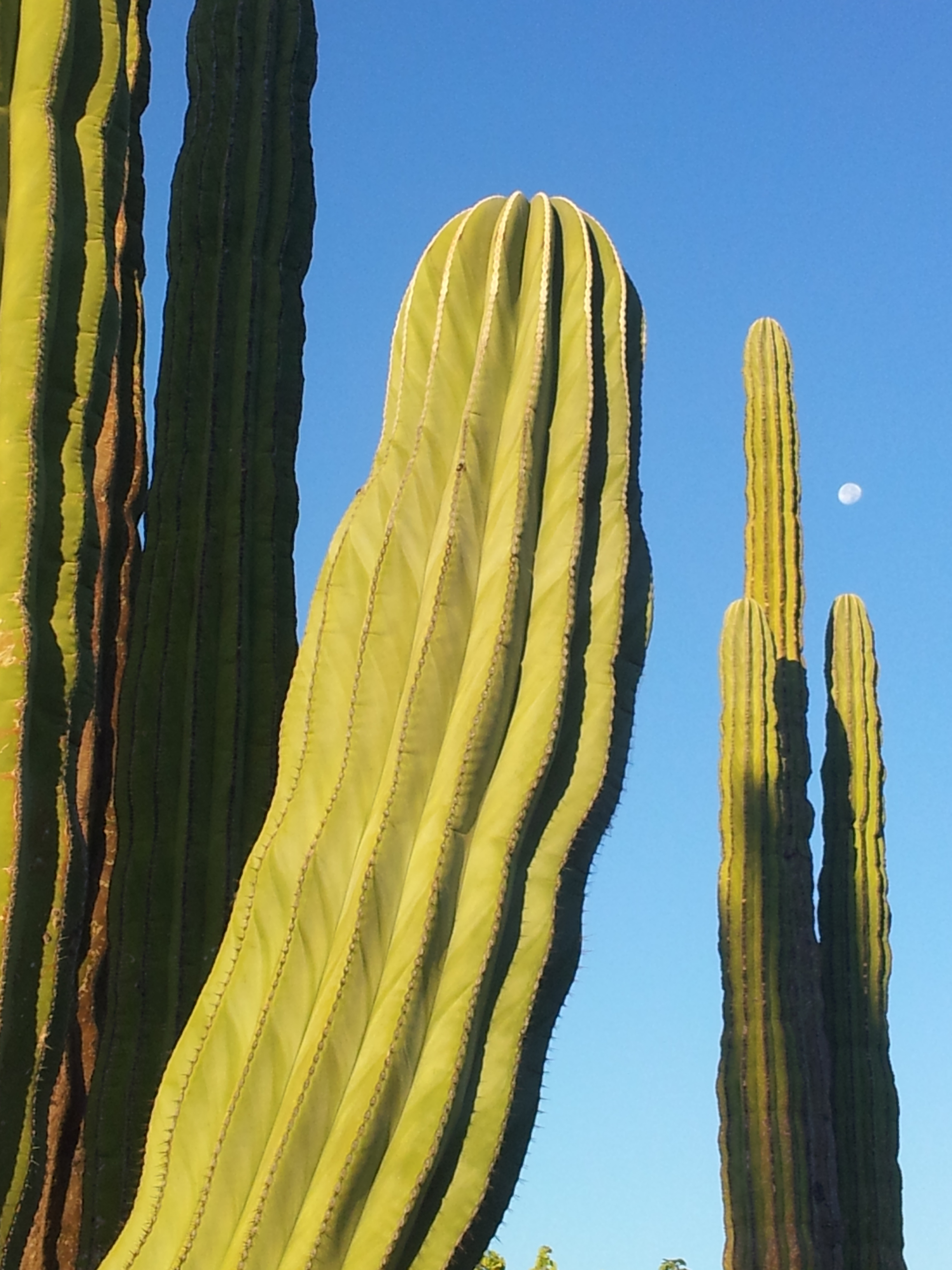
Cardon cactus shoot for the moon

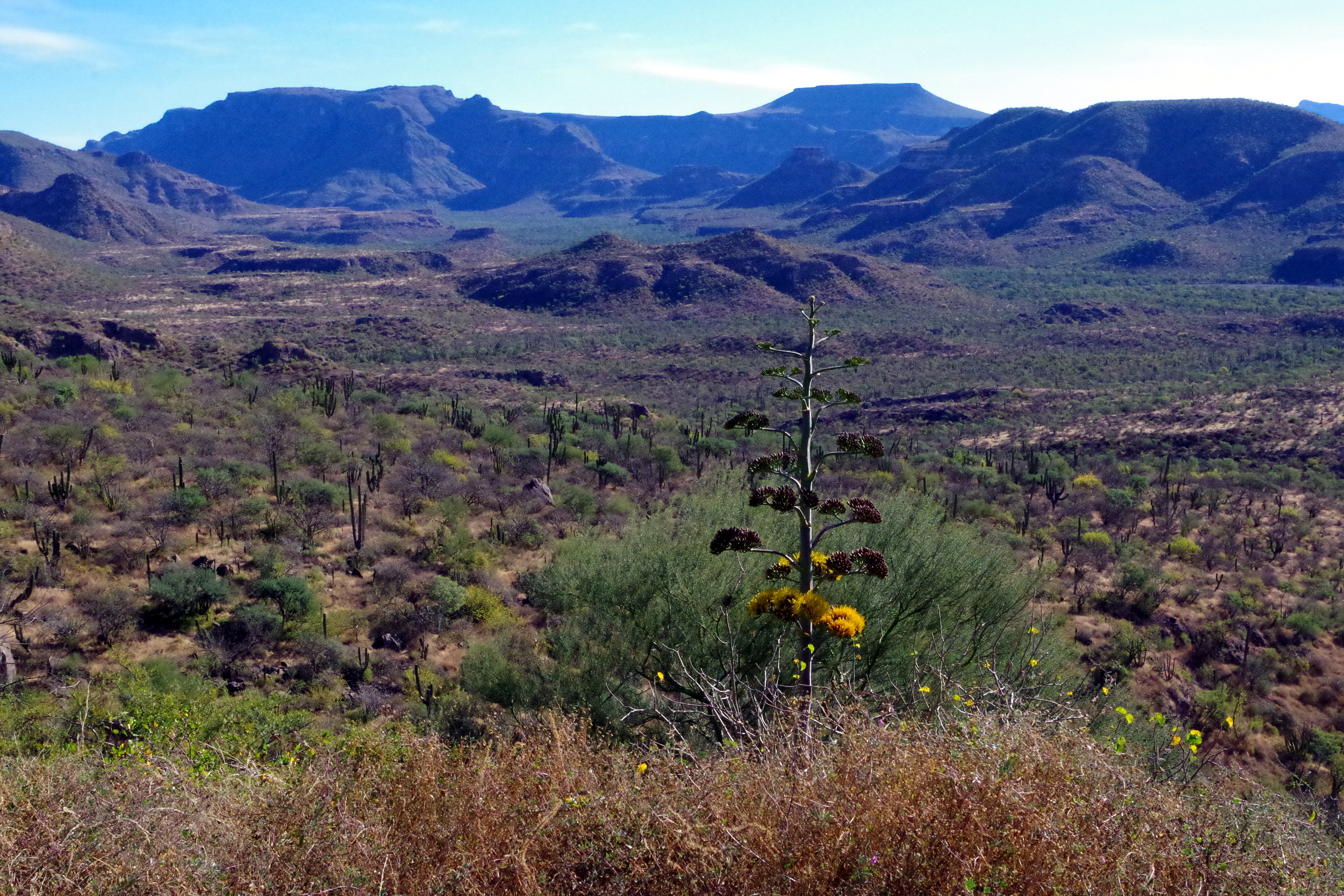
Die Eindrücke auf der Fahrt duch Zentralbaja haben mir das Buch wieder vor Augen geführt. Da waren sie: Die bis zu 18 Meter hohen Cardon Kakteen,

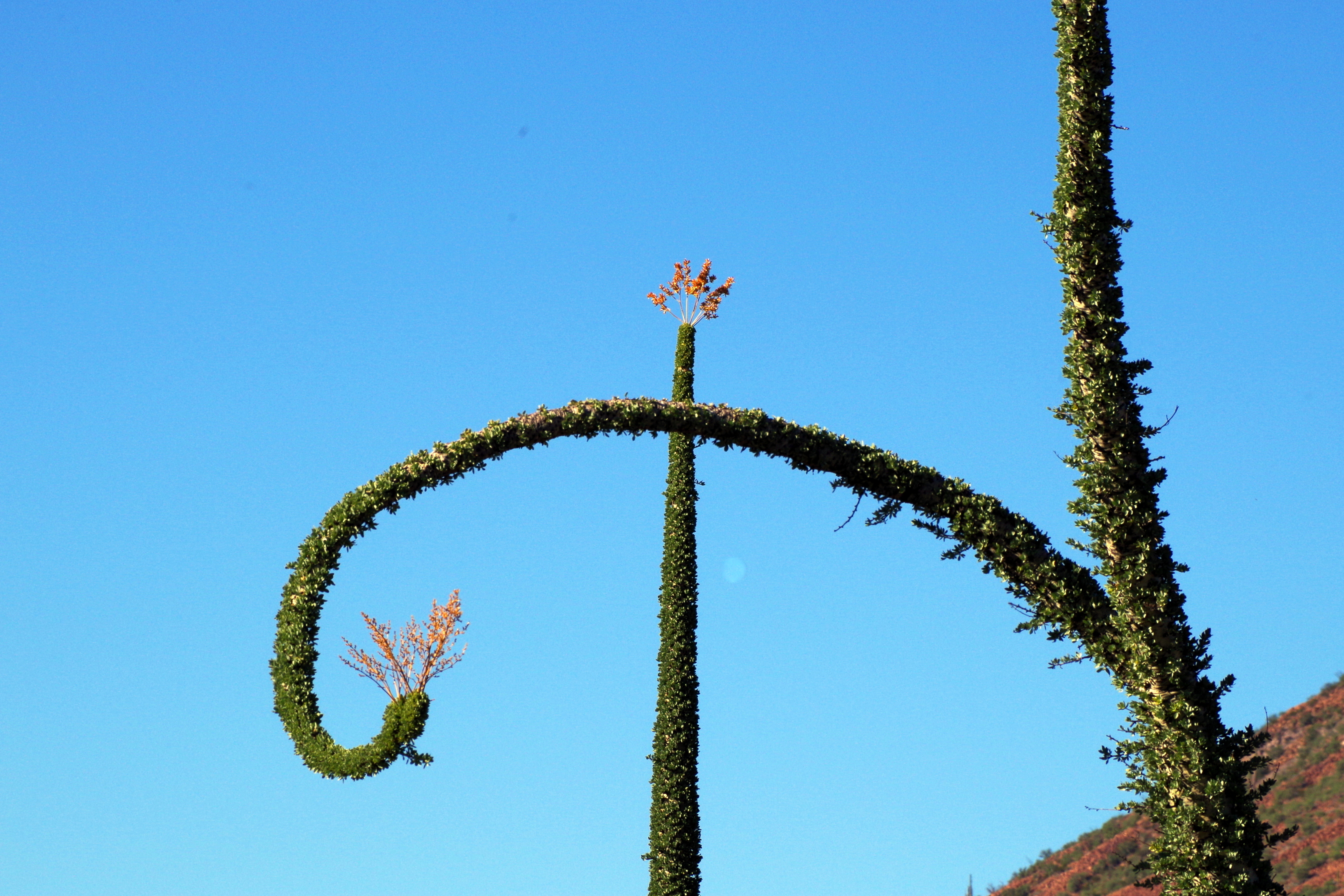
Cirio

Cirio trees

die grössten der Welt, kleine wollige Chollas, stachlige Fässchen und Ciriobäume die einer riesigen umgedrehten Karotte gleichen.

Man kann sich nicht satt sehen, hi und da sieht man Blüten und Früchte. Dazwischen gaukeln Zitronenfalter, kreisen verschiedene Raubvögel, sogar Singvögel und hi und da ein Coyote überraschen uns.

Auf der Strecke hinunter in die Bucht nach Bahia de Los Angeles war die Strasse oft von Flüssen weggerissen und wir mussten durchs trockene Bachbett fahren.

Der Hurrikan “Otilie” hat hier vor ein paar Wochen viel Schaden angerichtet. Das Dorf steht in den vom Fluss angeschwemmten Holzstücken und Sandschlamm, am Sandstrand hat der Sturm viele Häuser weggrissen, geköpfte Palmen stehen einsam da und zeigen zum Himmel.

IMGP0726

La Gringa beach in Bahia de Los Angeles

Wir fuhren ein paar Kilometerm auf der Strasse entlang der Küste nördlich des Ortes und kamen zu eine schönen Landzunge und Strand „La Gringa”!

Da kam auch schon Daniel angerannt und wollte 140 Pesos. Na ja, das war etwas viel, aber die Leute haben eine schwere Zeit hinter und vor sich nach dem Hurrikan und so bekam er das Geld (ca 10 Dollar). An diesem Strand hätten wir noch länger bleiben können, ich grub nach Muscheln, Daniels Frau brachte uns einen Tintenfisch und unsere neuen Freunde Pam und Mike aus Aspen teilten einen Dorado mit uns. Die Temperaturen von Meer und Luft waren angenehm, nur der Wind machte uns die ersten zwei Tage zu schaffen. Am liebsten lasse ich mich auf dem Rücken treiben wärend die Pelikane rundherum wie Torpedos ins Wasser tauchen. Die Tage wechselten sich ab mit schwimmen, lesen, wandern, essen, spanisch lernen (danke Judi und Rick) und wieder schwimmen, lesen………Da die Zufahrt nach dem Hurrikan etwas schwierig ist, ist der Strand recht verlassen.

Zwei Einheimische erzählten uns von einer netten Bucht: San Francisquito, 120 km südlich. Wir fuhren los, ein lange unbwfestigte Strasse, wieder durch Kaktuswald und Berge, durch ausgetrocknete Bachbette und Sandpisten. Auch hier hatte der Sturm gewütet und die Strasse war oft weggespült. Wir hatten jedoch das Glück, dass das Baja 1000 Autorennen nächste Woche stattfindet und die Strassen für dieses Rennen so gut es ging hergerichtete wurden. Nach 4 Stunden kamen wir in San Rafael and und Pancho (der einzige Einwohner) zeigte uns einen Platz am Strand wo wir übernachten konnten. (Wenn jemand vorhat, dorthin zu fahren, bitte bringt ihm Zigaretten mit.) An nächsten Morgen kauften einem Fischer zwei Fische ab, einen zum Grillen (Corvina) und einen für Ceviche (Sierra). So sind wir versorgt, Trinkwasser haben wir auch genug (überall knapp) und sitzen jetzt am Strand von Punta San Francisquito. Schöner Sand, angenehmes Wasser und 28°C.

IMGP0793

Punta San Francisquito

~~~~~~~~~~~~~~~~~~~~~~~~~~~~~~~~

We left Ensenada behind, had enough of the “City Camping”. A beach on the Pacific south of San Quintin was out first overnight spot, only the surf, dunes and pelicans around us. For two days we enjoyed the fresh air , peace and quiet. Then we went on to Bahia de Los Angeles.

In the 60s my favorite book was called “The World We Live In”. Often my siblings and I would pour over it and study the pictures; still today I can see them in front of me.

Already then I was fascinated by strange lands. (Books by the German author Karl May did the rest. I used to read his books under the blanket late at night – with the flash light.)

The sights on our drive through central Baja brought back the impressions the book left behind. Here they were: The up to 58 ft high cardon cactus, the biggest in the world, the wolly cholla, prickly barrels and cirio trees, looking like giant upside down carrots. One can’t get enough just looking at them, sometimes there is even a flower or fruit. In between there are yellow butterflies, different birds of prey, even songbirds, rabbits and a coyote now and then surprise us.

The road down toward the coast had seen a lot of damage from flash floods. It was washed out on several places and we had to drive through the dry creek beds.

Hurricane “Otilie” has done a lot of damage a few weeks ago. The ground in town is covered with pieces of wood, sand and mud. Most houses on the beach are gone or badly damaged, headless palm trees stand all alone and point to the sky.

IMGP0736

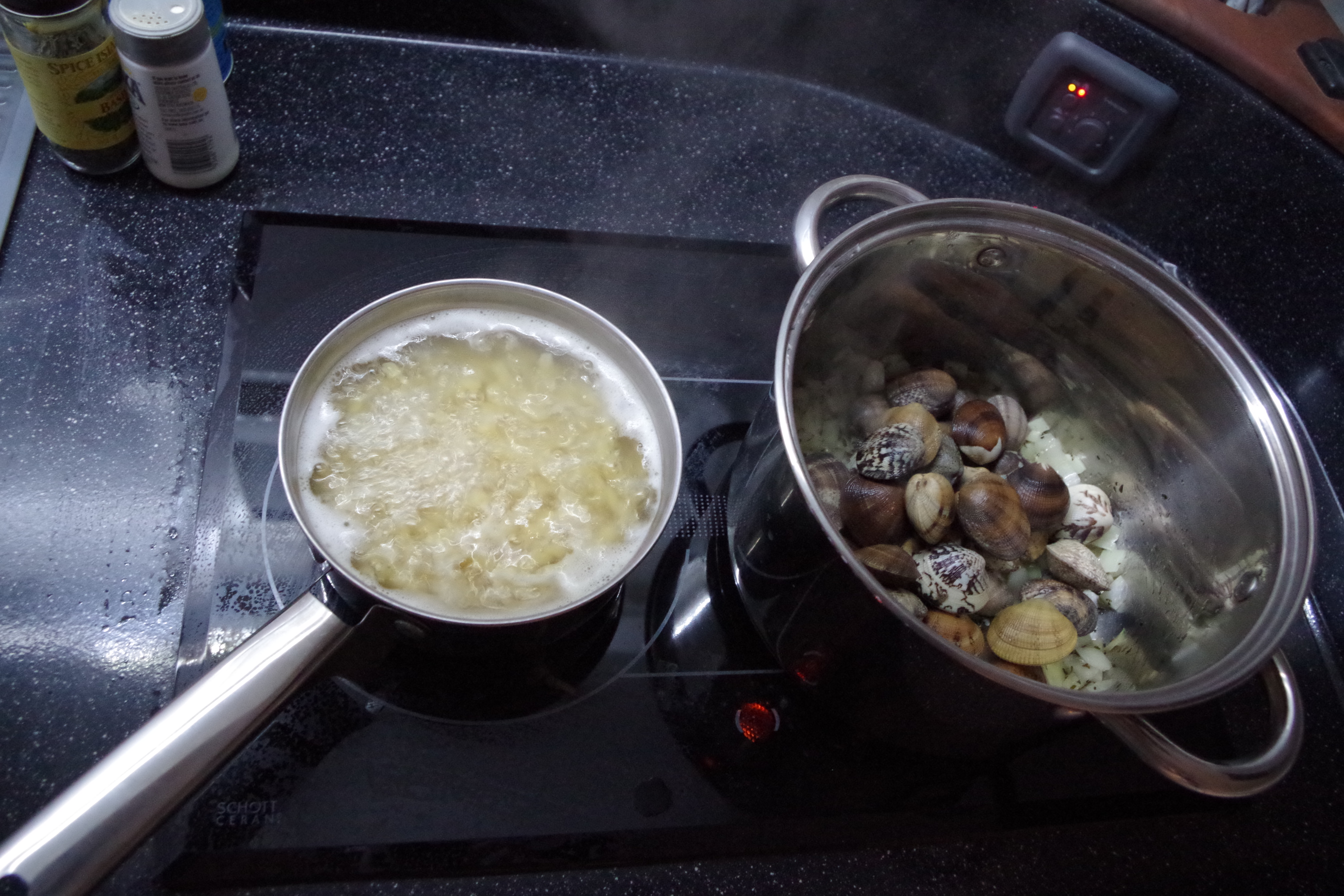
Clam pasta – Nudeln mit Venumuscheln

We turned north and drove a few km along the coast until we came to a beautiful sand spit and beach called “La Gringa”. And right away Daniel came running and wanted 140 pesos ($ 10.00). Oh well, it seemed like a lot, but people here have had a hard time and in front of them after the hurricane, we we gave him the money. I could have stayed longer, I dug clams, Daniels wife Silvia brought us an octopus and are new friends Pam and Mike from Aspen shared a Dorado with us.

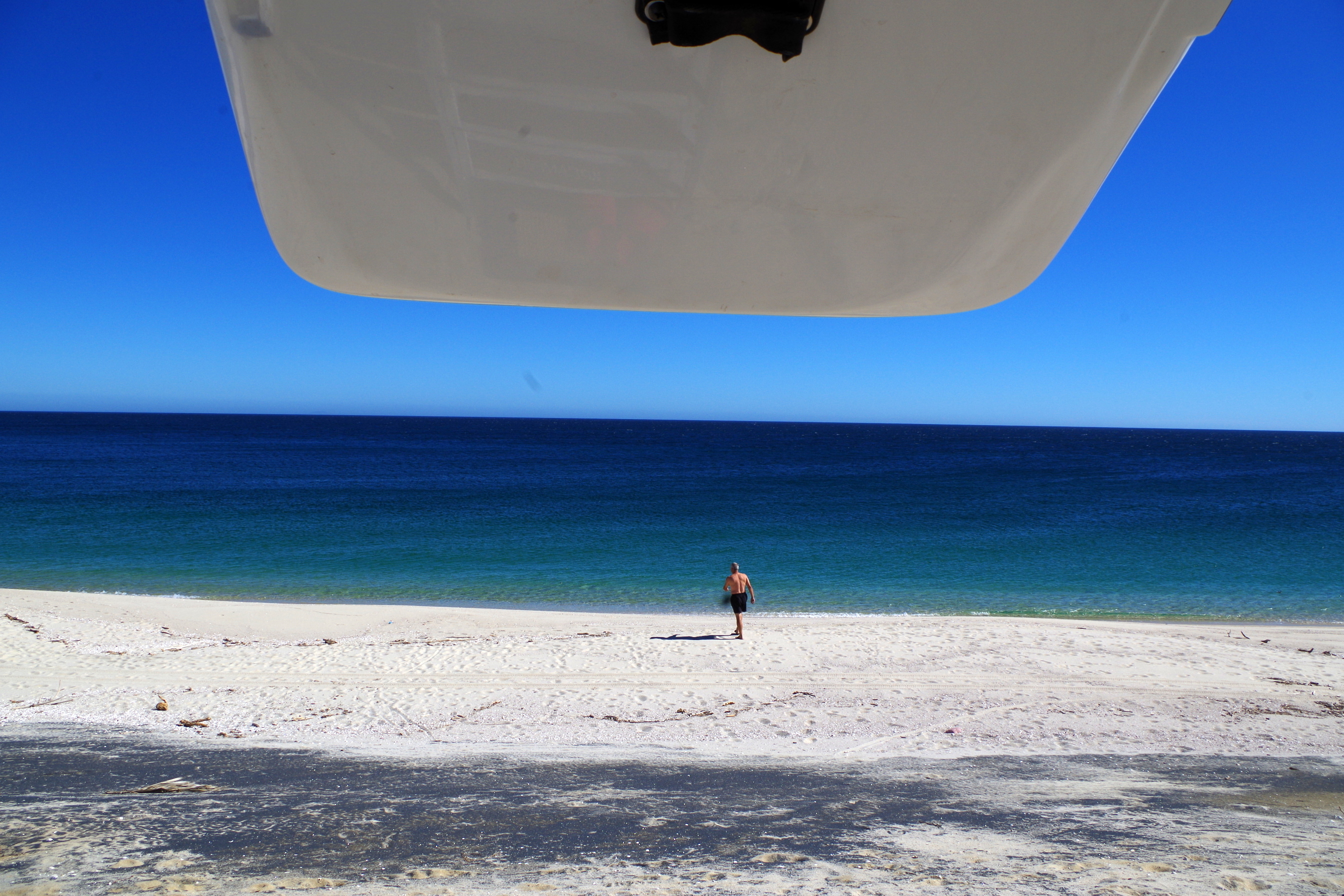
The water and air had perfect temperatures, only a strong northerly gave us a hard time the first two days. Drifting in the sea on my back with the pelicans hitting the water all around me like torpedoes is one of my favorite things to do here. The days flow along with swimming, reading, walking, eating, learning Spanish (thanks Judi and Rick) and back to swimming, reading……..

The drive to this beach was a bit rough and therefore we do not have much company.

Two locals told us about a nice beach called San Francisquito, 140 km south along the coast, so we packed up and decided to drive down that way and check it out. It was a rough ride, a long dirt road through cactus forests and mountains, arroyos and sandy washes. Here too the storm had done damage and the road was often washed out. Lucky though the Baja 1000 race starts in a few days and this road is part of it. So it had been fixed somewhat and graded as well as possible. After 4 hours we finally made it to San Rafael, Pancho (the only inhabitant) showed us a spot on the beach where we could camp for the night. (If anybody else heads that way, please bring him some cigarettes.) The next day we walked down the beach and bought two fish from a setnetter, one for the BBQ (Corvina) and one to make Ceviche (Sierra). Now we are taken care of, we have food, drinking water (always a limited commodity) and sit on a beautiful sandy beach at Punta San Francisquito. Great swimming and 28°C.

Go back

Your message has been sent

Warning
Warning
Warning
Warning

Warning.

Posted in Mexico | 4 Comments

Hola Mexico

Hola Mexico!
scroll down for the english version


20141031_135321

Wir sind in Ensenada auf der Bajahalbinsel, heute Nacht hat es geregnet, der Stadt wurde der Staub weggewaschen. Unsere Freunde Margarethe und Peter aus Deutschland sind seit ein paar Wochen hier, mit ihrem Segelboot „Seatime“ sind sie schon mehrere Jahre unterwegs. Wir haben sie auf ihrer Segeljacht besucht und durften im Hafenglände parken. Heute Nacht im Camper haben wir dann lautstark den „Day of the Dead” miterlebt. Die Mexikaner feiern Allerseelen etwas fröhlicher als wir. Sie gehn zwar auch auf den Friedhof, aber sie bringen Blumenschmuck und Leckerbissen und dann wir auf dem Grab gefeiert. Wir haben auch gefeiert denn gestern war Günters 52. Geburtstag. Auch auf der “Seatime” gab es Schmankerl und Sekt, wir wurden verwöhnt.

Die letzten Wochen verbrachten wir noch in Californien, in Palm Springs machten wir letzte Besorgungen, wanderten in den Wäldern auf 2600 m Höhe und 20°C oder über einen der zahlreichen Golfplätze und 30° +. Sue und Banks hatten uns ihr Haus zur Verfügung gestellt und wir genossen es sehr.

Dann fuhren wir weiter zum Coronado Yachtclub in San Diego und dem Segelboot “ Cayenne” aus Österreich, wo wir gerade rechtzeitig zu Sabines Geburtstagsfeier auftauchten, ein schönes Fest mit lieben Leuten und schmackhaften Gerichten. Auch dort konnten wir im Hafengelände übernachten.

Auf diesem Wege wollen wir unseren Segelfreunden und auch Sue und Banks nochmal herzlichst danken.

°°°°°°°°°°°°°°°°°°°°°°°°°°°°°°°°°°°°°°

We are in Ensenada, on the Baja, it rained last night and it washed away the dust from the city. Our friends Margarethe and Peter from Germany have been here the last few weeks, they have been cruising with their sailboat “Seatime” for several years. We visited them on their boat and got to camp in the marina parking lot. Last night we were treated to the rather loud “Day of the Dead” celebrations. The Mexicans celebrate this holiday not like we do (in Austria). They go the grave yard, bring flowers and food and proceed to party by the graves.

We partied as well, because it was Günters 52. Birthday. On the S/Y Seatime we had tasty delicacies and sparkling wine, we were spoiled.

The last few weeks we spent in California, in Palm Springs we took care of last minute purchases and paperwork, hiked in the pine forests at 8000+ ft and 70°F or on one of the many golf courses in the city at 90 °F. Sue and Banks let us use their home for our stay there and we really enjoyed it.

Then we took off to the Coronado Yacht Club in San Diego and the sailboat “Cayenne” from Austria, where we arrived just in time for Sabines birthday party. A nice celebration, with nice people and tasty dishes. We were able to camp in the harbor there as well.

We want to thank our sailing friends and Sue and Banks again this way.

Go back

Your message has been sent

Warning
Warning
Warning
Warning

Warning.

Posted in Mexico | 7 Comments

Under way – Unterwegs


  Scroll down for the English version

17.10.2014

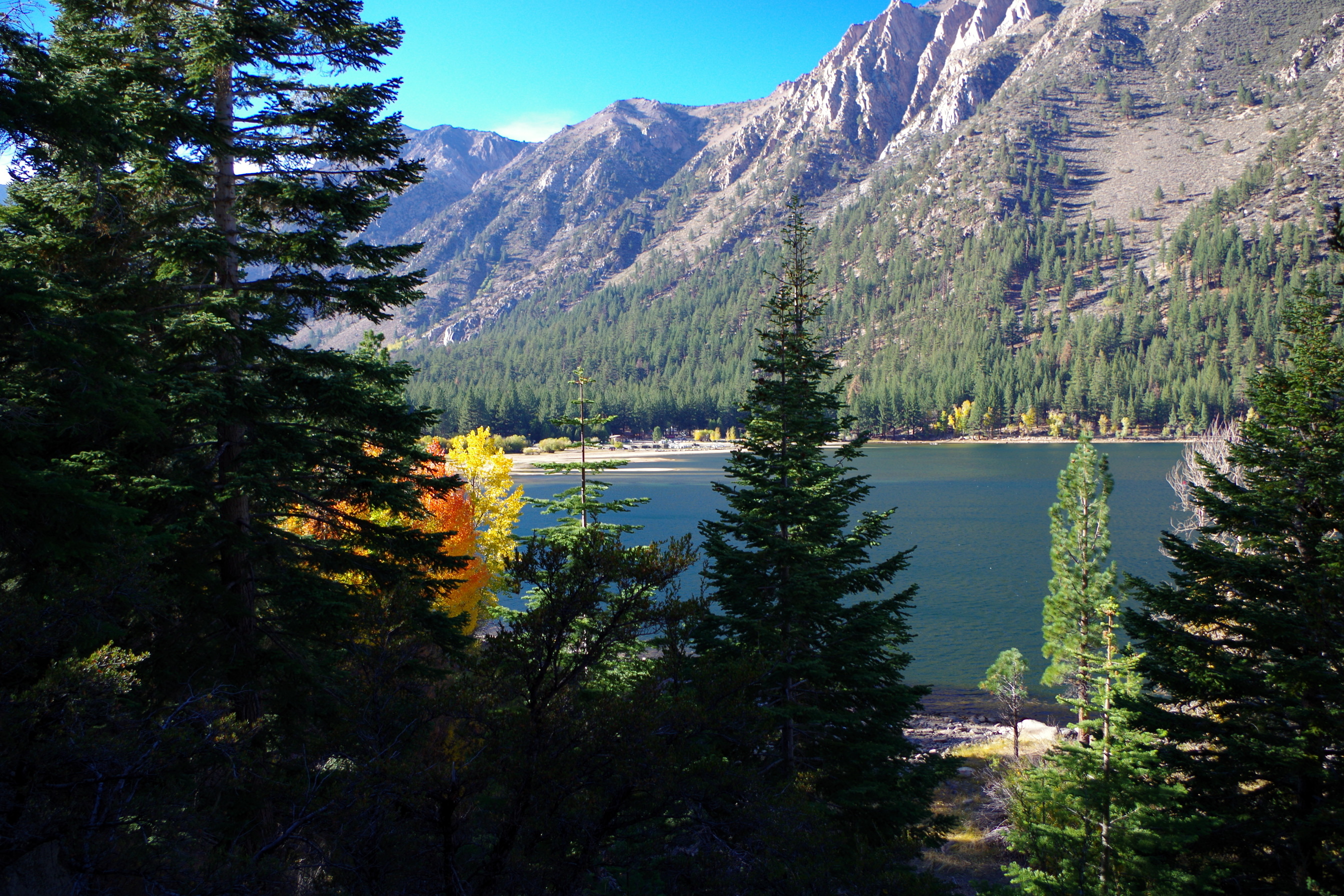
Wir sind endlich unterwegs. Nach mehreren Besuchen in der Autowerkstatt und bei XP Camper ist nun alles geregelt, unser Gefährt in Schuss, Ersatzteile und letzte Einkäufe verstaut und der Kühlschrank voll. Wir sind aus Grass Valley losgefahren, nach Südosten, in die Sierra Berge bis wir auf 2000 m ein Plätzchen in einer Lichtung mit Sicht auf die unendlichen Wälder fanden. Noch ist es ja einfach. Im Westen von USA findet man leicht ein einsames Plätzchen für die Nacht, die Gegend ist spärlich besiedelt und viele grosse Gebiete sind für alle zugänglich.

Letztes Wochenende verbrachten wir auf Einladung von Marc Wassman (Xpcamper-boss-visionary) am Meadow Lake in den Bergen nördlich von Lake Tahoe. Viereinhalb Stunden brauchten wir auf Strassen die zum Teil bei uns nicht mal mehr als Alpweg eingestuft würde, sondern als Bachbett.

Vorbei an Seen und schroffen Wänden fuhren wir hinauf ins Gebirge, unser Dodge hat gezeigt was er kann. Es war der Test für wohl einige Touren die noch vor uns liegen.

Um so gemütlicher wars dann als wir am Meadow Lake ankamen und von Marc und seinen Freunden herzlichst begrüsst wurden.

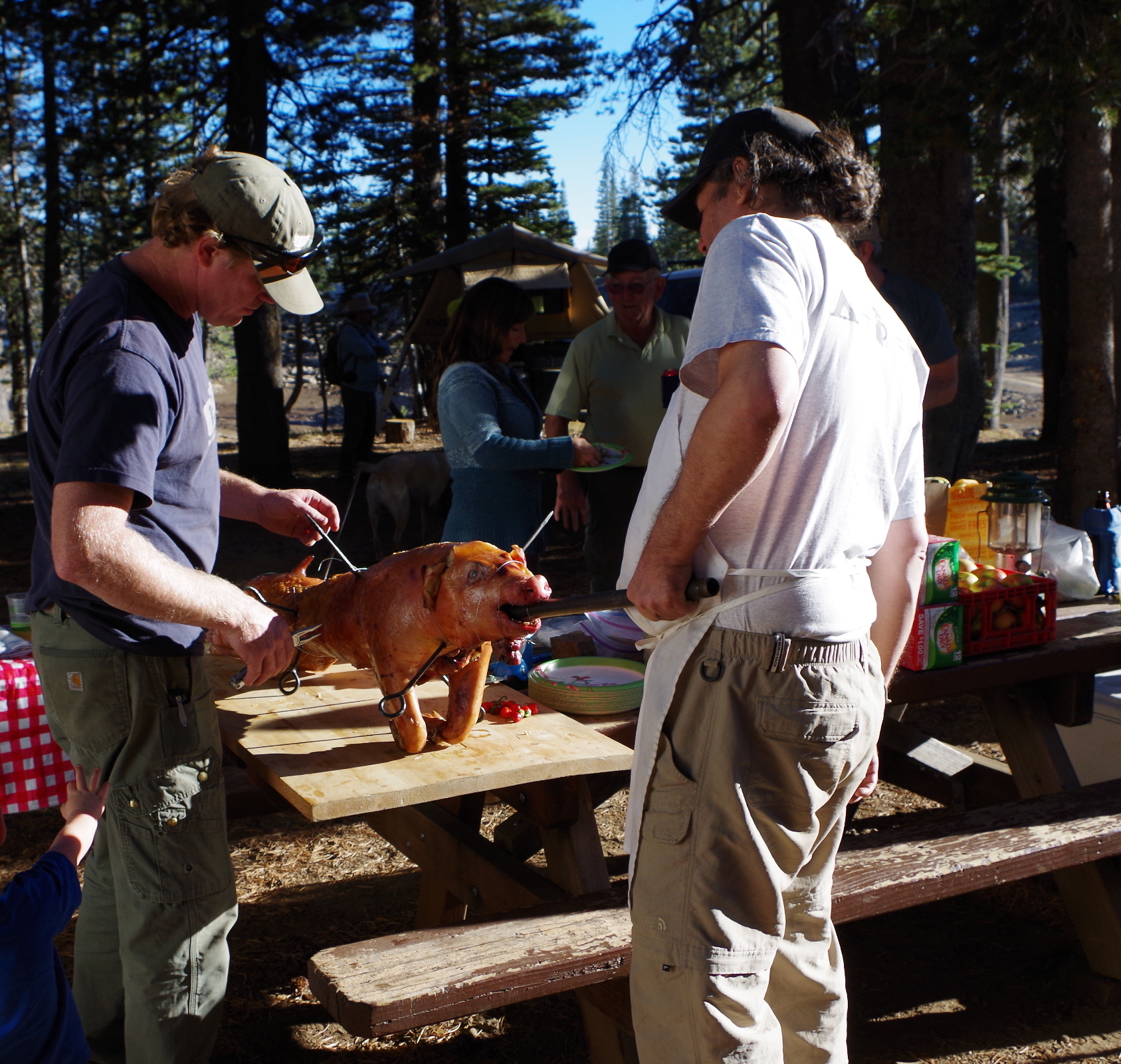
Das Spanferkel am Spiess war mit seinen 25 kg wohl eher ein “Spanschwein“. Cheviche, „Humboldt Fog“ Geisskäse und Walnusskuchen trugen dazu bei, dass es ein richtiges Festessen wurde. Es war eine nette und lustige Runde. Danke Marc und „Wander the West“.

Wir sind inzwischen wieder in südlicher Richtung unterwegs, rechts von uns das Sierragebirge, links die Wüste und Death Valley.

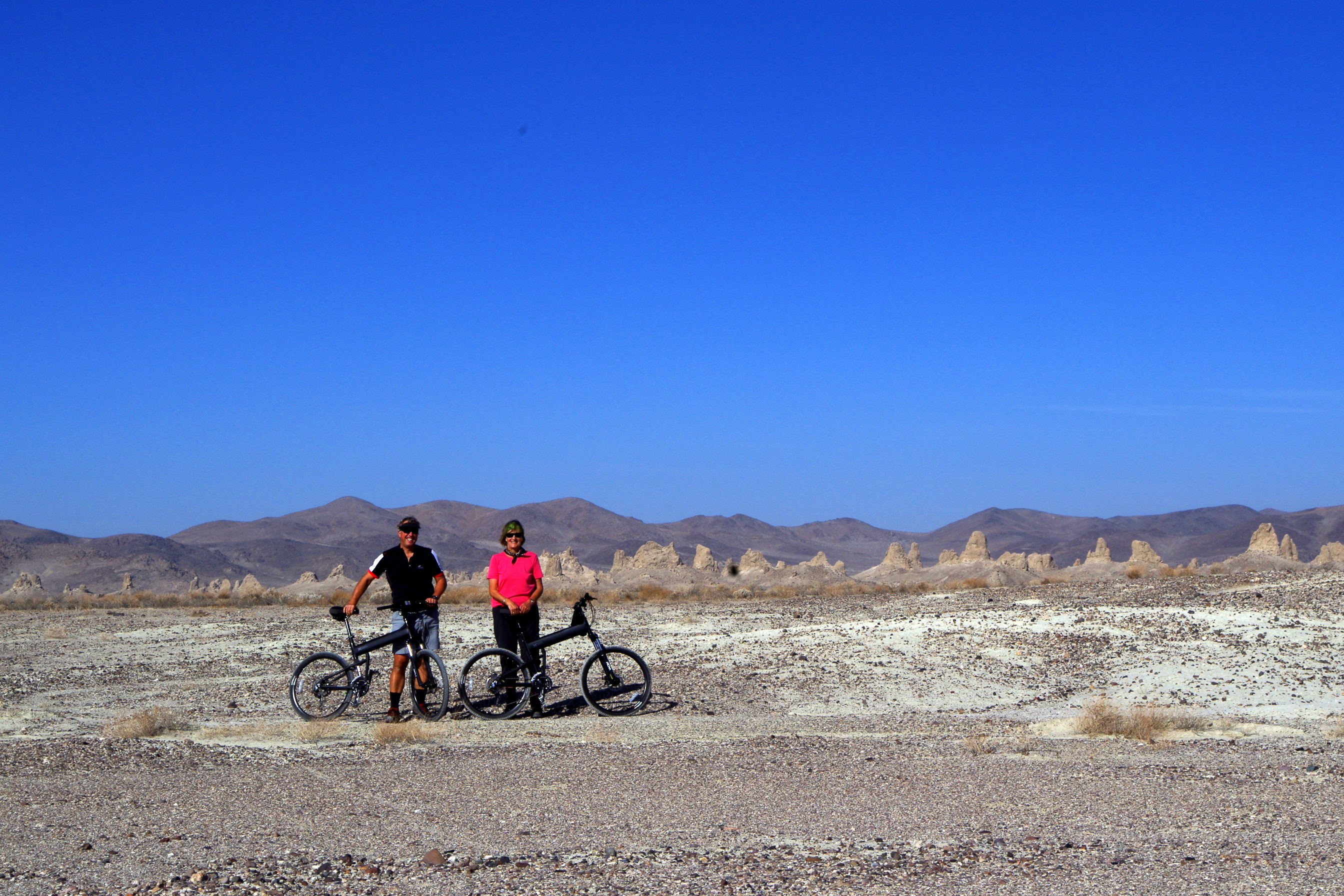
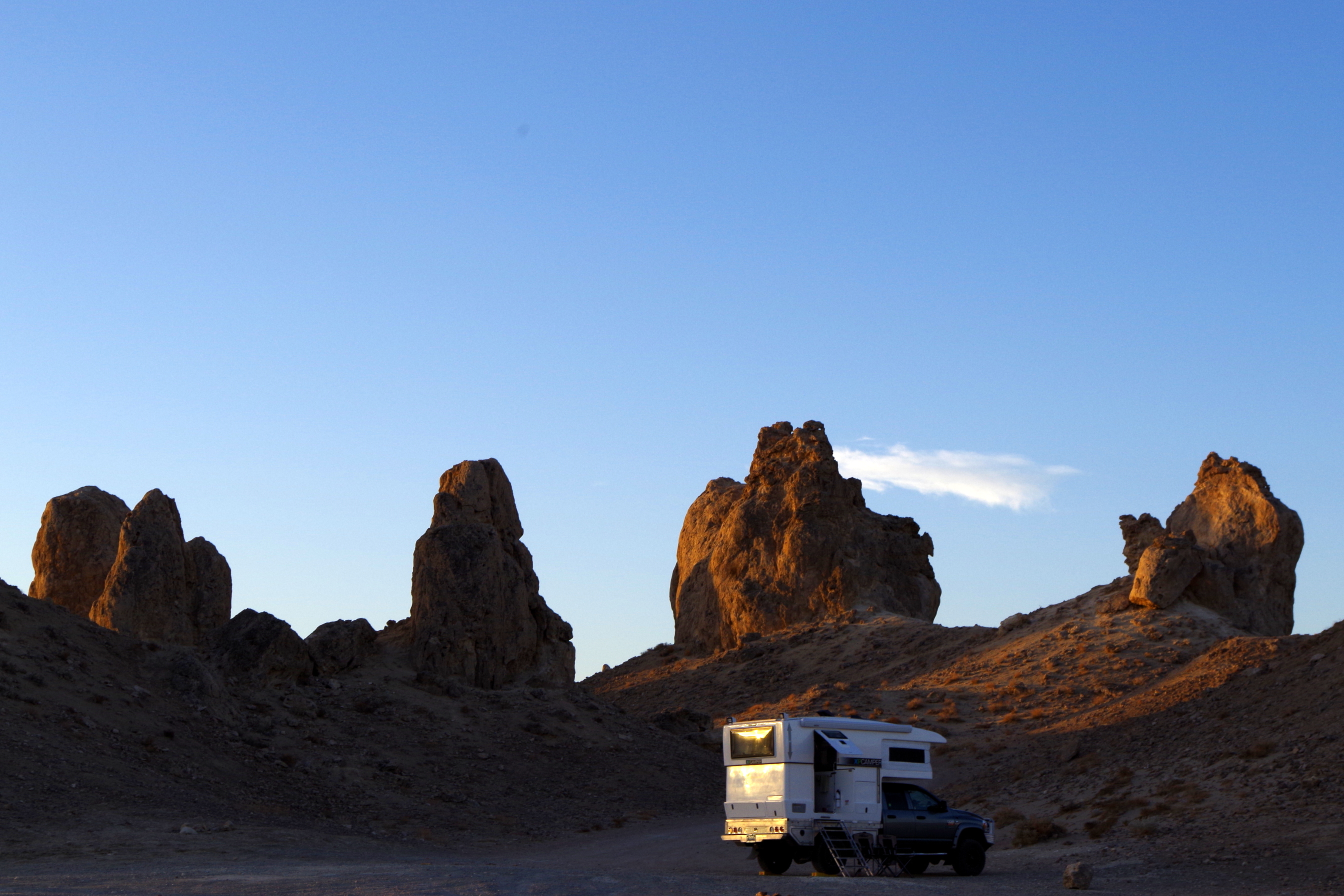
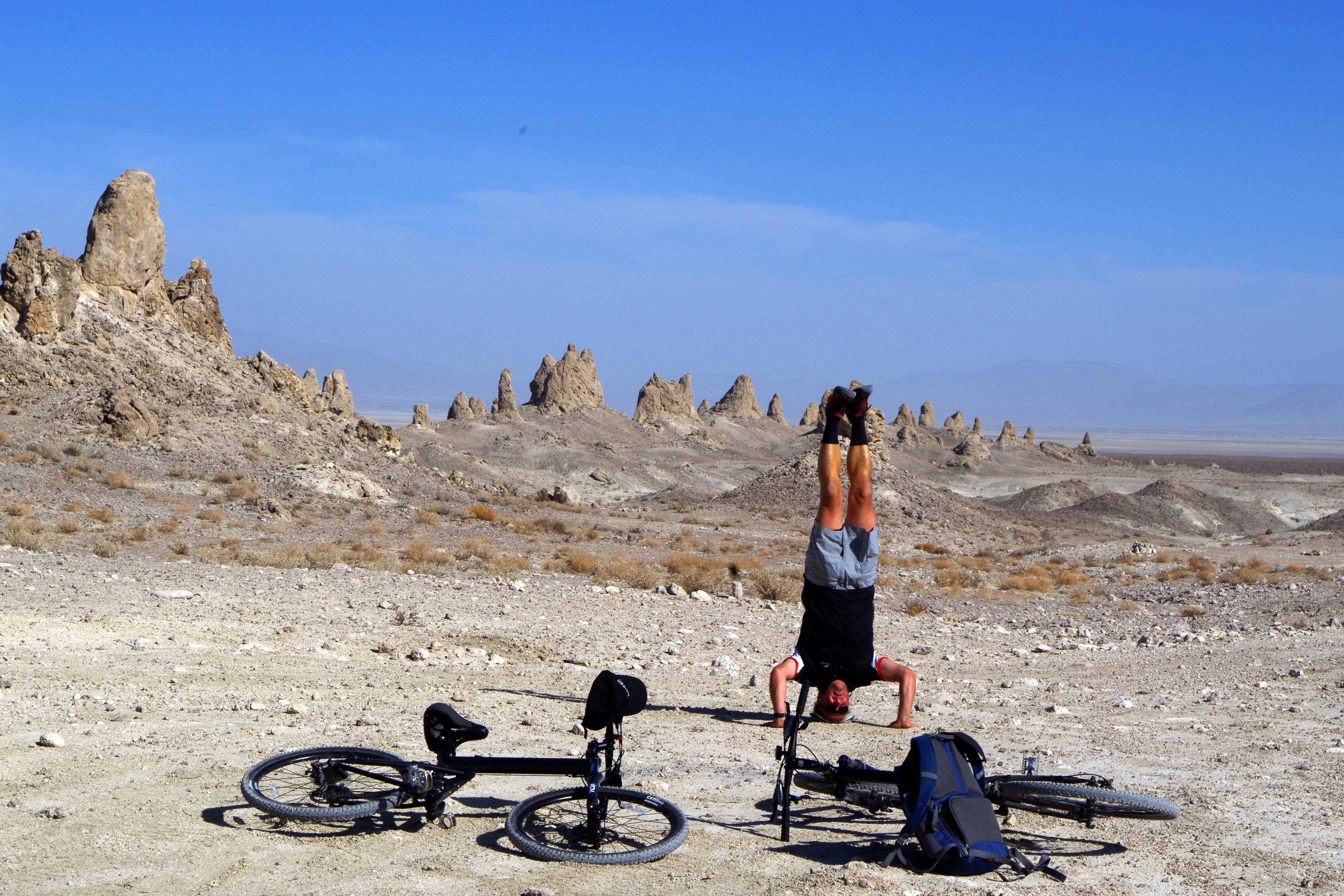
Am Rand der Mojavewüste – zwischen den “Trona Pinnacles“ – fanden wir ein Plätzchen und blieben gleich ein paar Tage. Mit den Rädern erkundeten wir die Gegend in der Türme in allen Variationen und bis zu 50 Meter hoch verstreut sind. Hier wurden Szenen für “Planet der Affen” „ET“ und “Startrek V” gedreht, eine unwirtliche und zugleich faszinierende Gegend. Wir sind alleine, sehen nur hi und da am Horizont ein Auto, oder besser gesagt, Staubwolken die von 4x4s aufwirbelt werden.

Ans Camperleben haben wir uns gleich wieder gewöhnt, der XP Camper(.com) ist sehr praktisch und auch gemütlich. Wir sind viel draussen und unterwegs, aber wenn wir zurück kommen fehlts uns an nichts. Dank der Solaranlage können wir Espresso (Krups) brauen, mit dem Laptop (einer ohne i vorne) schreiben, im “kindle“ lesen (Amazon) und Musik hören (XM Sirius Satellitenradio).

Life is good!

°°°°°°°°°°°°°°°°°°°°°°°°°°°°

We are finally under way. After several visits at the repair shop and the XP Camper shop we took care of everything, our truck is in good shape,

Spare parts and last minute purchases are tucked away and the refrigerator is full. We took off from Grass valley and drove southeast and up the Sierras until we found a nice camping spot at around 7000 feet in a clearing in the trees with view of the vast forest. There is a lot of public land in the western US and it is easy to find a secluded spot for the night.

Last weekend Marc Wassman (XP Camper – boss – and visionary) invited us to come up to Meadow Lake, north of Lake Tahoe in the Sierra Mountains, for a pig roast he planned with his friends from “Wander the West”. It took us four and a half hours to drive up there on roads that in parts would not even be considered an “Alpweg” back home in Austria, more like stream beds. Along lakes and sheer cliffs we drove up into the mountains and our Dodge showed his best, a test for things to come.

All the more “gemütlich” was our stay at Meadow Lake once we got there and were greeted warmly by Marc and his friends.

The weaner-pig Marc roasted over the fire was 50 lb. and more like a weaner-hog. Ceviche, “Humboldt Fog” goat cheese and homemade walnut pies made for a great feast. It was a nice and fun round of people. Thanks Marc and “Wander the West”.

In the mean time we keep traveling south, the Sierras to our right, the desert and Death Valley to our left.

At the edge of the Mojave desert – between the “Trona Pinnacles” – we picked a spot in the shade of one of the pinnacles and stayed for a couple of days. With our bicycles we explored the area, rode through the pinnacles in different shapes and variations, some as high as 150 ft. Thanks Jim and Judy for telling us about this place.

Scenes of movies like “Planet Of The Apes” “ET” and “Star Trek V” were filmed here, a desolate and yet fascinating place.

It is quiet here; sometimes we see a car on the horizon, or better – a dust cloud kicked up by some 4×4 vehicle in the distance.

We got used to the camper life again quickly, the XP Camper(.com) is practical and cozy. We spend a lot of time outside and exploring, but when we come back we don’t have to do without. Thanks to the solar power we are able to drink espresso (Krups), write on the laptop (something without an i in front), read the “kindle” (Amazon) and listen to music (XM Sirius satellite radio).

Life is good!

IMGP0518

Sierras

IMGP0497

 Marc’s pig roast

IMGP0555


IMGP0547

IMGP0560

Go back

Your message has been sent

Warning
Warning
Warning
Warning

Warning.

Posted in USA | Tagged | Leave a comment

Goodbyes – Abschied

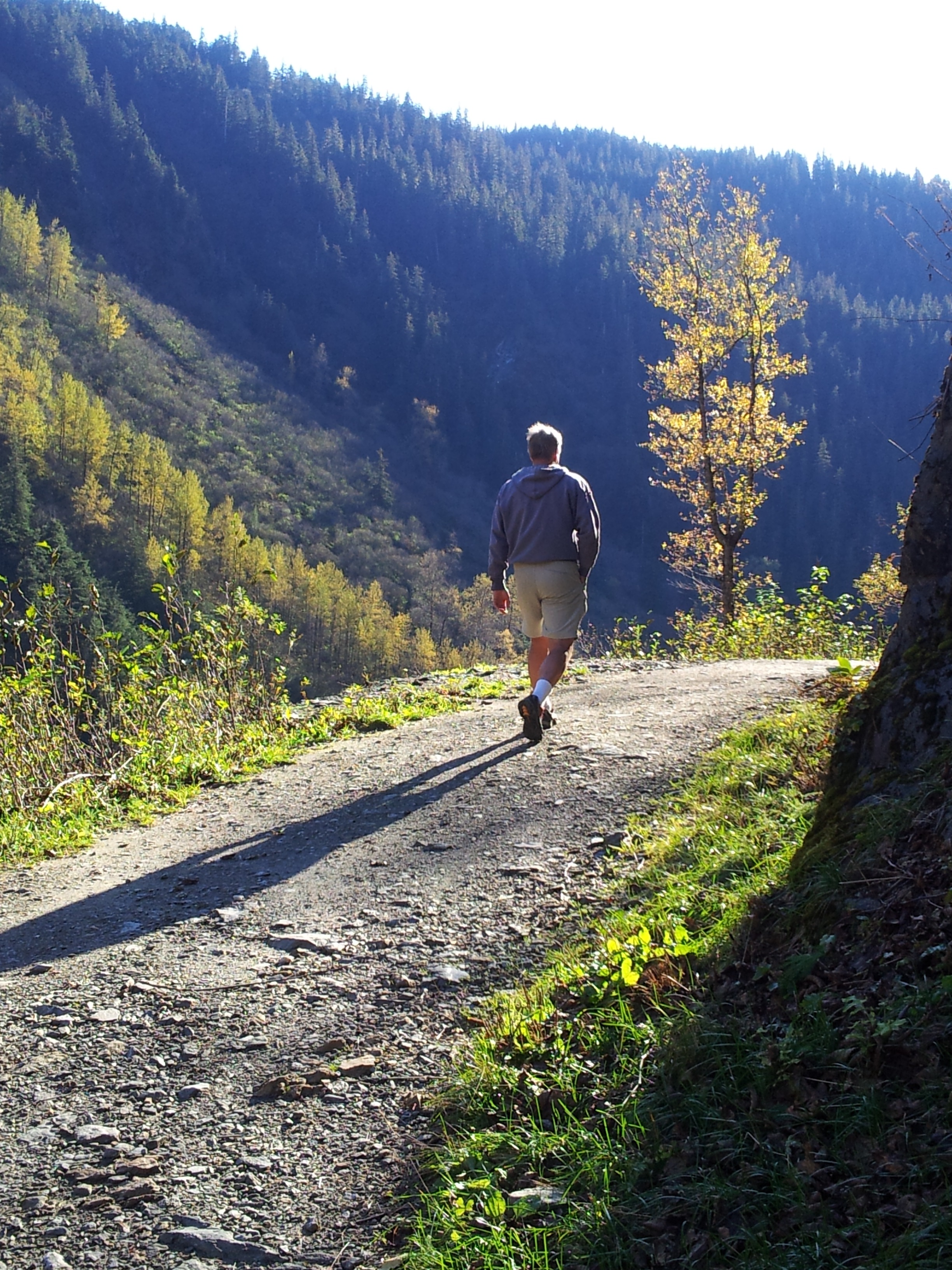
We are off! We packed our bags, handed over the house keys to our nice renters, said goodbye to all our friends and neighbors and left Juneau. After a rainy summer Alaska teased us with a beautiful crisp fall day, but with the knowledge that the next rain squall was just around the corner, we waved good bye one last time and got on the plane to Seattle.

°°°°°°°°

Wir sind unterwegs. Wir packten unsere Taschen,  übergaben die Haustürschlüssel unseren netten Mietern, verabschiedeten uns von Freunden und Nachbarn und verliessen Juneau. Alaska hat uns noch mit einem wunderschönen Herbsttag gelockt, aber mit dem Wissen, dass der nächste Regentag nicht lange auf sich warten lässt winkten wir noch einmal und bestiegen das Flugzeug nach Seattle.

20141001_152637

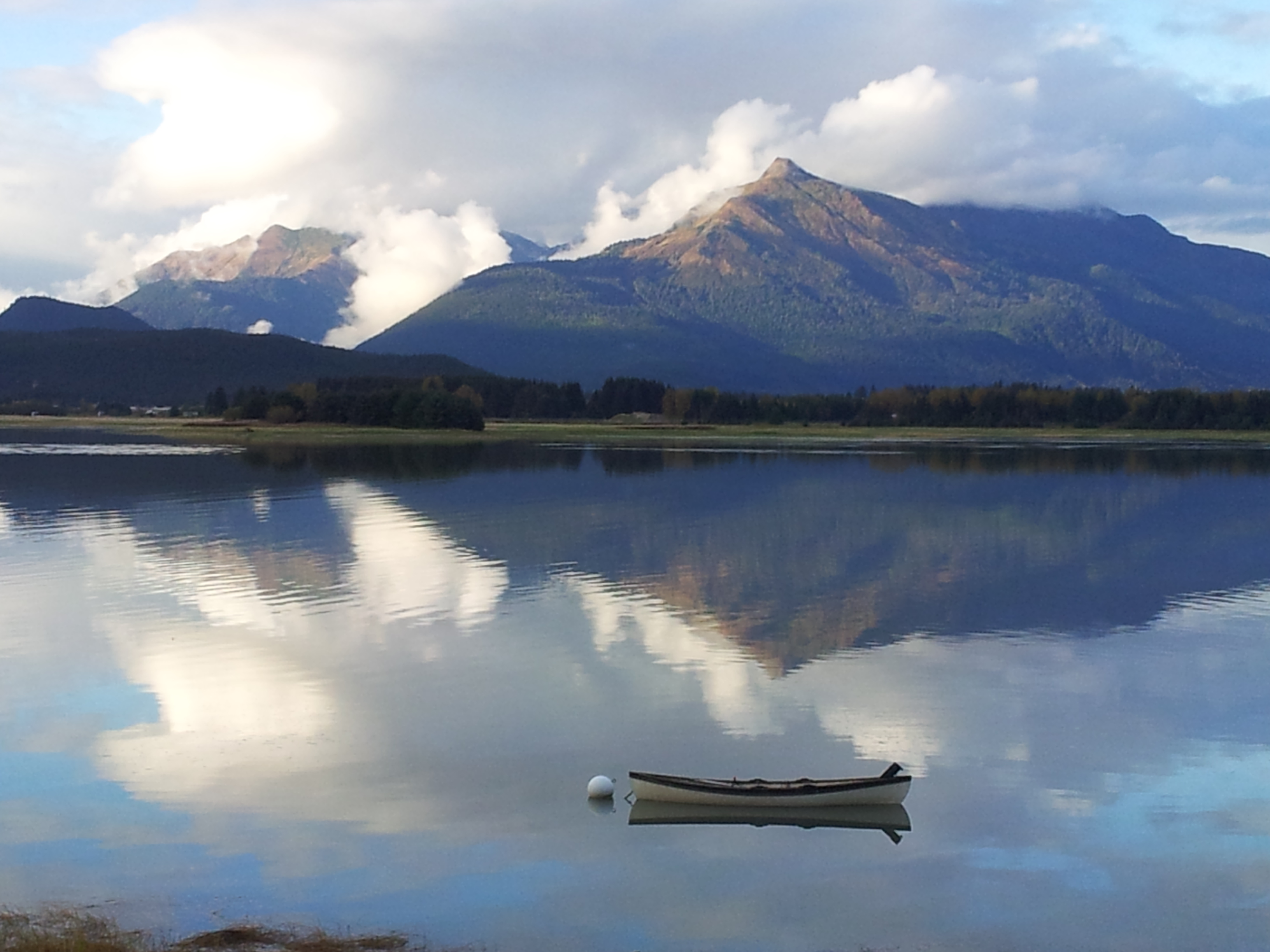
View from our house.

View from our house.

20141002_120832

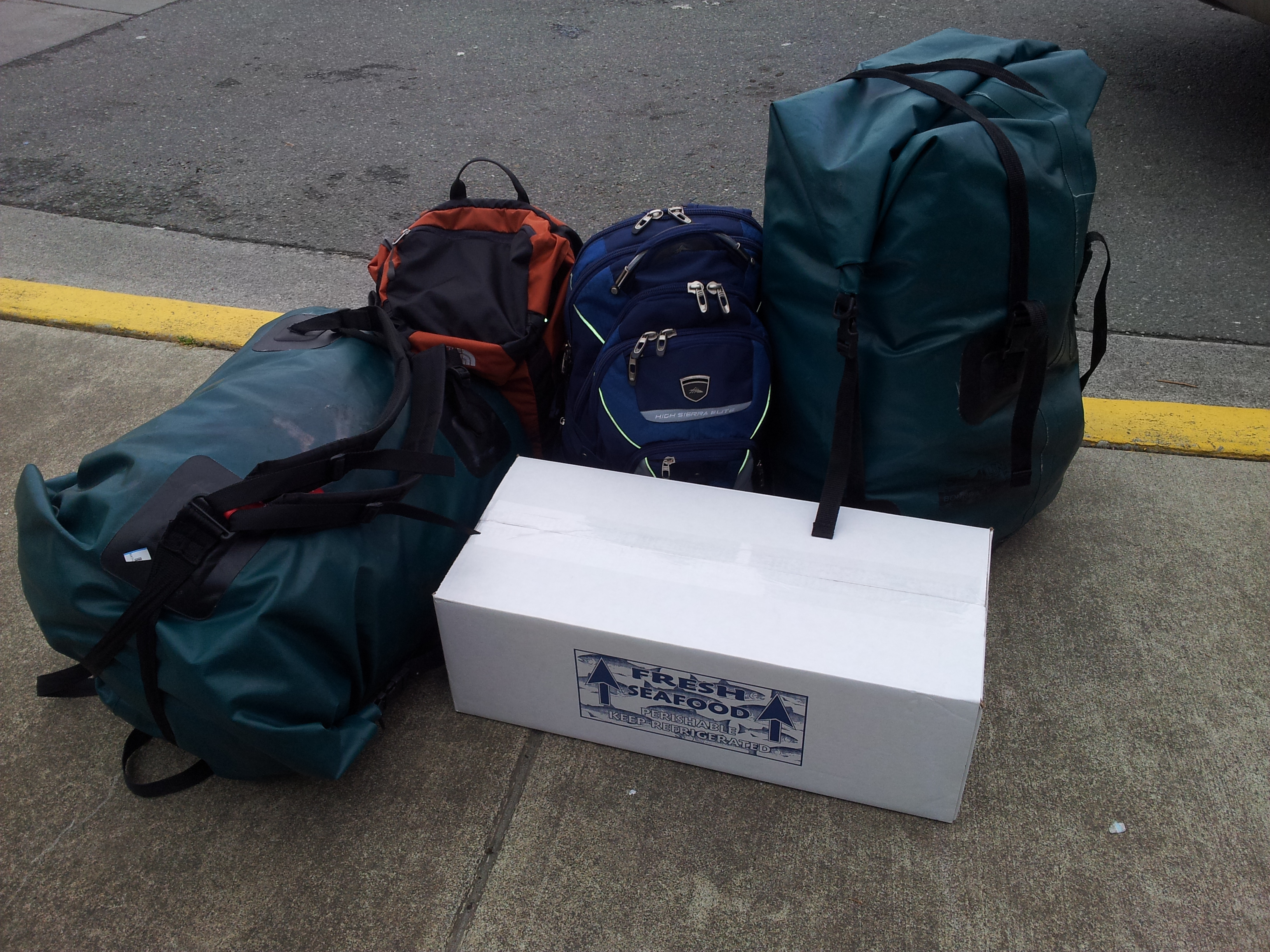
Our posessions for the next 2 years……

Go back

Your message has been sent

Warning
Warning
Warning
Warning

Warning.


Posted in USA | Tagged | 2 Comments

Parking the boat:

Go back

Your message has been sent

Warning
Warning
Warning
Warning

Warning.

Posted in USA | Tagged | 1 Comment

Preparations – Vorbereitungen

September List:

° Empty house, clean house, rent house……………………………….Haus leeren, Haus putzen, Haus vermieten.

° Get shots and pills for all kinds of diseases we might encounter……………………………..Spritzen und Tabletten  gegen alle möglichen Krankheiten besorgen.

° Put finances on autopilot…………………….Die Finanzen auf Autopilot umstellen.

° Say good bye to friends and family………….Von Freunden und Familie verabschieden.

Go back

Your message has been sent

Warning
Warning
Warning
Warning

Warning.

Posted in USA | Tagged | Leave a comment

Countdown

Noch drei Wochen, dann gehts los. Wir werden den Camper in Californien abholen und Richtung Baja California, Mexico fahren.

Three more weeks and we are off. We will pick up our camper in California and drive toward Baja California, Mexico.

http://xpcamper.com/

Go back

Your message has been sent

Warning
Warning
Warning
Warning

Warning.

Posted in USA | Tagged | Leave a comment