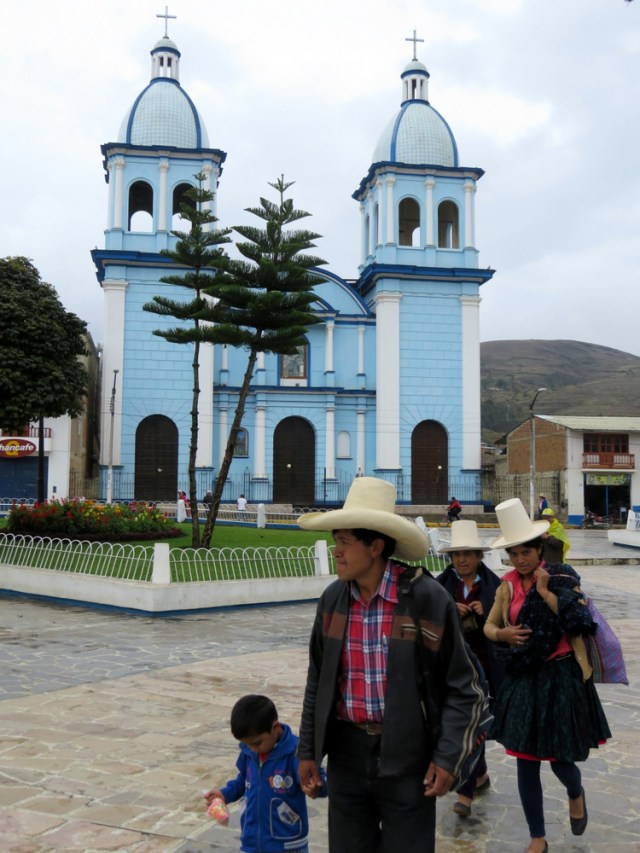
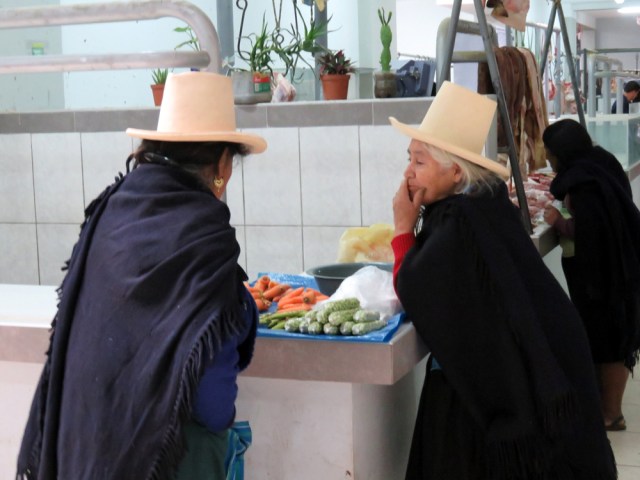
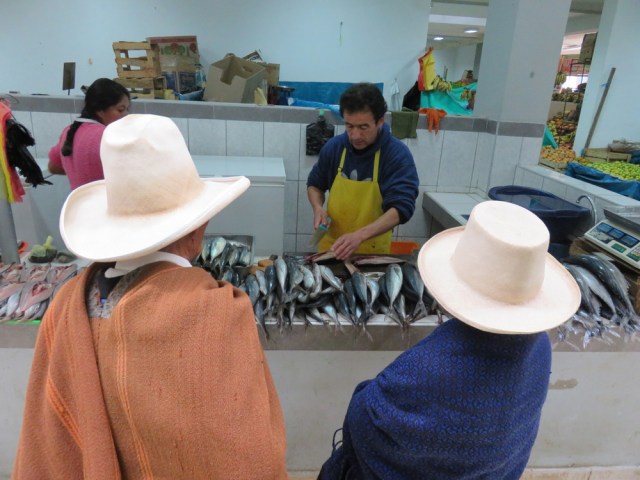
From the Northern Highlands to the coast


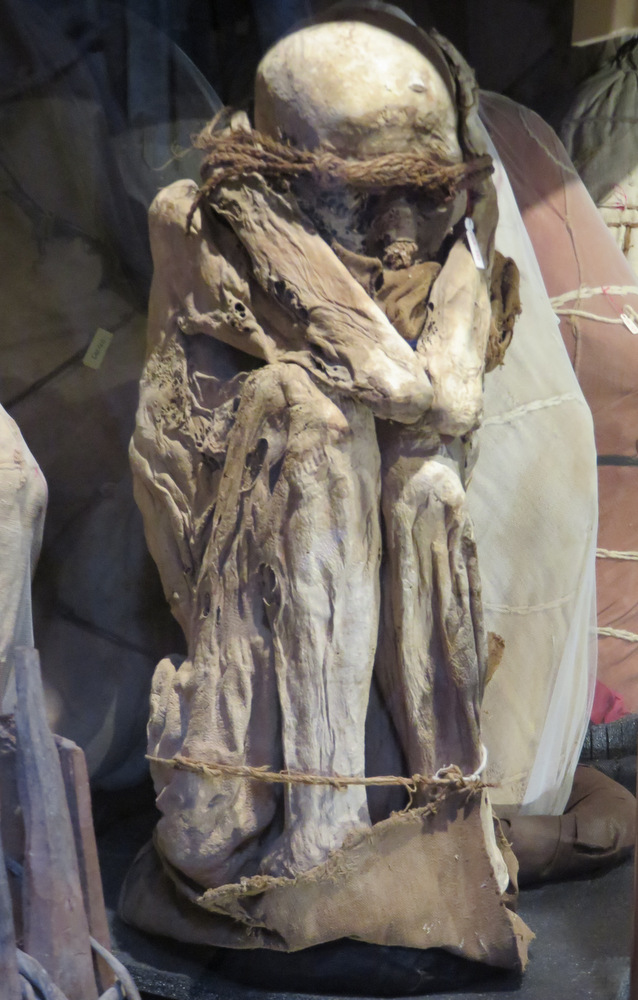
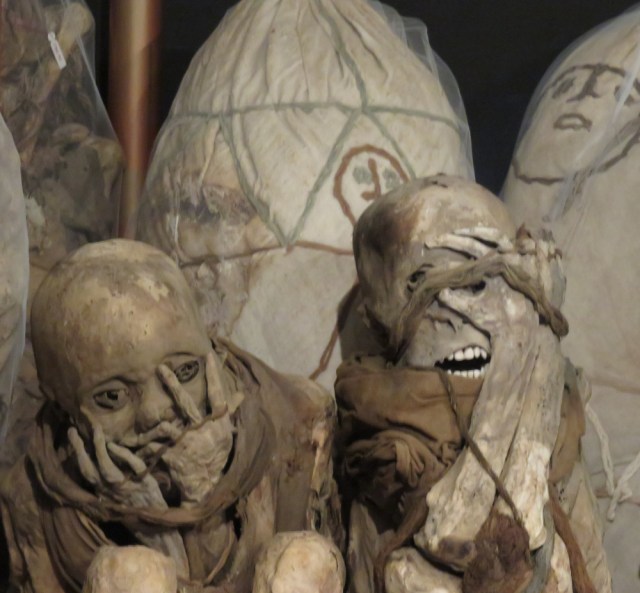
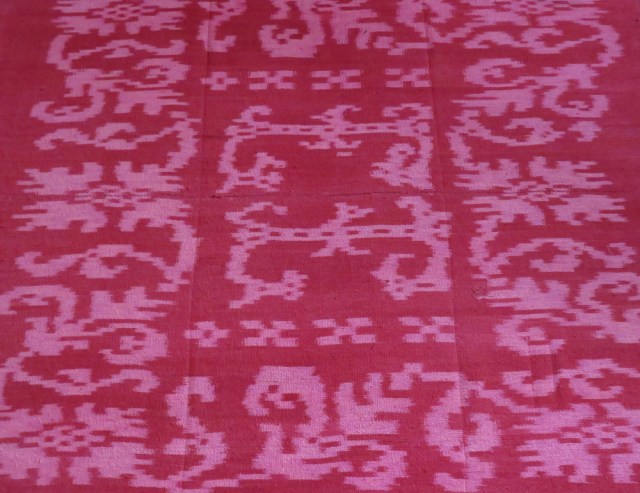
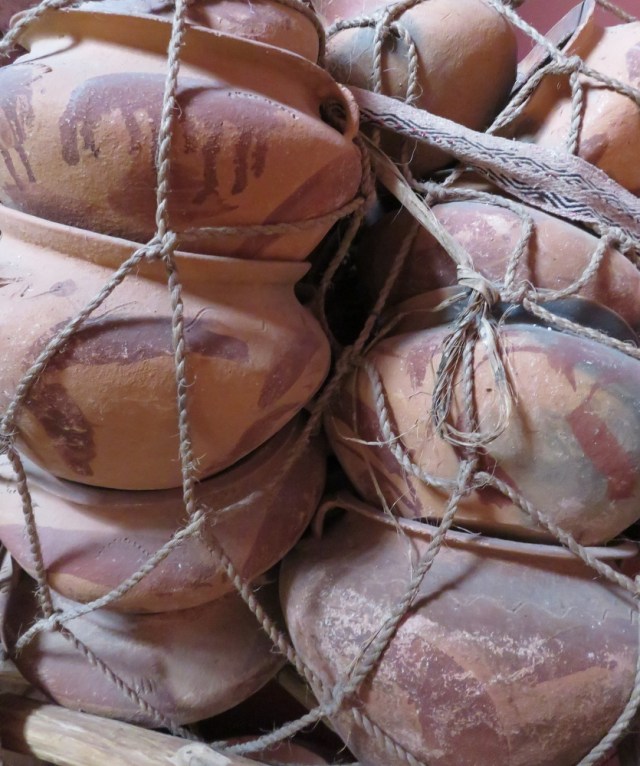
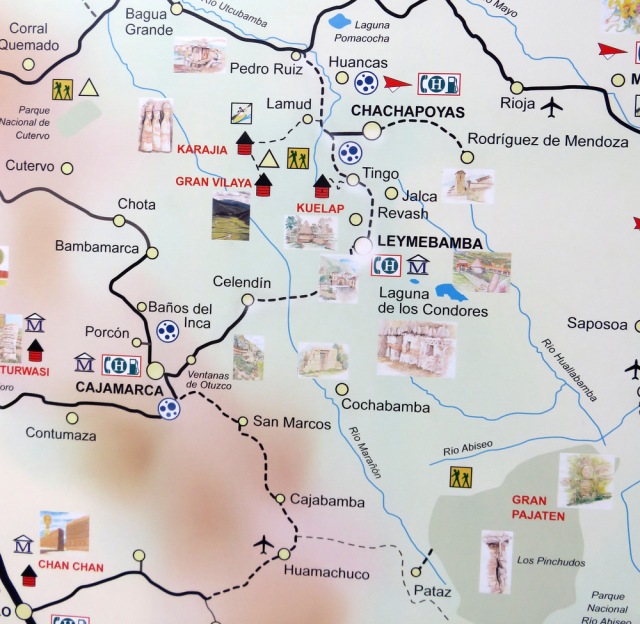
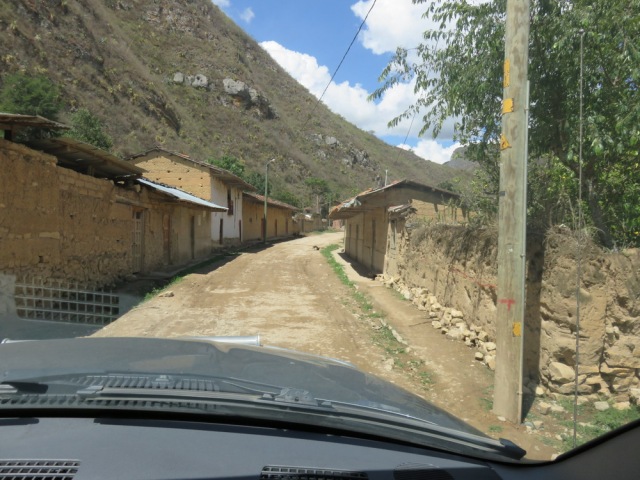
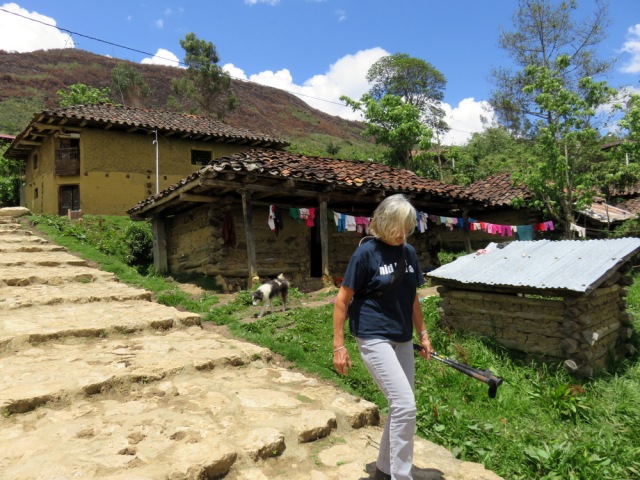
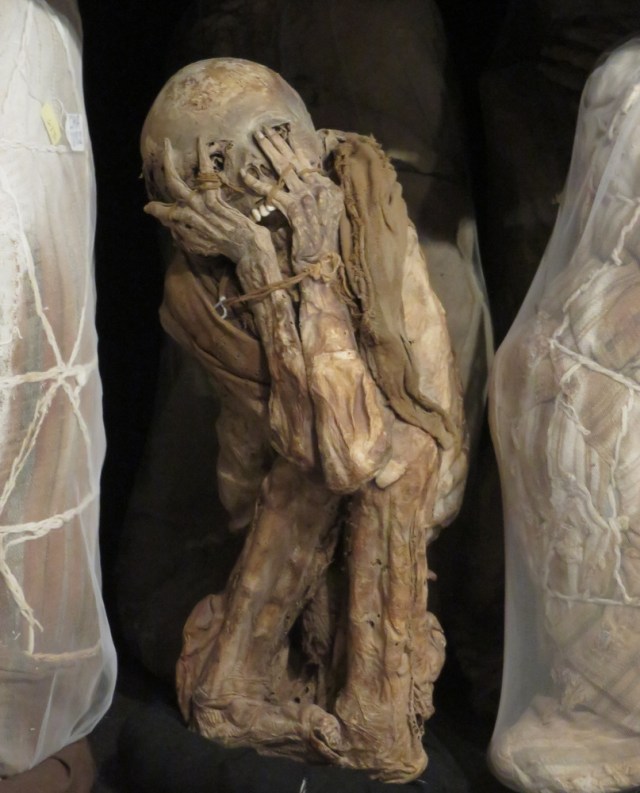
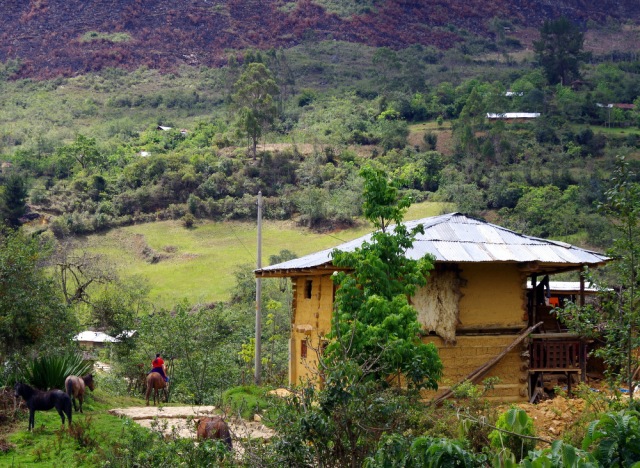
After a visit to the museum in Leymebamba we drove up to Calla Calla pass and spent a foggy, quiet night tucked away near the road. The museum in Leymebamba is well worth a visit, it displays mummies and other items from the tombs (that had not been raided yet) of Chachapoyas.
IMG_3211

IMG_3208

IMG_3210

IMG_3217 IMG_3215

The fog on the pass lifted in the morning and after a nice morning walk up the hill and a beautiful sunrise we headed down the other side. West, toward the Peruvian coast.

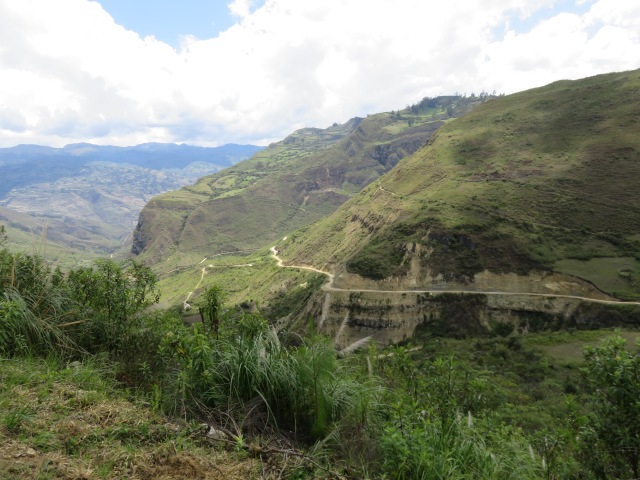
Several hours of white knuckle driving brought us from the pass at 3600 m down to hot La Balsa at 800 m, the river valley is lush with mango trees and palms. We bought some fruit and then wound our way back up to Celendin, on to Cajamarca and finally to the Pacific Ocean.

The coast is barren and windy, with big rolling sand dunes and the occasional desolate town. The windblown garbage and thousands of poultry farms from the San Fernando company dominate the scene. No wonder they seem to live on “arroz con pollo” in these countries.

They produced 45 million fryers a week in 2013, and probably more now.

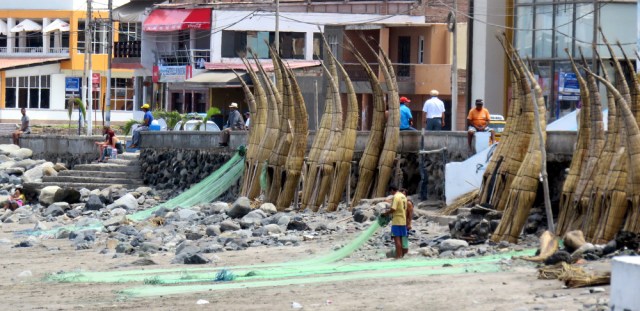
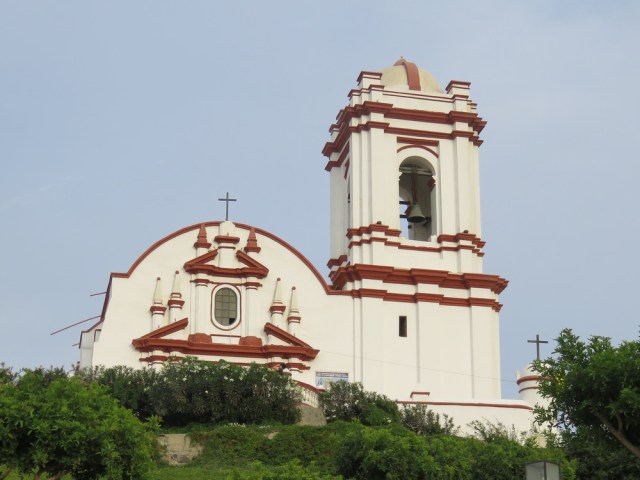
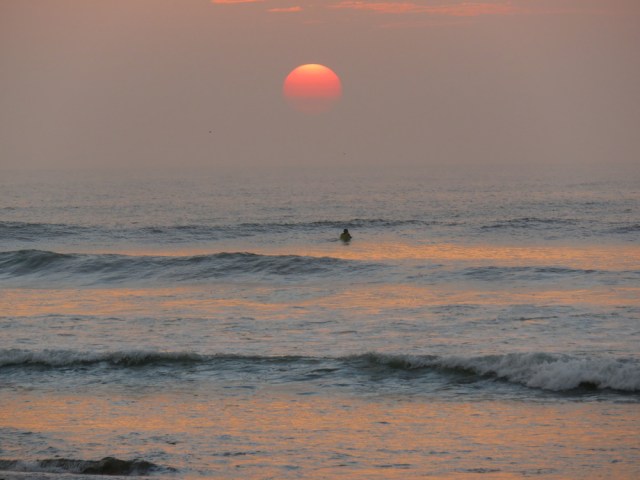
We stopped in Huanchacho – north of Trujillo – , camped in the garden of a little hotel and decided to explore the town with the bicycles. There is one of the oldest churches of Peru, we drank our first “pisco sour”, watched the sun set over the ocean and the fishermen working on their nets. The reed boats are not in much use anymore, they don’t last long and there are just a few left in the harbor. The bars along the surf beach are populated with beach bums of every kind, the surfing is good they say, and living is cheap.We moved on. Wanted to drive up to the Cordillera Blanca, where there are snow-capped high mountains (Huascarán, 6,768 m , 22,205 ft), blue lakes, steep, verdant green valleys with forgotten towns and – you guessed it: More ruins.
IMG_3224

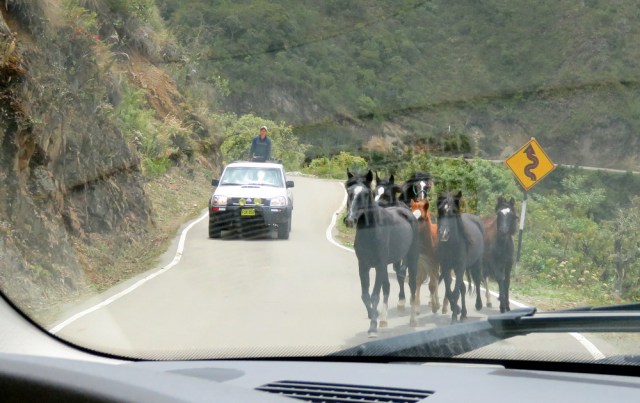
Modern Peruvian horse round up

IMG_3234-001

…and down the other side…..

IMG_3228

I hope there is not a crazy Peruvian bus around the corner, headed out way.

IMG_3227

IMG_3309

Celendin

IMG_3260

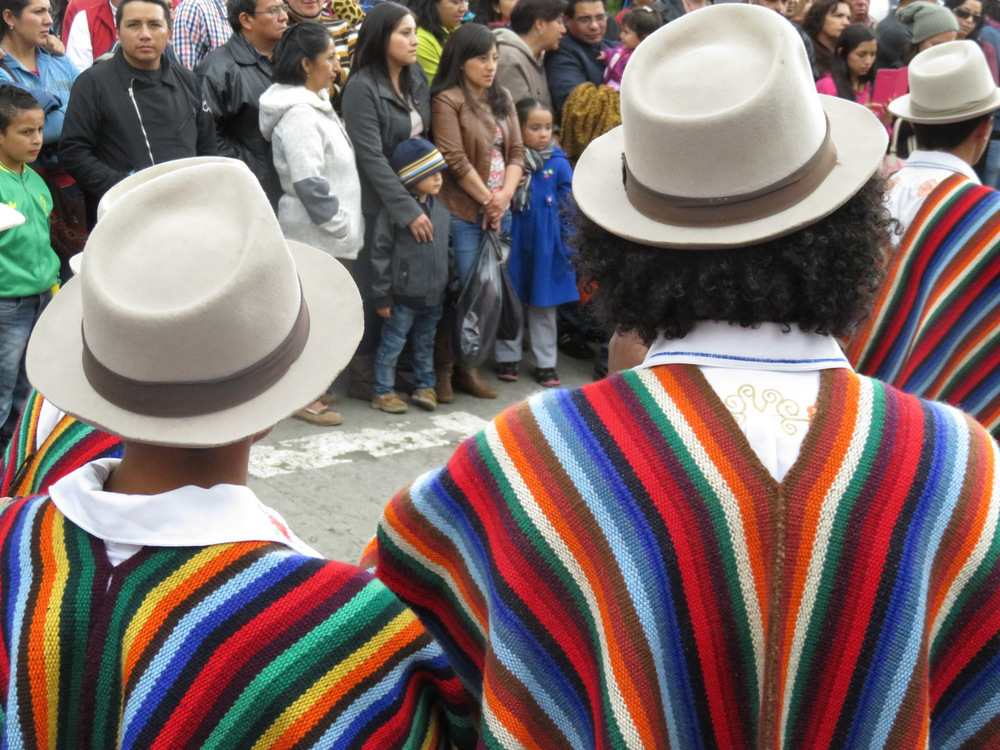
Can’t get over the hats

IMG_3349-001

IMG_3264-001

IMG_3291

IMG_3298

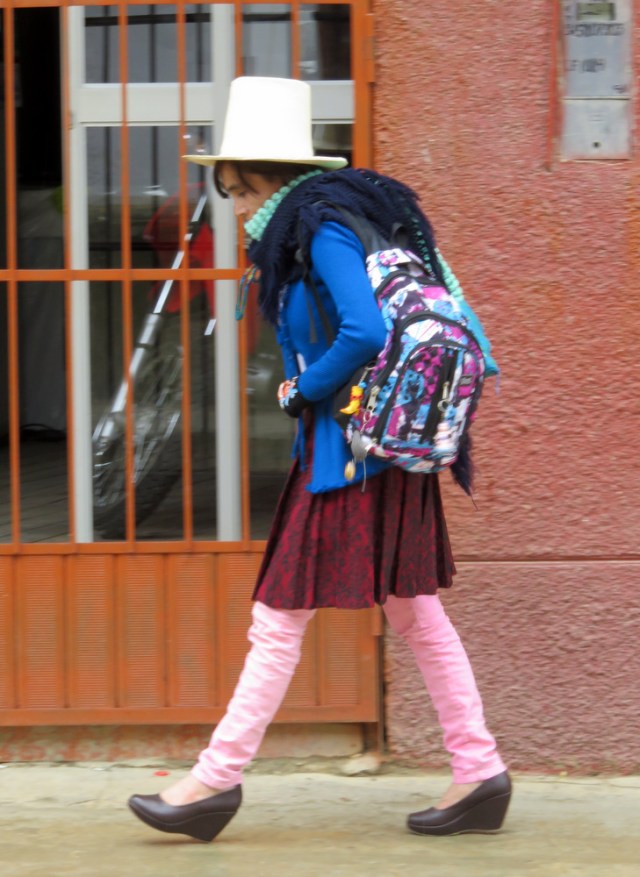
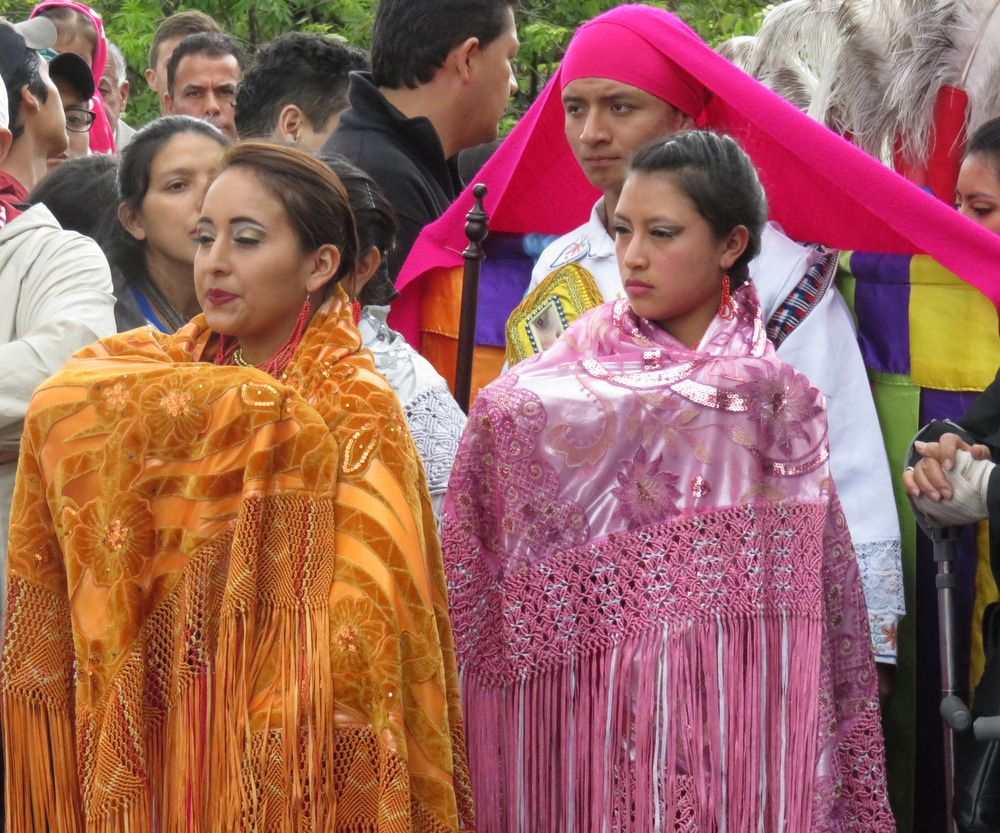
I loved the way she adapted the traditional style to her liking, could be Paris fashion


IMG_3316

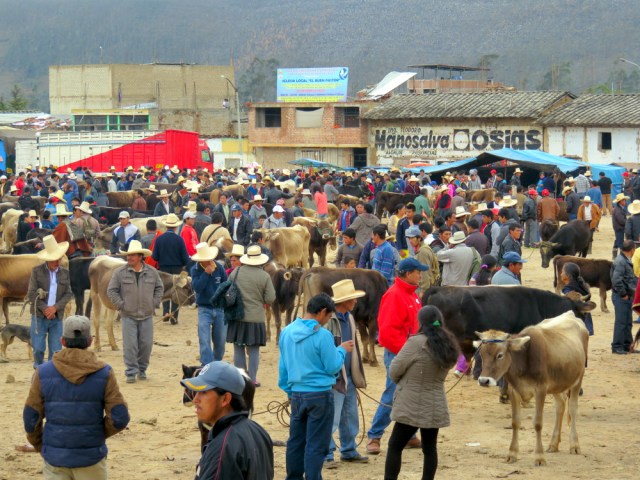
she came from the animal market so we walked over there
IMG_3320

IMG_3323

IMG_3341-001

He is thinking “Schwinsbrata”

IMG_3347

Paso Peruviano

IMGP5563

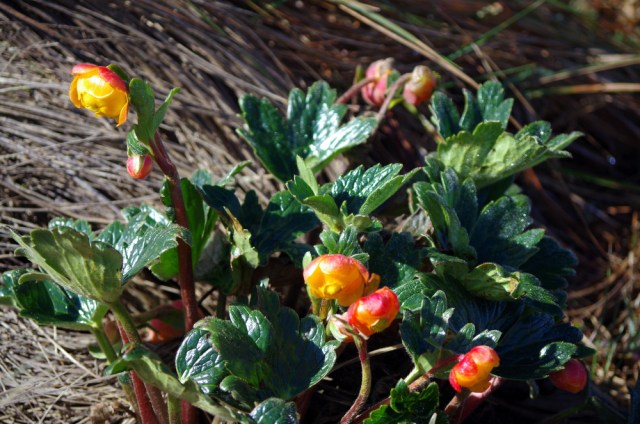
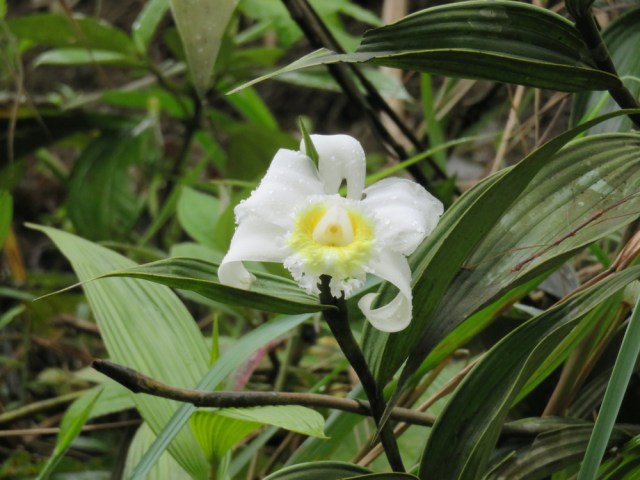
Flowers at Calla Calla pass

IMGP5565-001

IMG_3381 HUANCHACO

IMG_3378

IMG_3376

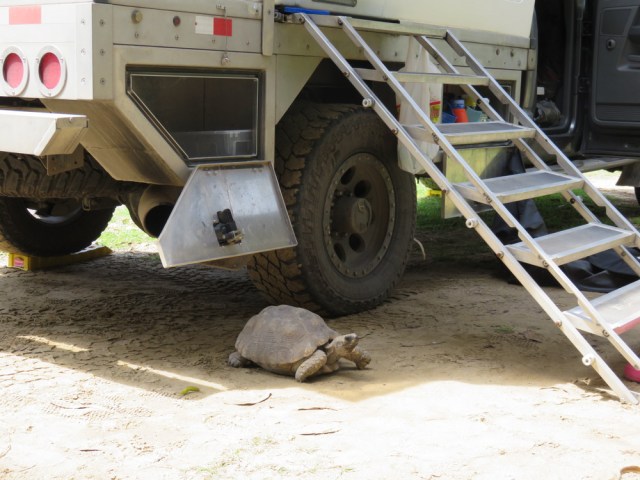
“Don Tortuga” liked our mangos

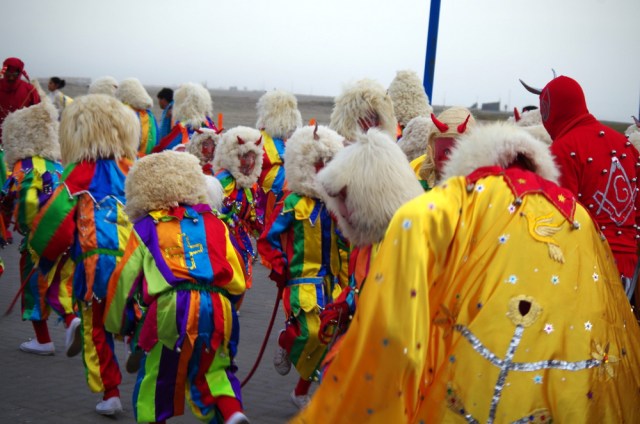
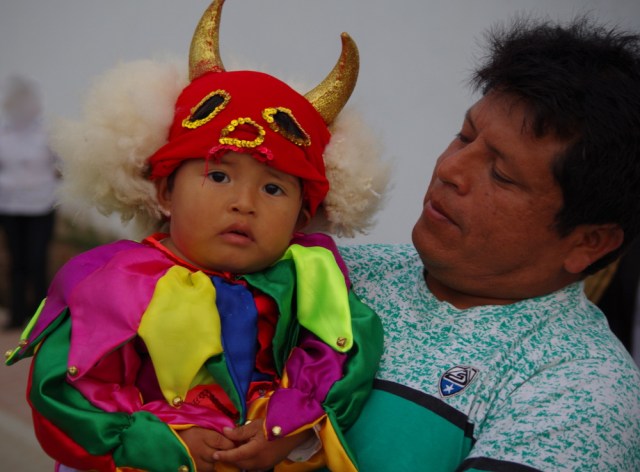
We never found out what this celebration was all about:

IMGP5589 IMGP5577 IMGP5574

IMGP5594

IMG_3385

Built between 1535 and 1540

IMG_3390

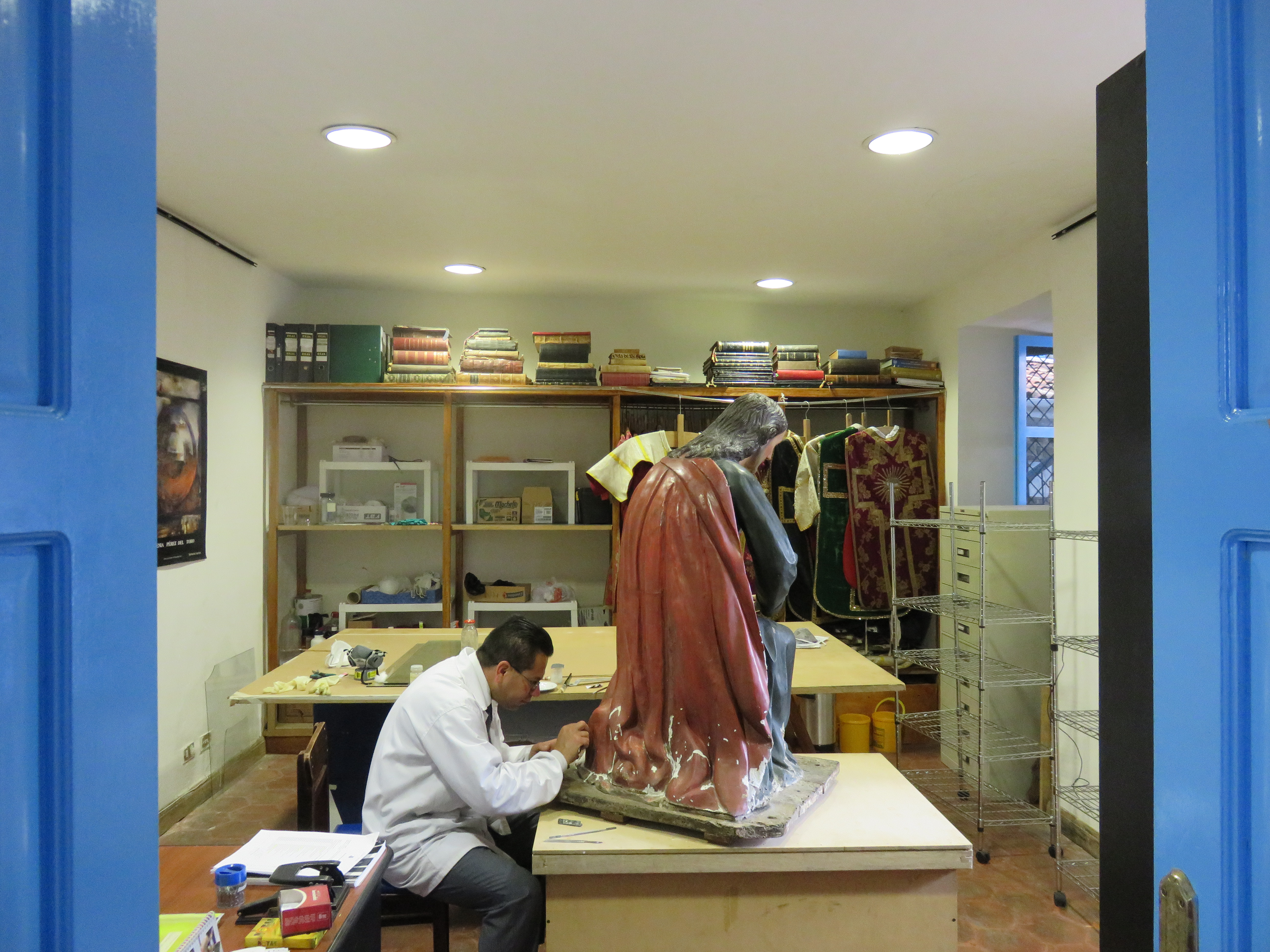
Priests outfits

IMG_3393

IMG_3401

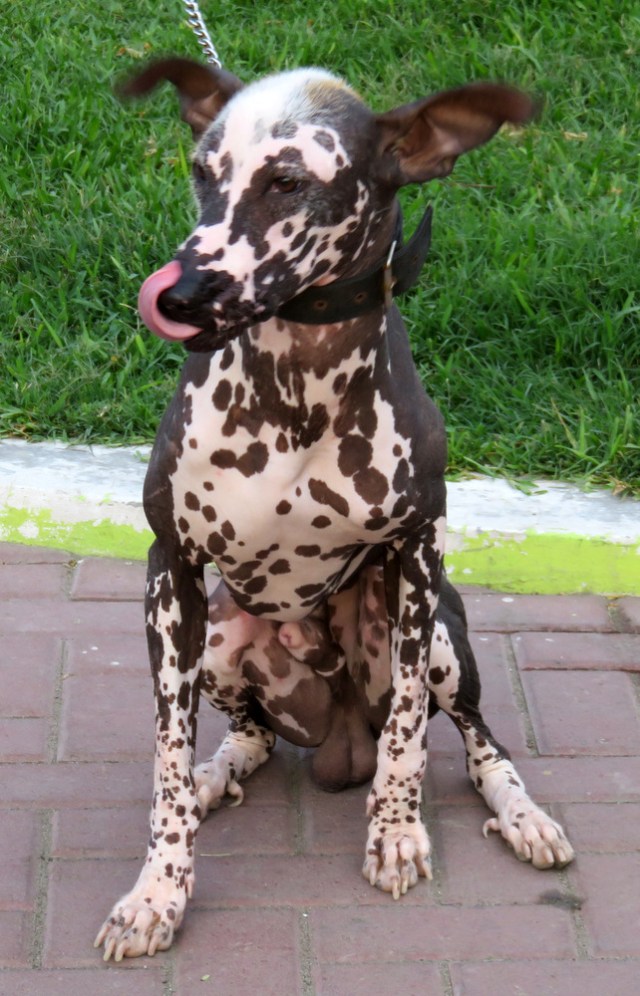
                                                                    (almost) hairless dog
IMG_3410

← Back

Thank you for your response. ✨


Posted in Peru | 2 Comments

Revash – Northern Highlands

IMG_3204


Revash, we decided, will be the  last ruin we would visit here in the Northern Highlands of Peru. You can’t see them all but even if you visit a few you get an idea about the past in these places. Next would be the Inca ruins around Cusco.

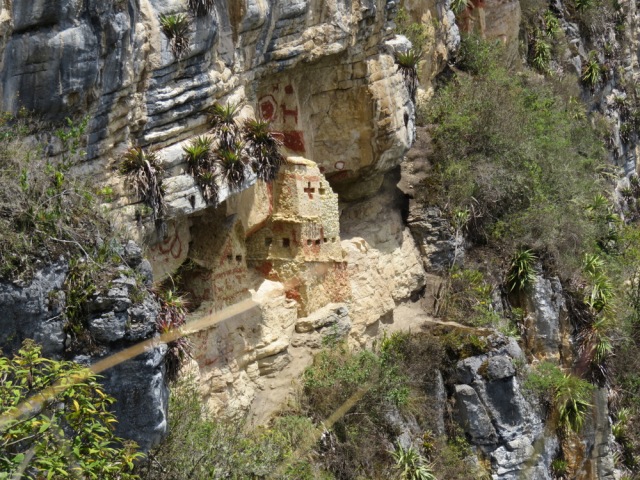
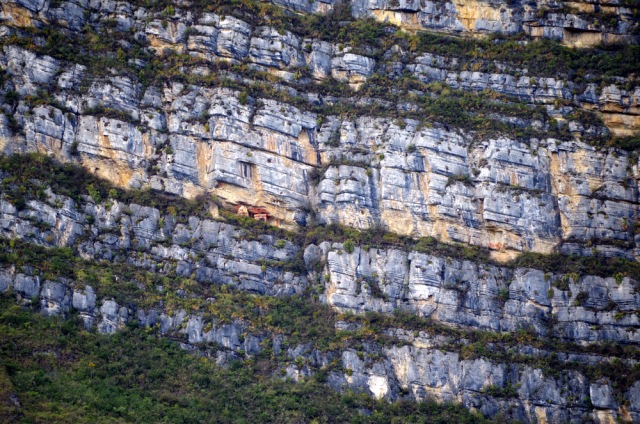
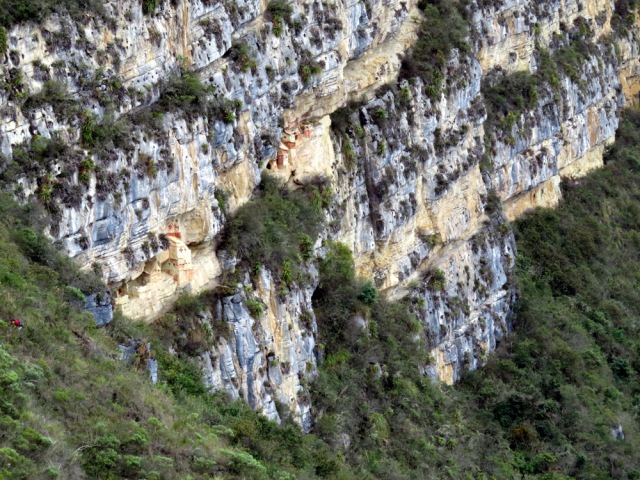
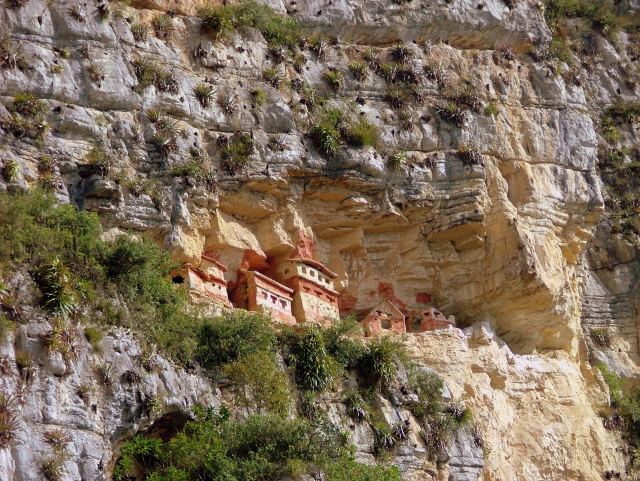
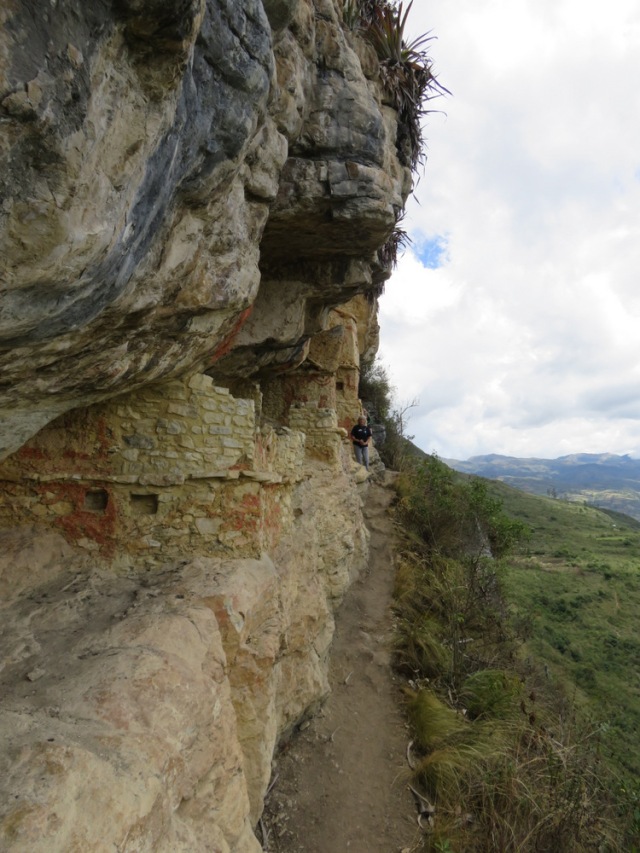
So up we drove again, past the trail sign for “Revash”, we had read that the hike it long, steep and hot when the sun shines. There is a fairly new dirt road that leads to the little town of San Bartolo. From there it is an easy hike over to the rock cliff where there are many colorful little houses wedged into cliff ledges and cracks. They are not homes for the living though, they are funerary buildings and used to hold mummies. Years ago they were looted by grave robbers and all that remains are the structures. We parked in the square of San Bartolo and hiked through the town toward the cliff. I was glad I brought the hiking poles as the trail got a little steep and narrow and the drop off got bigger. Finally we were there, there were many little structures up high and below us. Some were not accessible, it must have been quite a feat to make it to those ledges and hold a funeral.

Also below us we saw two people resting and called down to them. It turned out they were two young backpackers from Germany, they had come up the long way and were surprised to hear from us that there is an easier trail. Later they hiked down again, missed their bus and got a ride from us to Leymebamba.

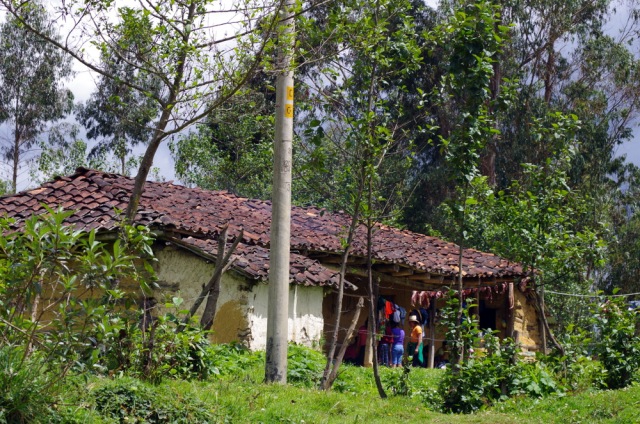
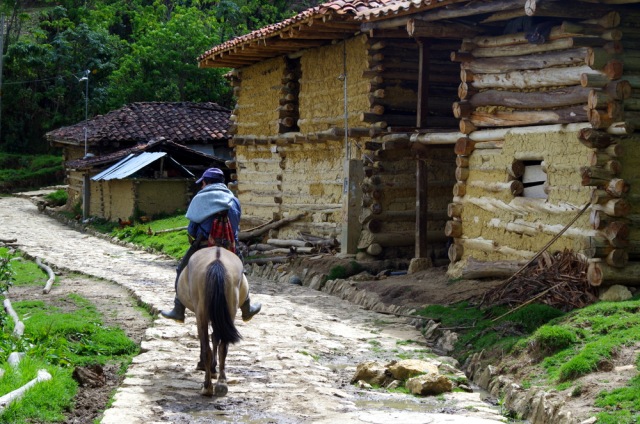
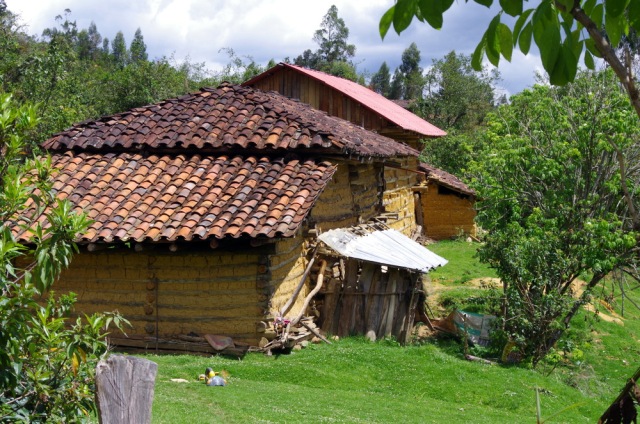
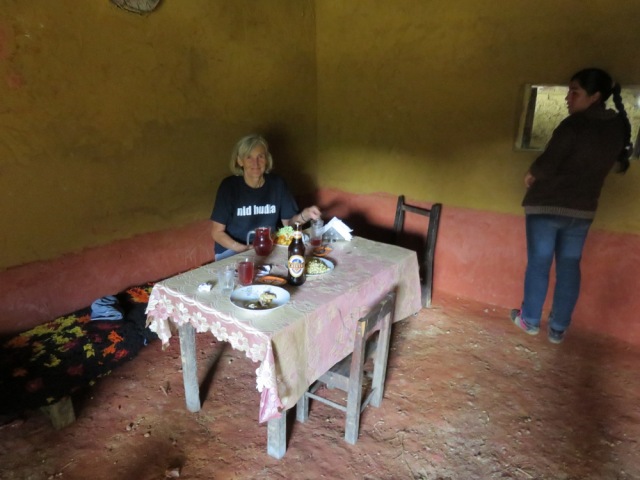
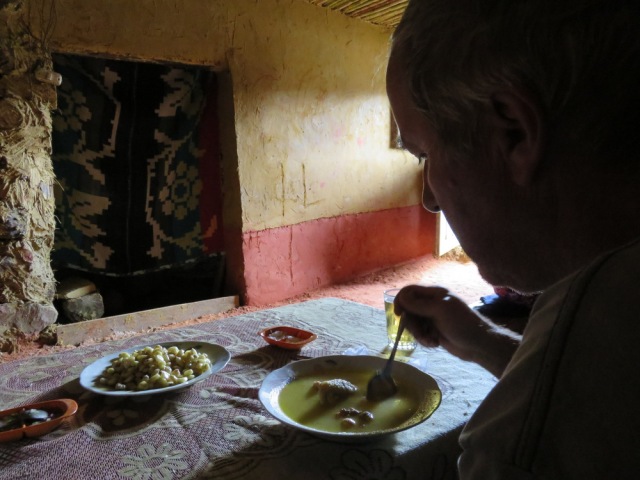
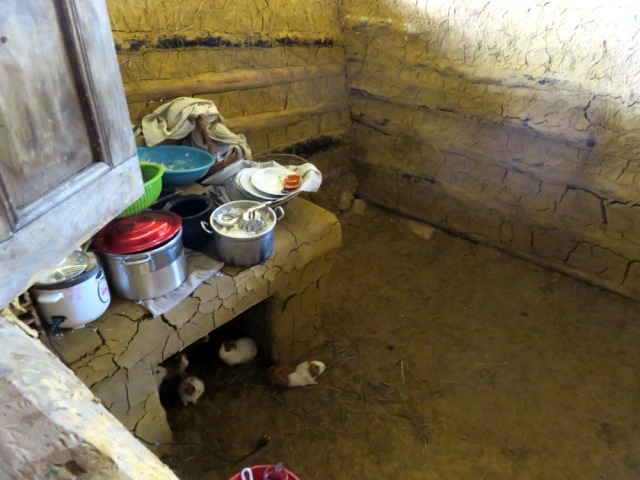
While we enjoyed the ruins I have to say that the little town of San Bartolo was just as interesting to me. Traditional houses, laid back people, children playing in the square. So I took my time walking back from the ruins, made small talk with some locals and enjoyed the goings on the cobble stone trail. Meanwhile Günter, always hungry, went ahead and tried to find out if we could get lunch somewhere in town. Well, the town is to small for a restaurant, but he found lady and her daughter that agreed to cook as a lunch. The houses are built of clay/straw/wood and have few if any windows. We entered their house and it took a while for our eyes to adjust to the darkness. Sparse furniture on earthen floor is all we could see. The ladies were very nice and produced some toasted hominy, a soup and the standard rice, potatoes and chicken on a plate. It was good, the kitchen is semi outdoor and just as sparse, a fire in the stove, stacked dishes and a gaggle of guinea pigs running around.

A special little town.

IMG_3147

and up again

IMG_3192

the road we came up on

IMG_3150

IMG_3157

plowing time

IMG_3156

leaving San Bartolo for the ruins

IMG_3164

IMGP5556-001

IMG_3161-001

revash

IMG_3168

IMGP5538

they were butchering when I came by, on my way back the meat was hanging on the clothes line

IMGP5539

a brand new house

IMGP5546 IMGP5544 IMGP5543 IMGP5541

IMGP5553

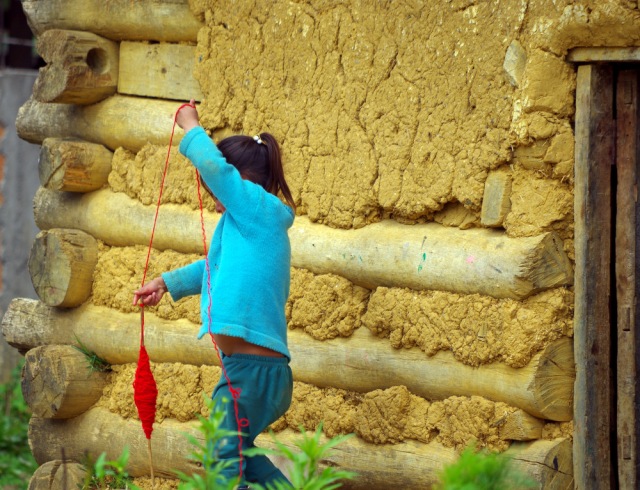
practicing spinning

IMG_3152

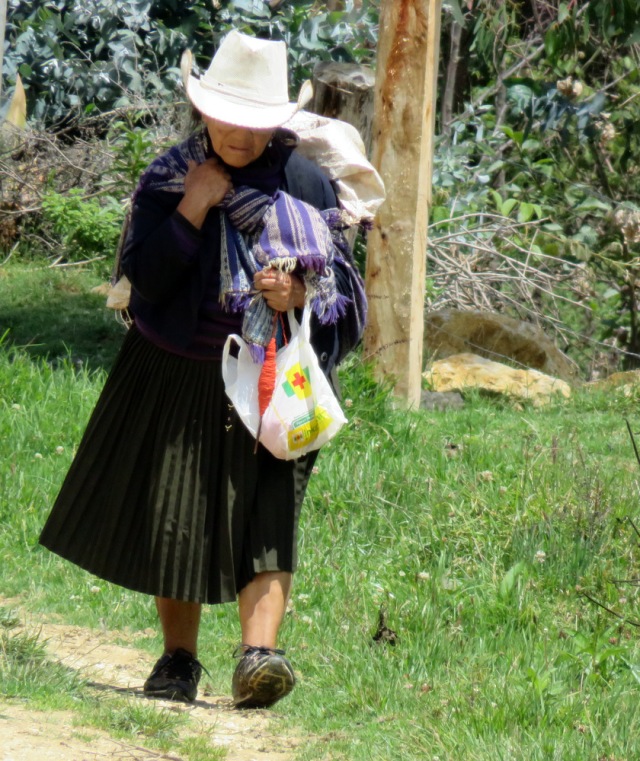
never leave home without your spindle or knitting project

IMG_3181

lunch time

IMG_3180

toasted hominy and soup for starters

IMG_3187

the kitchen

← Back

Thank you for your response. ✨


Posted in Peru | 5 Comments

Kuelap – Northern Highlands

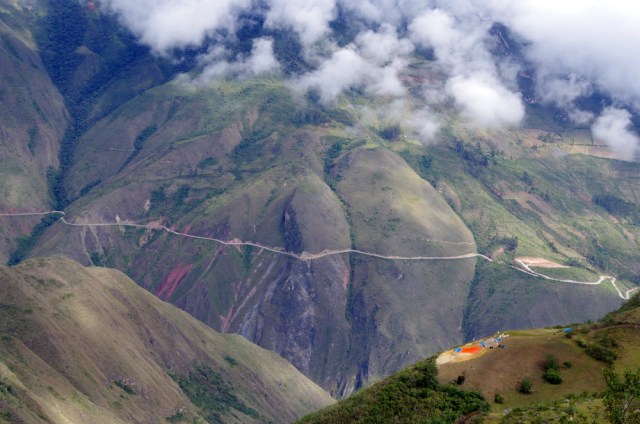
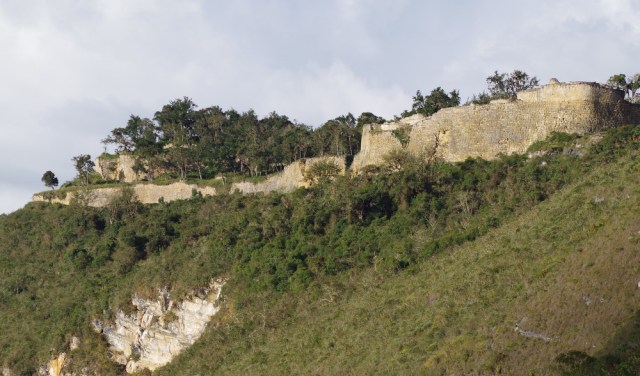
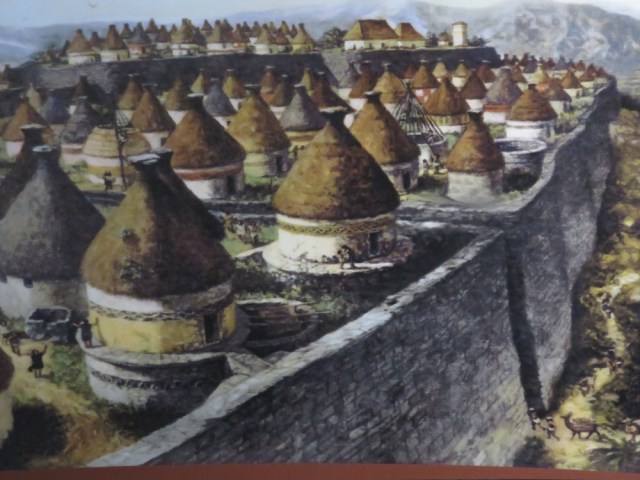
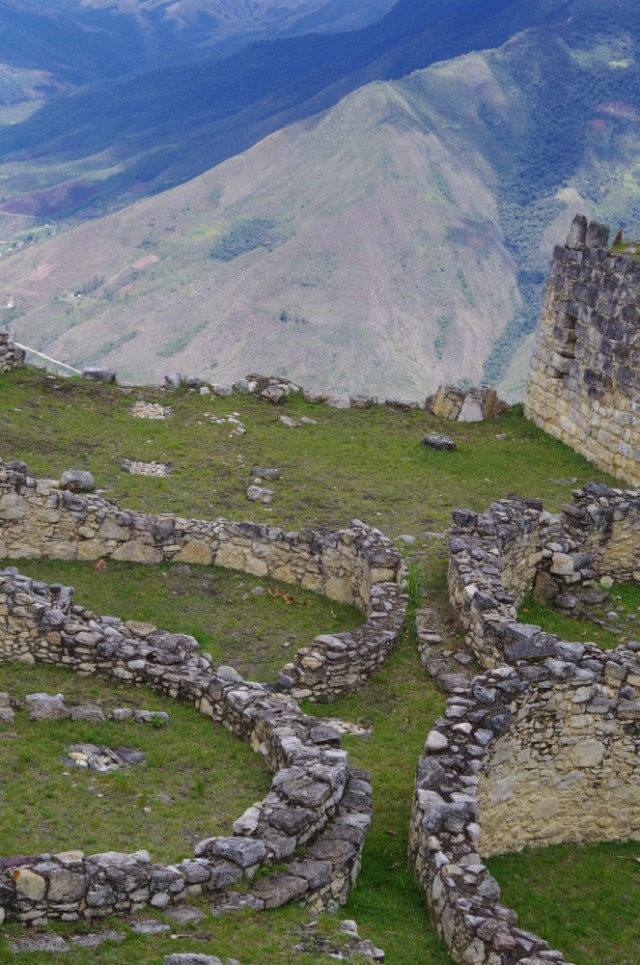
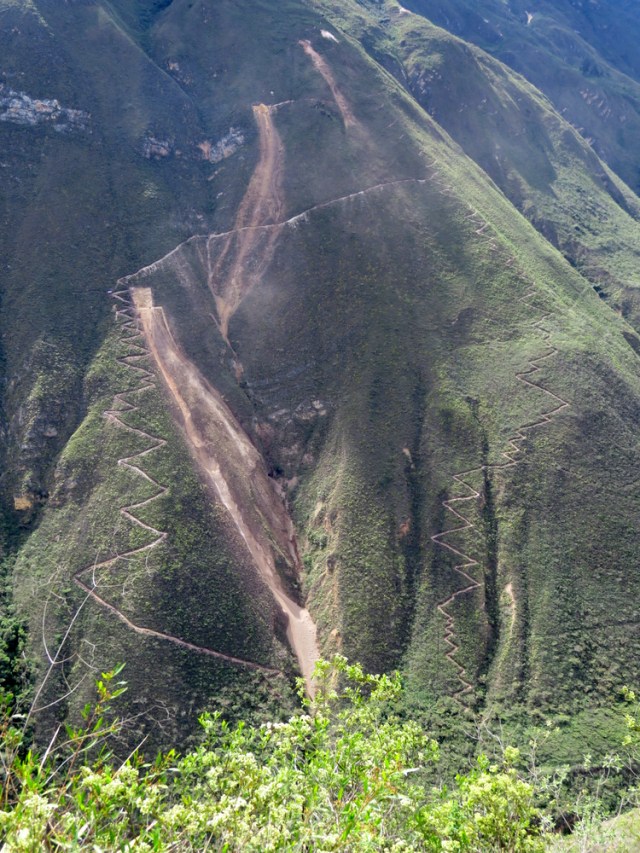
Kuelap, fortress in the clouds. (3000 m) The Chachapoyas culture inhabited the highlands before the Incas came and they left behind interesting ruins and graves, thirty known but many yet to be discovered. Driving up to the hilltop city ruins of Kuelap was amazing by itself. The road hugs a steep mountain and is very narrow, I was glad we did not meet much oncoming traffic. Once we had the worst part behind us I got a chance to look up and saw the remnants of the cloud forest that once covered these mountains as far as you could see. It still houses wild animals like spectacled bears, tigrillos and many – many birds, sadly, there is not much left of that forest. Reforestation is often done with Australian eucalyptus trees or pines. I don’t like the eucalyptus trees, bromeliads don’t like them either, and I never see birds nests in them.

IMGP5453

The road up, on the lower right a site for a cable car tower


IMG_3134

That scary road


Chachapoyas means “People of the clouds”. Kuelap has a nice little visitor center and quiet parking lot. Since the drive up there is not for everybody, it does not get many visitors. We were allowed to stay in the parking lot and spent two nights there, beautiful and quiet.

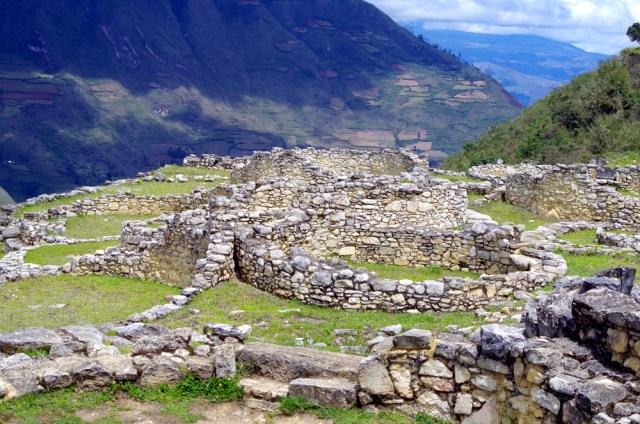
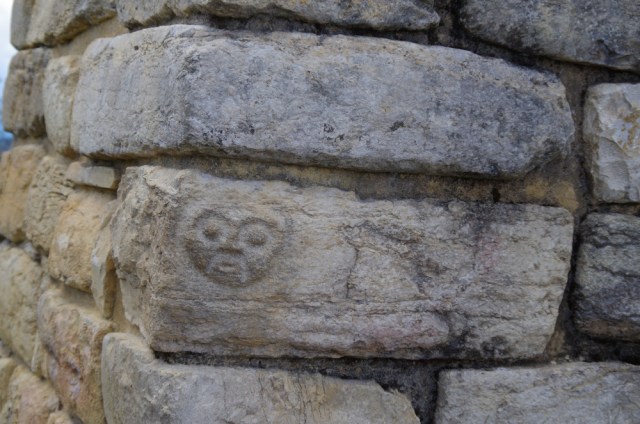
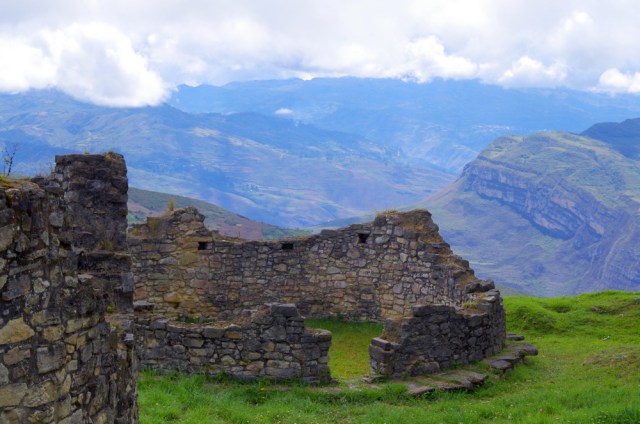
The ruins were beautiful and very impressive, pre-Columbian built around 500 to 1500 AD. We spent most of the day wandering around sitting on ledges and tried to imagine what it was like when they were inhabited so many years ago. All the houses were round with thatched roofs. The kitchens had separate walled off corners where the guinea pigs were kept. The guinea pig was first domesticated as early as 5000 BC for food, the people in the Andes eat them like we do chicken or other domesticated animals.

The views in all directions were expansive, with cloud forest and patchwork quilts of fields everywhere. Other than a few llamas and archeologists, we had the place to ourselves most of the day.

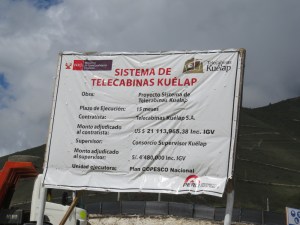
There is some excavation of another kind going on beside the visitor center, the government of Peru decided that Kuelap needs to get more tourists and tourist money. They call it the second Machu Picchu and are in the process of building a cable car (together with Doppelmayr from Austria) up there from the town of Tingo Nuevo. They plan to be operating in 2016 so we are glad we came here when it was still peaceful and quiet.

IMGP5517

IMGP5460

IMGP5489

IMGP5505

IMG_3126

IMG_3117

IMGP5485

IMGP5495

IMGP5479

IMGP5497

IMGP5462

IMGP5518

IMG_3143

IMG_3140

The trails are being used by workers who excavate the sites for the cable car towers.

← Back

Thank you for your response. ✨


Posted in Peru | 3 Comments

Karajia – Northern Highlands

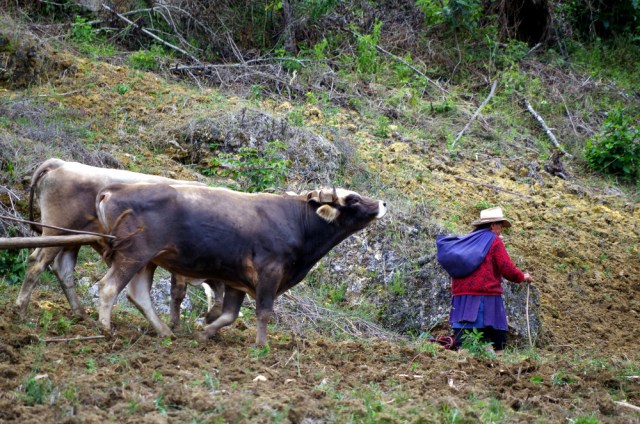
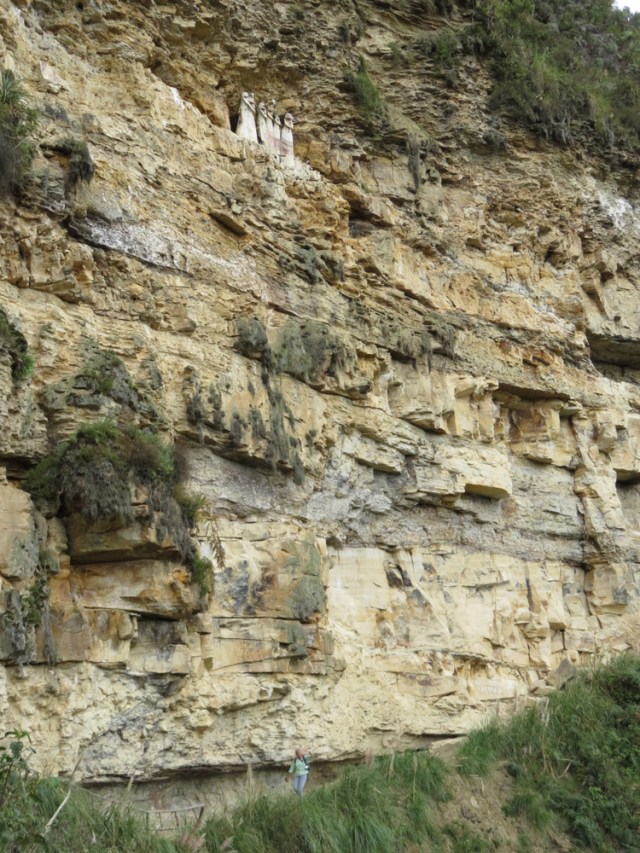
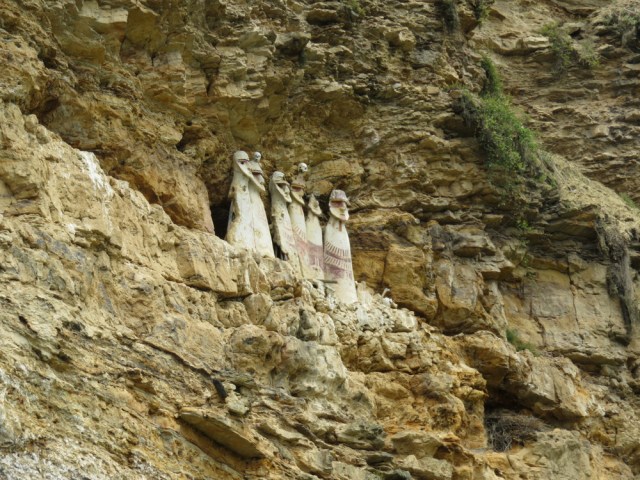
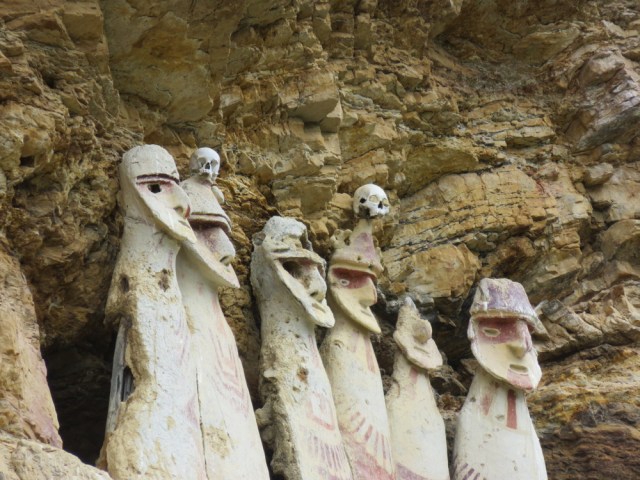
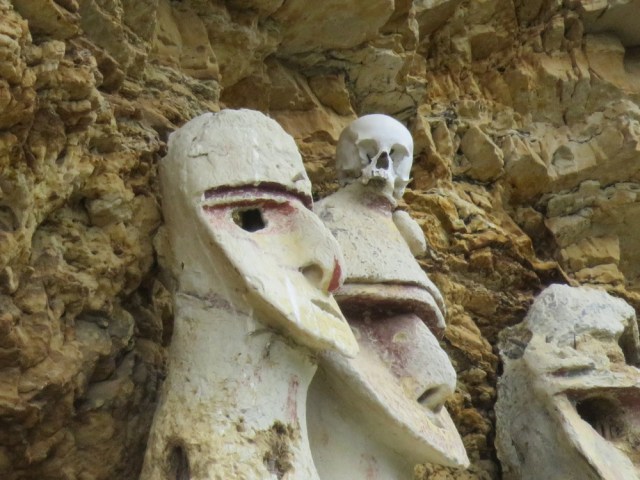
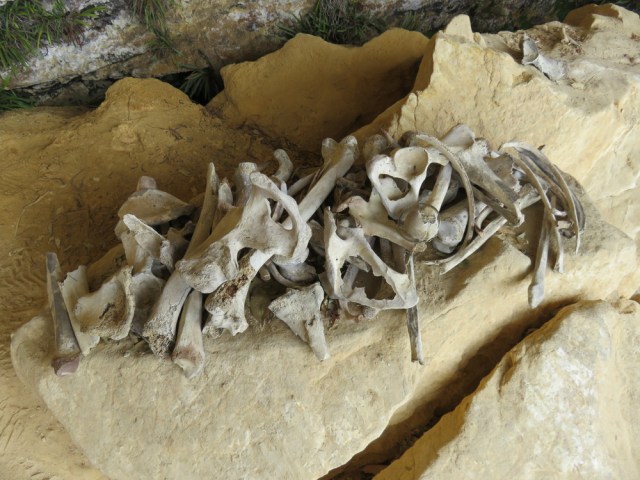
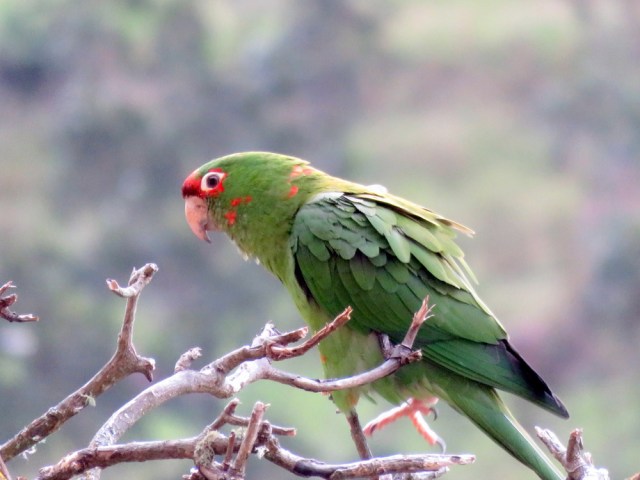
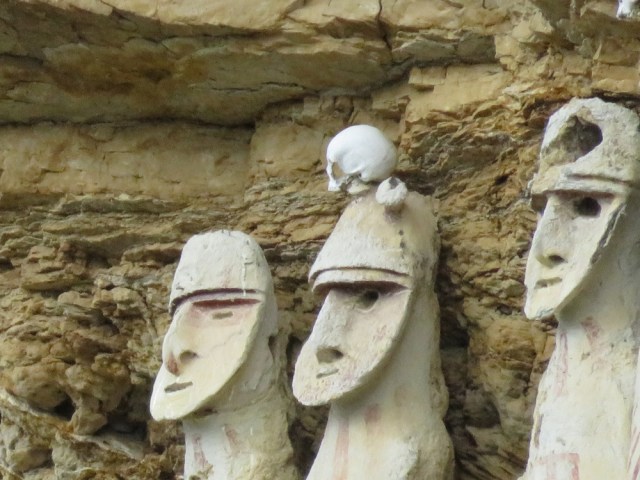
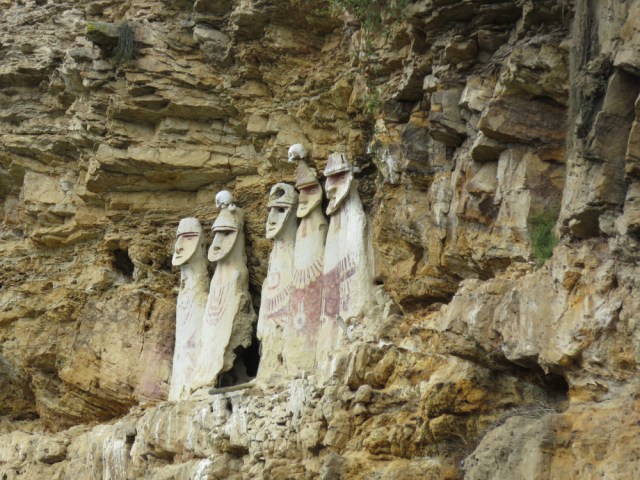
There are quite a few ruins and other archeological sites in Peru that are much older than what Peru is most famous for, Machu Picchu. They are remnants of a civilization who inhabited the land before the emergence of the Incas. In the Northern Highlands there are several very interesting sites and we decided to visit a few of them. The first one is near the little hamlet of Cruz Pata, as we drove through the long valley south along the Rio Utcubamba we looked up to the mountains on both sides and saw the windy roads snaking their way up to the high plateaus. Up there is a different world, sleepy towns, friendly people walking along the roads, the women usually spinning with their spindles or knitting while they walk and socialize. Children splashing in the creek and men plowing the fields with teams of oxen. We always greet and wave to the people we pass and most of the time they wave back. At Cruz Pata we parked, a local lady charged us 5 soles per person to hike to the canon where the six sarcophagi are situated. A one hour nice hike down brought us the a cliff where we got a great view of the figures are sitting on a ledge overlooking the valley. They are long faced human figures made out of straw and clay supported by a wooden frame, much like the houses. Behind the figures are their coffins that house(d) mummies. A very impressive site, the rock cliff is also home to a flock of green parrots as well as a pair of falcons, their nest is perched under an overhang. Two little heads were eying us strange tourists as we walked underneath. The hike back was steep and two ladies came down with their horses to offer us a ride up, it is a way for them to make a few extra pennies. Günter did a lot of driving on crazy roads that day, because we decided not to stay, but instead drove back to down to the river valley and up the next dirt road, to mountaintop fortress Kuelap, our next destination.

IMGP5451

Tourist at Cruz Pata


IMGP5529

IMG_3070

IMG_3045

IMG_3048

IMG_3049

IMG_3065

IMG_3068

Red spectacled parrot

IMG_3060 IMG_3058

← Back

Thank you for your response. ✨

Posted in Peru | Leave a comment

Gocta waterfalls – Northern Highlands

The border crossing to Peru in La Balsa was easy, we were the only vehicle there at the time. The officers were friendly and efficient, nice. On the Peruvian side the road was paved, we drove to Jaen and bought the insurance. Jaen was so ugly it was interesting, while Günter waited in the truck I walked several blocks and across a bridge (they think it is a garbage shoot) to the insurance office. Buying the insurance was easy and on the way back I walked a different route, the town is considered off-limits to tourists and one would not want to camp here. I was glad to crawl back into the truck seat and leave the mess behind. You can’t choose what part in the world you are born into, but I am thankful that in my case it was a little mountain town in Austria. So we left this city behind and were off to the mountains again,  dying to go for a nice hike. Our Lonely Planet guide-book from 2013  described the Gocta waterfalls and hiking possibilities. The drive was nice and we ended up at the little town near the waterfall, parked beside the park office/ soccer field/town center and hiked to the falls. The trail is well maintained and the hike beautiful, a little steep in places. But one can rent a horse for the first two-thirds of the distance and then hike the rest.

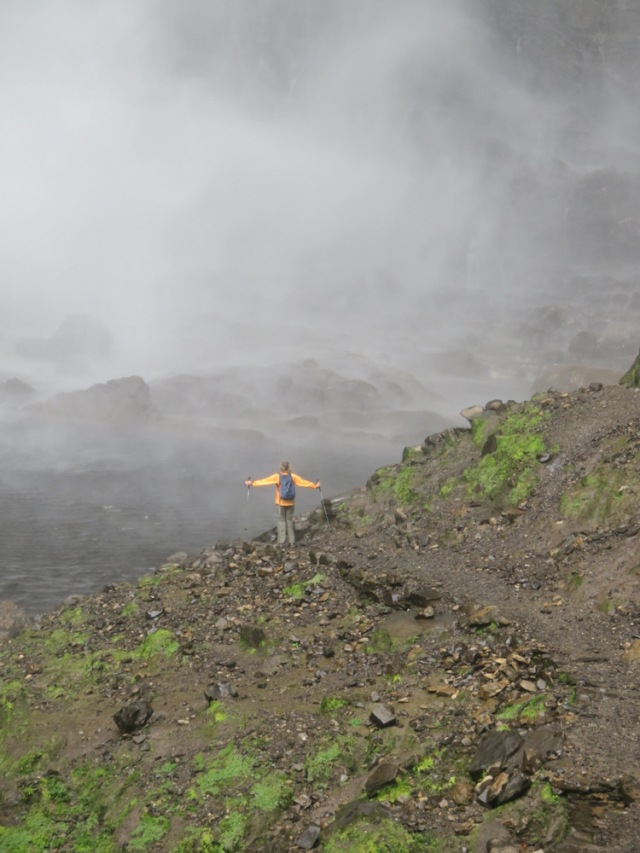
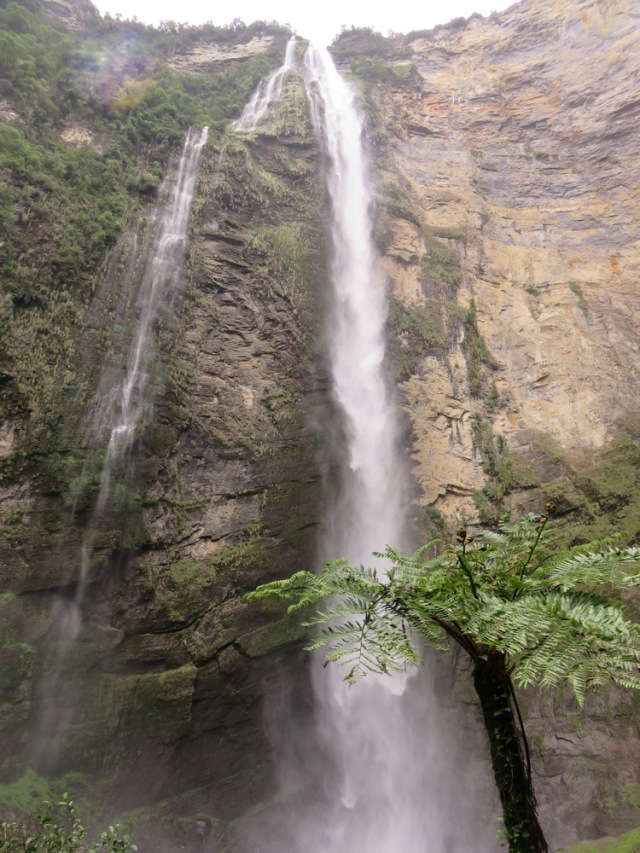
The falls were beautiful and invigorating if you stood close enough, the water comes over the edge and by the time it arrives at the bottom it is mostly mist.

IMGP5403

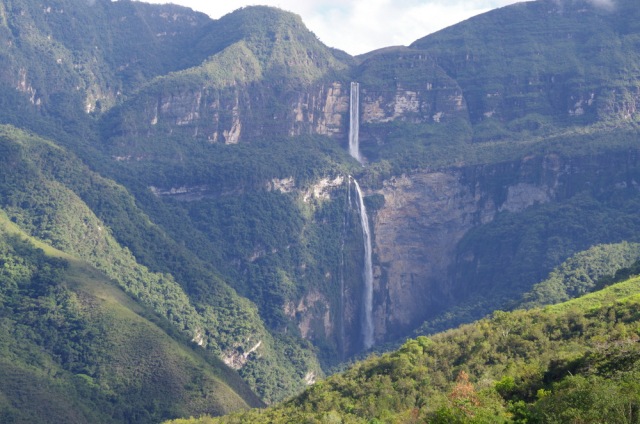
The falls: The total height was measured at 771 m (2,530 ft), which rankes Gocta as the third tallest free-leaping waterfall in the world.

IMG_3015

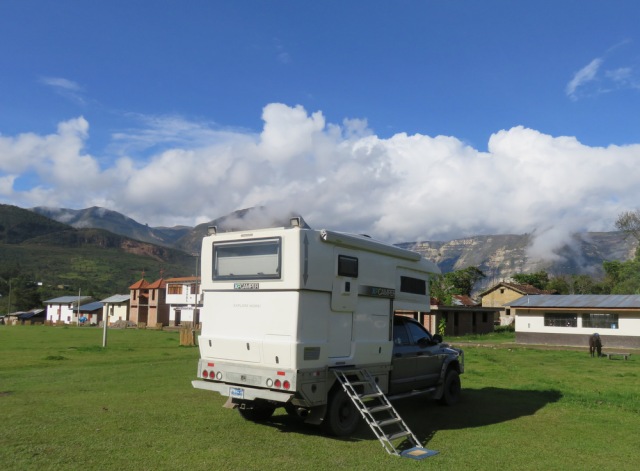
Nice camp spot in town.

IMG_3016

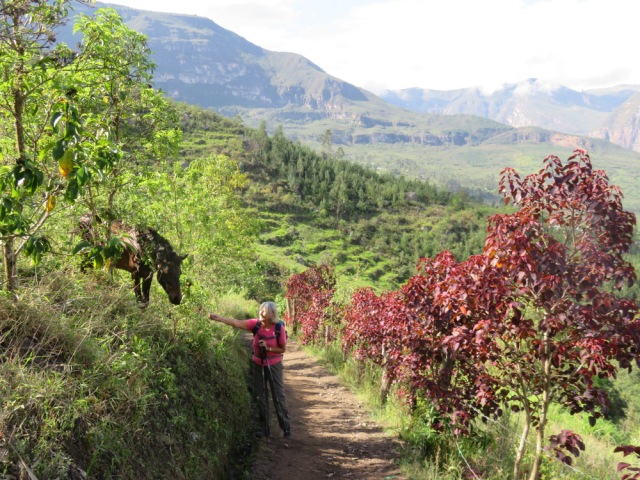
On the trail to the falls.

IMG_3038

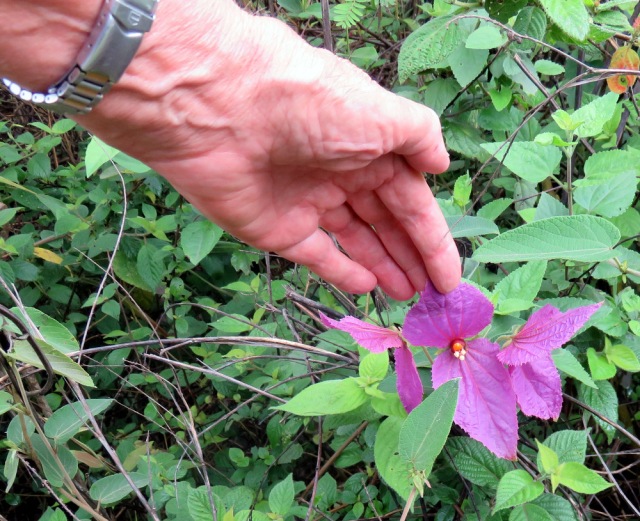
Unusual vines.

IMGP5425

IMGP5431


IMG_3023

IMG_3029

IMG_3032

IMGP5399

IMG_3028

← Back

Thank you for your response. ✨


Posted in Peru | 2 Comments

Guadalupe, Chinchipe

Oh how great if felt to be on the road again, adios Cuenca. Refrigerator, fuel tank and water tank full, we headed toward the little town of Guadalupe in the Yacuambi valley in the southeast of Ecuador.

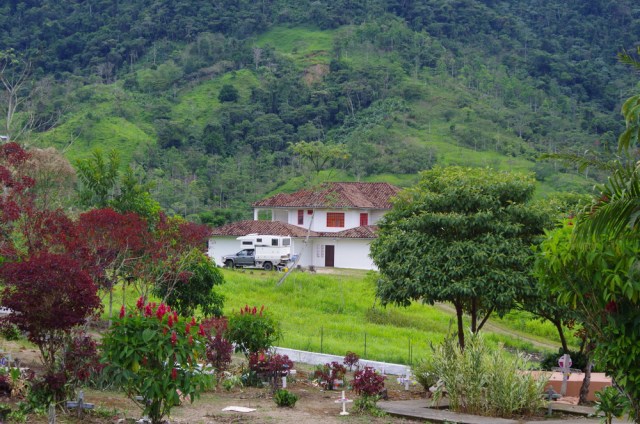
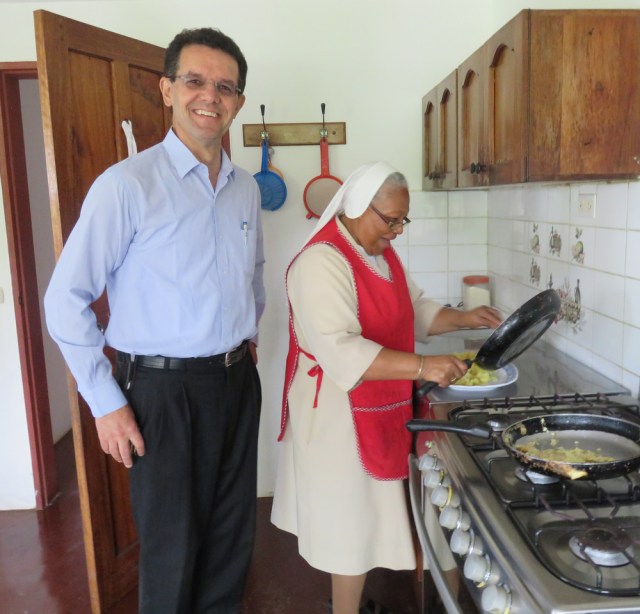
This little town has a great mission and hospital, staffed with volunteers from Europe and the US. Padre Jorge Nigsch from Schoppernau, Austria: “El Jefe” as the sisters at the mission call him, has spent the last twenty-five years here in the Amazon region and is busy with his congregation and the hospital. The mission is in a beautiful location across the river from the town itself. People come down from the hill towns to have their medical needs attended to, at any given time there are several physicians taking care of sick and insured people. When we were there a group of eight doctors and nurses were arriving from Germany.

Padre Jorge (Georg) welcomed us with open arms, gave us a great spot to park the camper behind his house and a key so we could use the facilities. I loved waking up in the morning, quiet except for the birds singing up a storm. The Amazon area is lush and wet, it rains almost daily, but if you are from Southeast Alaska you don’t even notice it. There is a dirt road into a side valley where there are several Shua settlements, I walked part way but did not want to bother them since they do not like to have their picture taken and do not like it if you take pictures of their poverty. I did not. We spent three days at the mission, ate with them and enjoyed talking with the padre and the visiting health workers. Vergelts Gott!

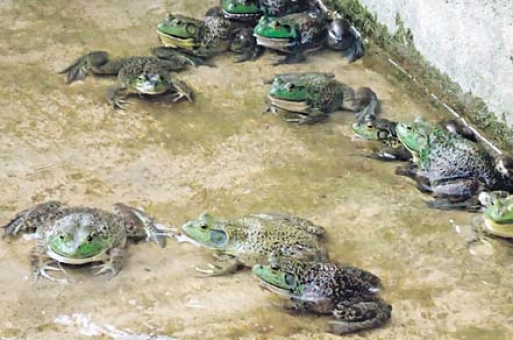
There are several frog farms in Ecuador and one of them is in the next town, Piuntza. They raise bull frogs and sell them restaurants, needless to say, in Zamora and around you can order frog anytime. But 80 % of their production goes to New York and Europe. Two tons a month between May and November.  They have breeding tanks, tadpole nurseries, wet and dry growing areas. Ramon Costa  has 15 warehouses, which contain around 300 000 frogs. They are covered by a fabric that allows the free flow of air to maintain an optimum temperature. The frogs grow best at temperatures between 24 and 29 degrees. The metamorphosis of a frog food lasts between 10 and 12 months, at which time it will be ready for sale, weighing 150-180 grams. Worth a visit.
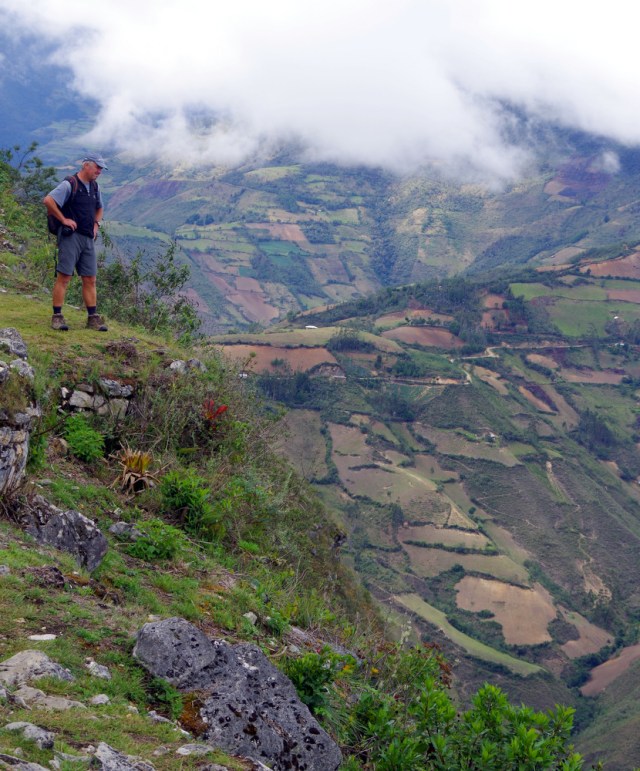
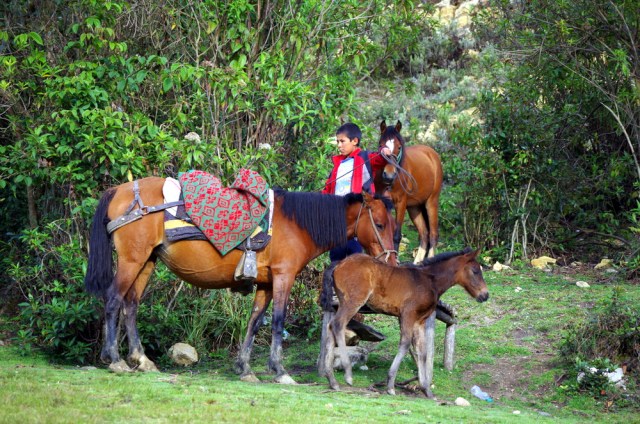
You can get to Guadalupe via Zamora, the drive from Loja is spectacular, with orchids growing along the road and the Podocarpus rain forest, countless waterfalls and lush hillsides. There is also a new road that leads from Saraguro east to Yacuambi (28 de Mayo) and the Yacuambi valley. Padre Jorge said that on a nice day it is spectacular up there “it makes you feel like you are in an airplane looking down”. From Guadalupe you can also explore the Nangaritza river, but we never did because rainy season was approaching in Peru and we wanted to move south. So we said farewell to Padre Jorge and the sister and left for La Balsa on the Ecuador/Peru border.

IMG_2942-001

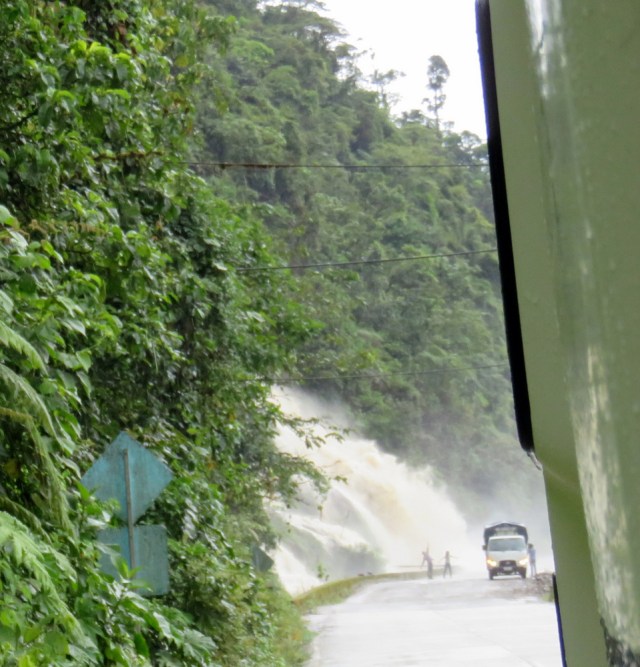
This waterfall at Podocarpus Park hit half the road after a rainfall.

IMG_2988

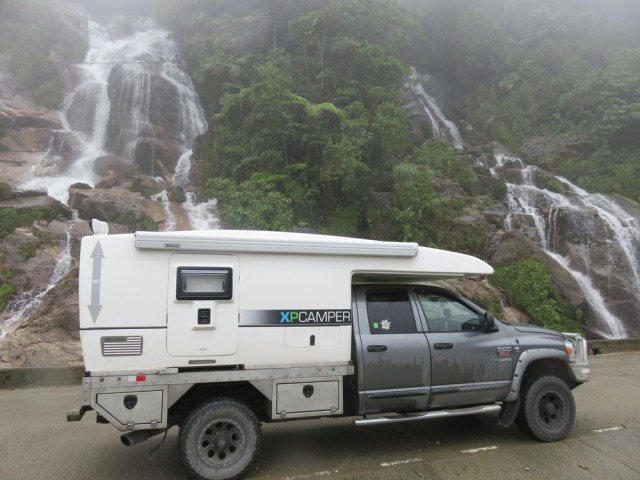
The same waterfall three days later.

IMG_2991

IMGP5378

Das Pfarrhaus. We had very quiet neighbors.

IMGP5376

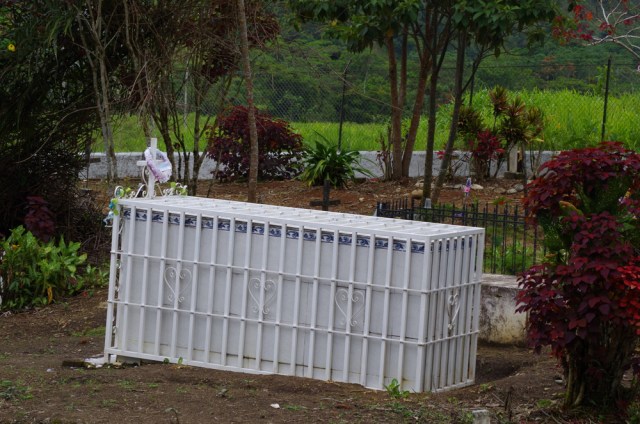
Four bodies were stolen from the graveyard and presumably sold. So tombs are frequently enclosed like this.

IMG_2952

El Jefe !

IMGP5394

A visitor on the hood of the truck.


IMGP5390

20151113_085128

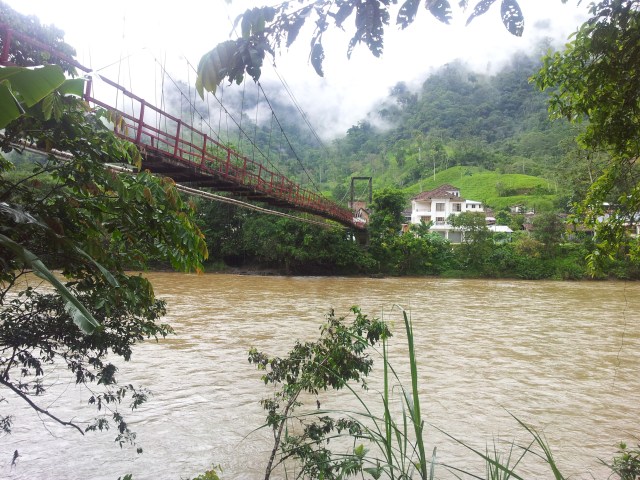
Guadalupe bridge from town to the mission.

frogfroesch

← Back

Thank you for your response. ✨


Posted in Ecuador | Leave a comment

Adios Cuenca!

Our truck has held up really well and we are happy with it and the XP Camper it hauls around.
But it needed some attention and we found a shop (Tecnicentro Chicago) in Cuenca whose owners, two brothers, are US trained mechanics (and speak English).

We ordered some parts from the US and had them sent via FedEx, well that worked well, but we spent days trying to get it through customs in Guayaquil. It was ridiculous and nerve wrecking at the same time. After many emails and phone calls to customs the the package was finally released and the repair was done. After five weeks we were excited to leave the city and head south,  but at the edge of town we noticed that the alternator was not charging, so back to the shop we went. Cuenca just did not want to release us.

This time we decided to do it differently, we could not find a new alternator and a used one that “might” work was over USD 700.00. So Günter took a “red-eye” flight to Florida where our friends Sharon and Robert were a great help and they had a great reunion at the same time. Günter bought a new alternator for $ 160. Four days later he as back in Cuenca, alternator in his backpack. Customs was a breeze and the alternator was installed the next day. Finally we were off.

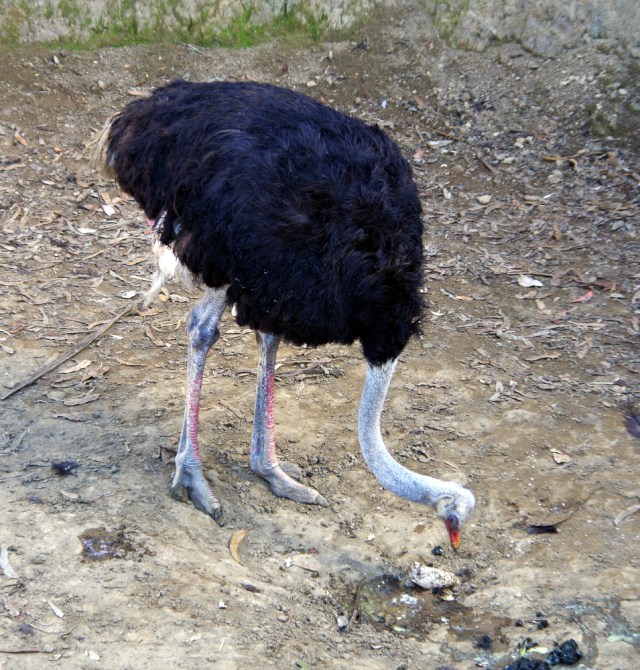
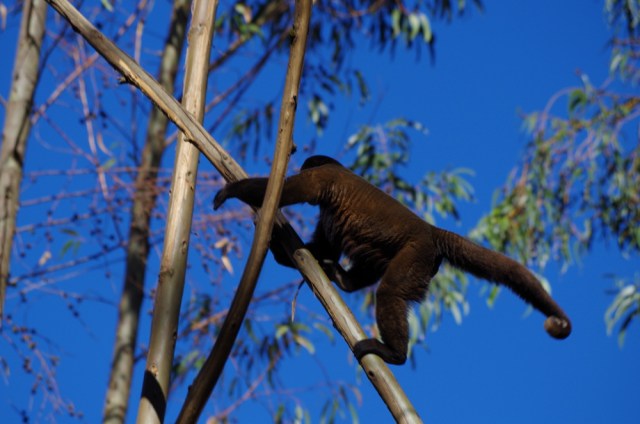
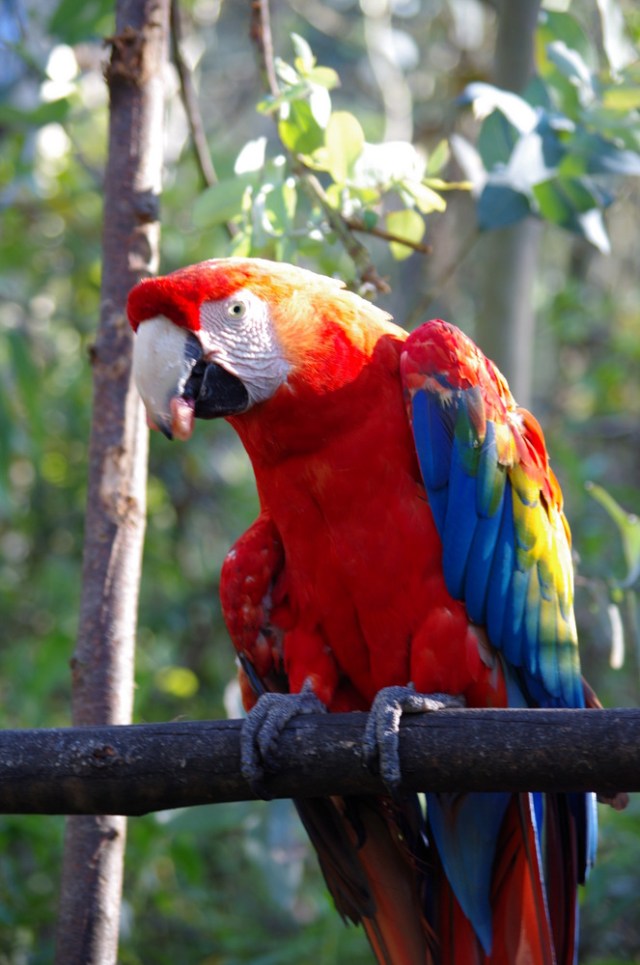
While Günter was in Florida I decided to go to the Amaru Zoologica in Cuenca. It is a quirky zoo and very interesting. You need at least three hours for this zoo, it is located on a hillside east of downtown. Bring water and good shoes, it is a hike too, the great views invite to sit here and there. Most animals are native to South America, but there are lions and a pair of ostriches (who were eating their own egg while I was there) from Africa as well. For the monkeys there are chicken wire tubes throughout the compound so they can follow you on your stroll. You can enter the bird house and get up close with them, no touching though. There were giant tortoises from Galapagos and tiny lizards from the Amazon jungle, snakes and Andean fox, bears and even a rhino (lignea hippo) way up on the hill.

I had a great day !

IMGP5264

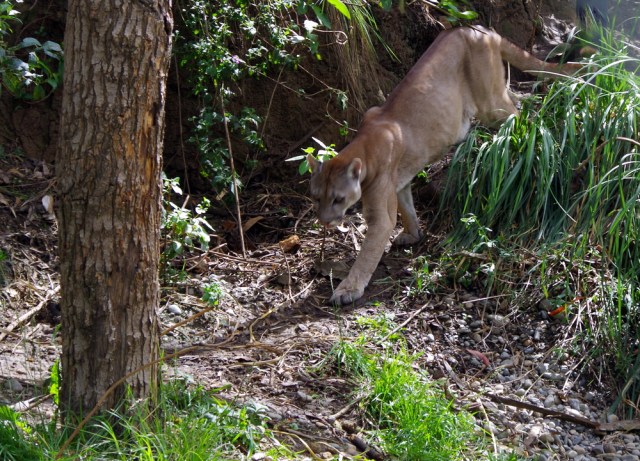
Puma!

IMGP5255

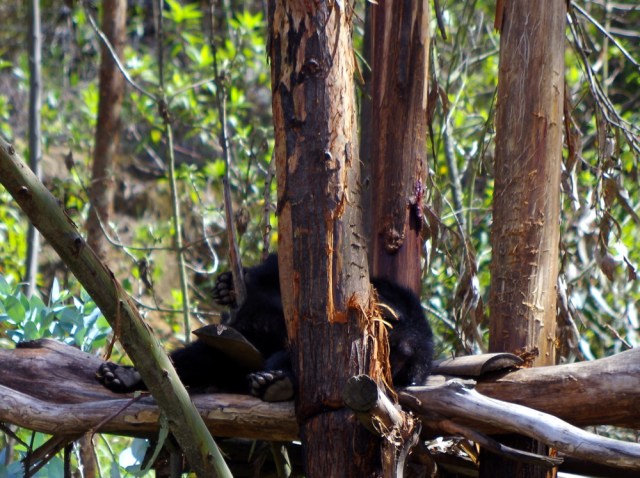
Andean bears like to sleep on platforms.

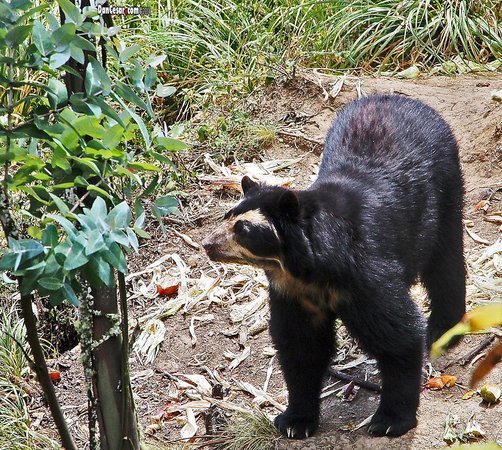
andean-bear

Spectacled Andean bear.

IMGP5273

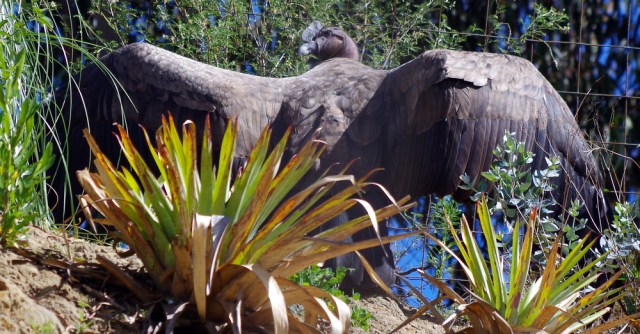
Condor

IMGP5269

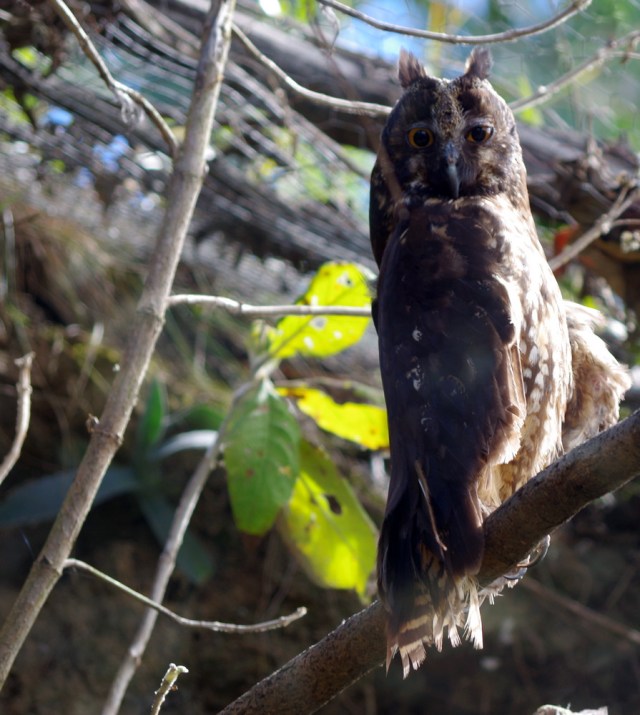
uhu

IMGP5302

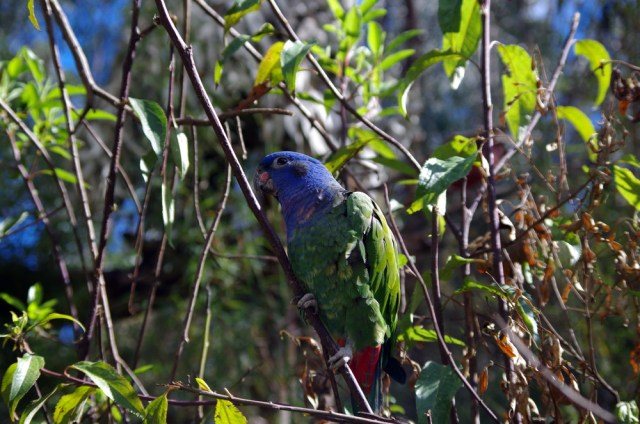
Blue headed parrot.

IMGP5324

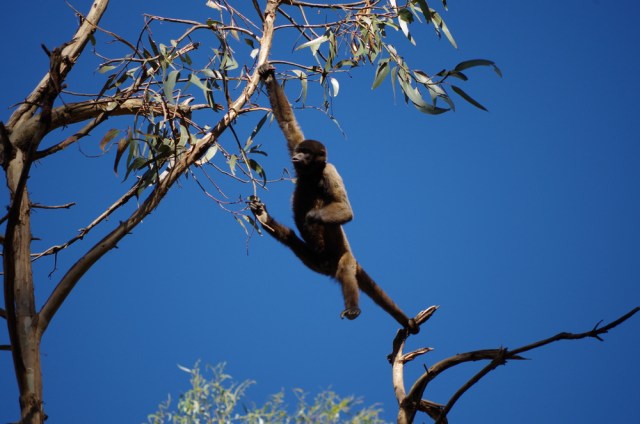
Monkey Yoga

IMGP5340

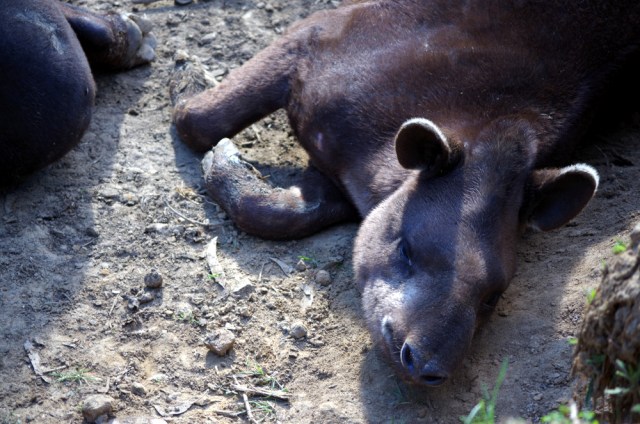
Tapir.

IMGP5345

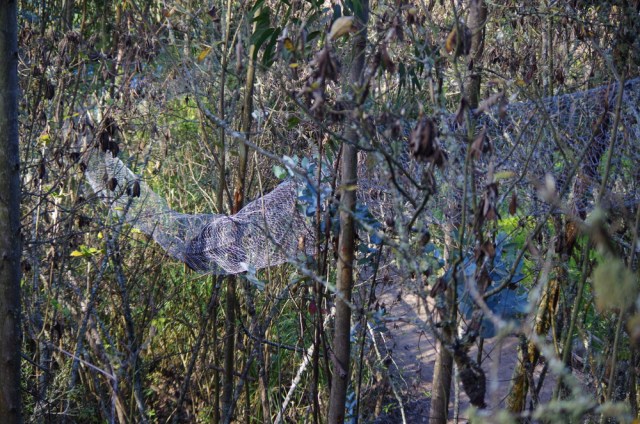
Monkey trail.

IMGP5364

He ate the egg his mate had just laid.

IMGP5319 IMGP5354

← Back

Thank you for your response. ✨


Posted in Ecuador | 4 Comments

Bogota on a Saturday afternoon.

There is a lot of entertainment if you just go for a walk in Bogota on a weekend.

Click here for a video clip.

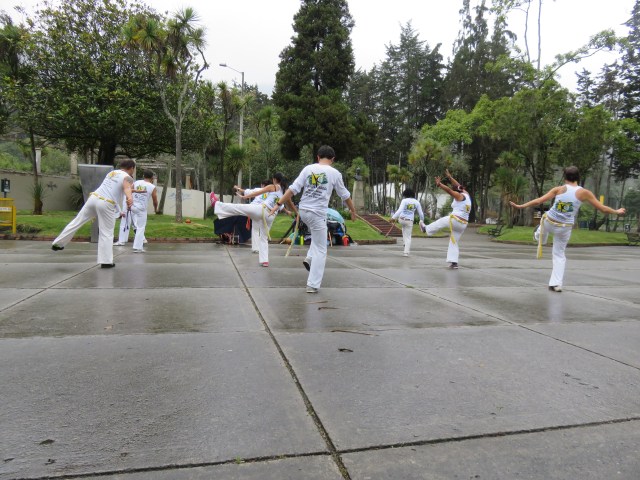
Hari krishnas, new agers, capoeira fighters, story tellers, card players, marionette players  …….

IMG_0999

Capoeira

IMG_1002

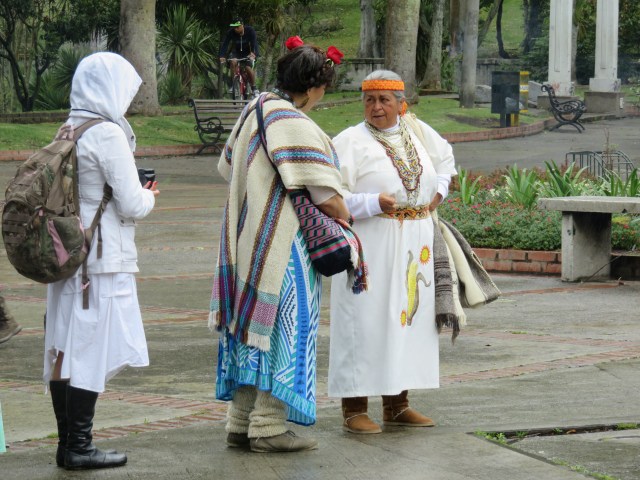
The female shaman.

IMG_1003

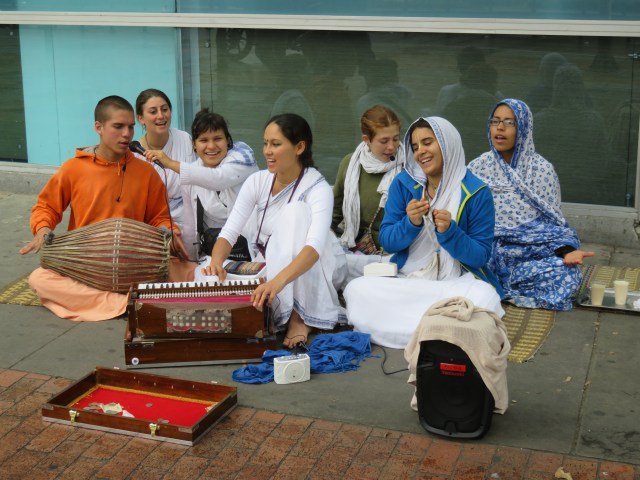
And of course the hari krishnas.

.

Posted in Colombia | Leave a comment

Cuenca days

Well, we are taking a break in Cuenca.

We are not really city people and usually spend very little time in towns or other large metropolitan areas.

We love quiet spots in nature, fresh air, endless vistas and birds singing.

We like little villages and like to watch the people go about their daily lives, work in the fields or do their laundry on the banks of a river.

But there where some repairs that needed to be taken care of on the camper, so we decided to have it done here, before crossing into Peru.

IMG_2725

The eight Araucarias were brought  from Chile and planted by Luis Cordero at the turn of the century.

IMG_2744Cities like Cuenca have many stories to tell, there is a lot of history here and walking around for a day just isn’t enough.

IMGP5226

IMG_2597

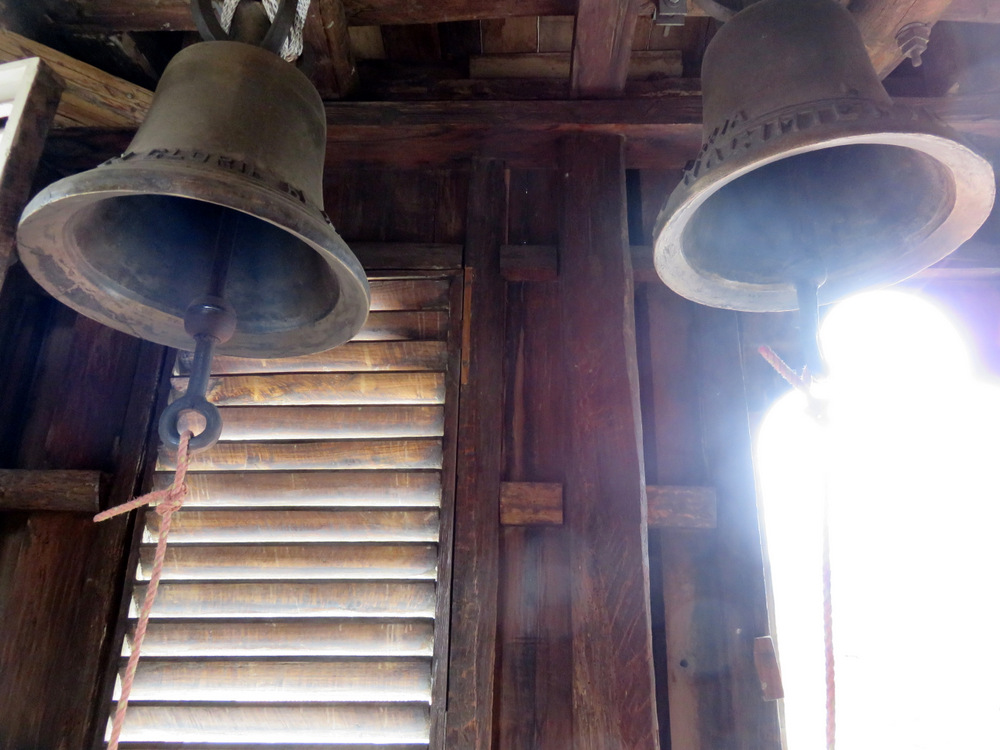
Todos  Santos bells.


IMG_2741

IMG_2743

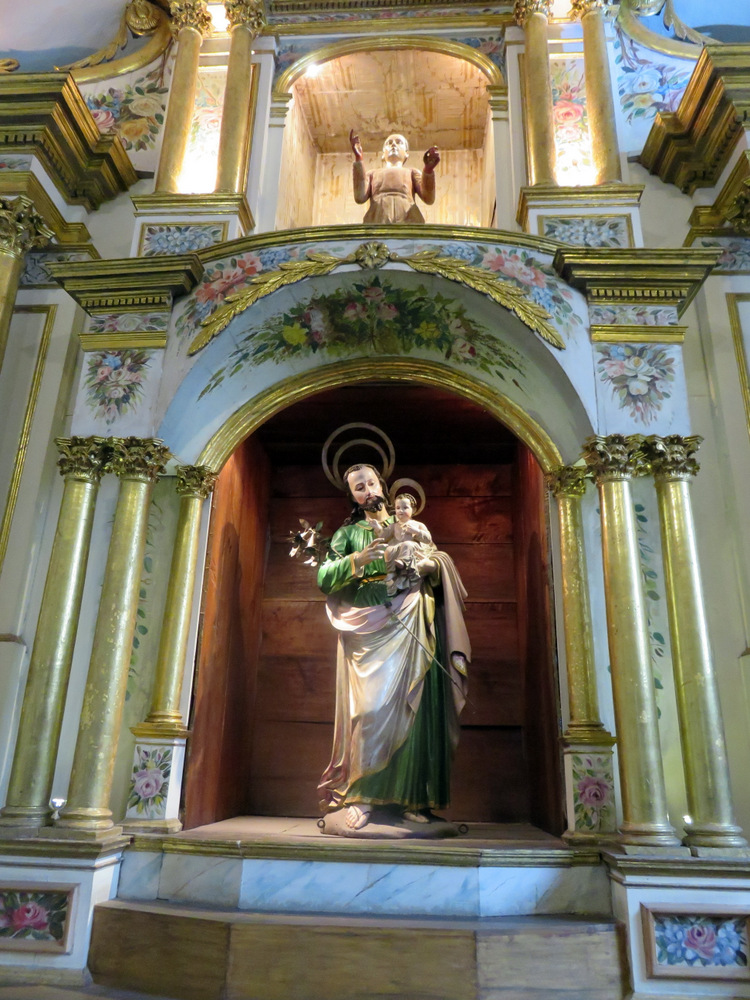
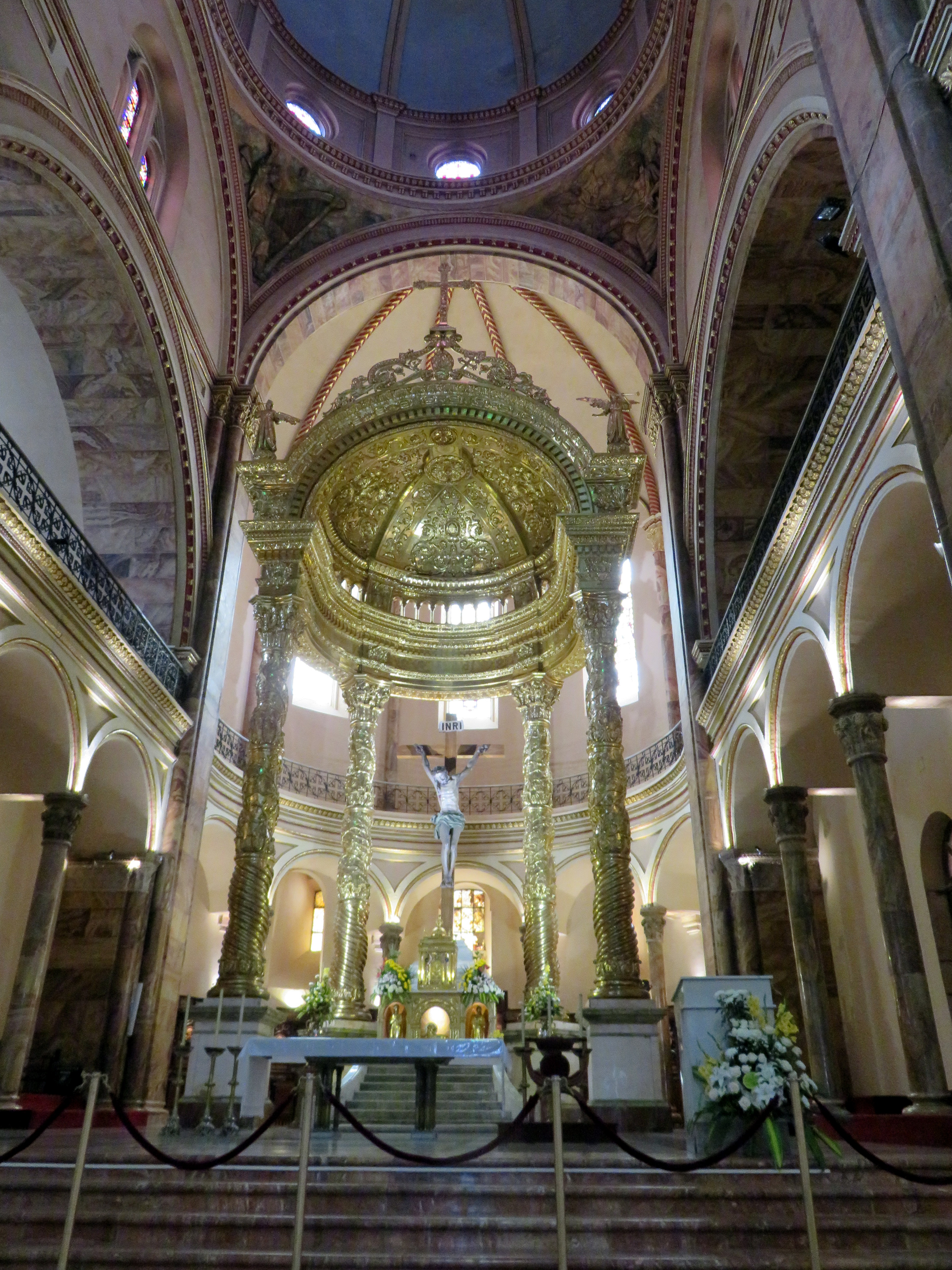
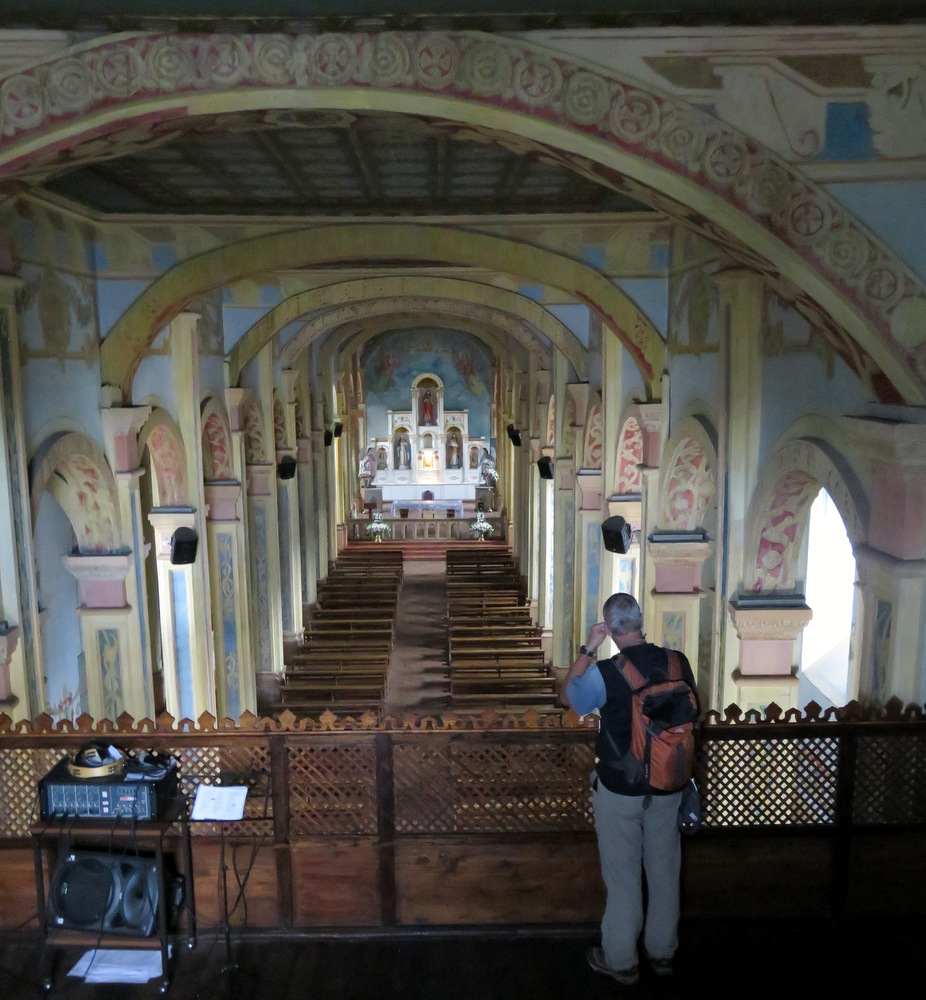
In the old cathedral.

IMG_2588

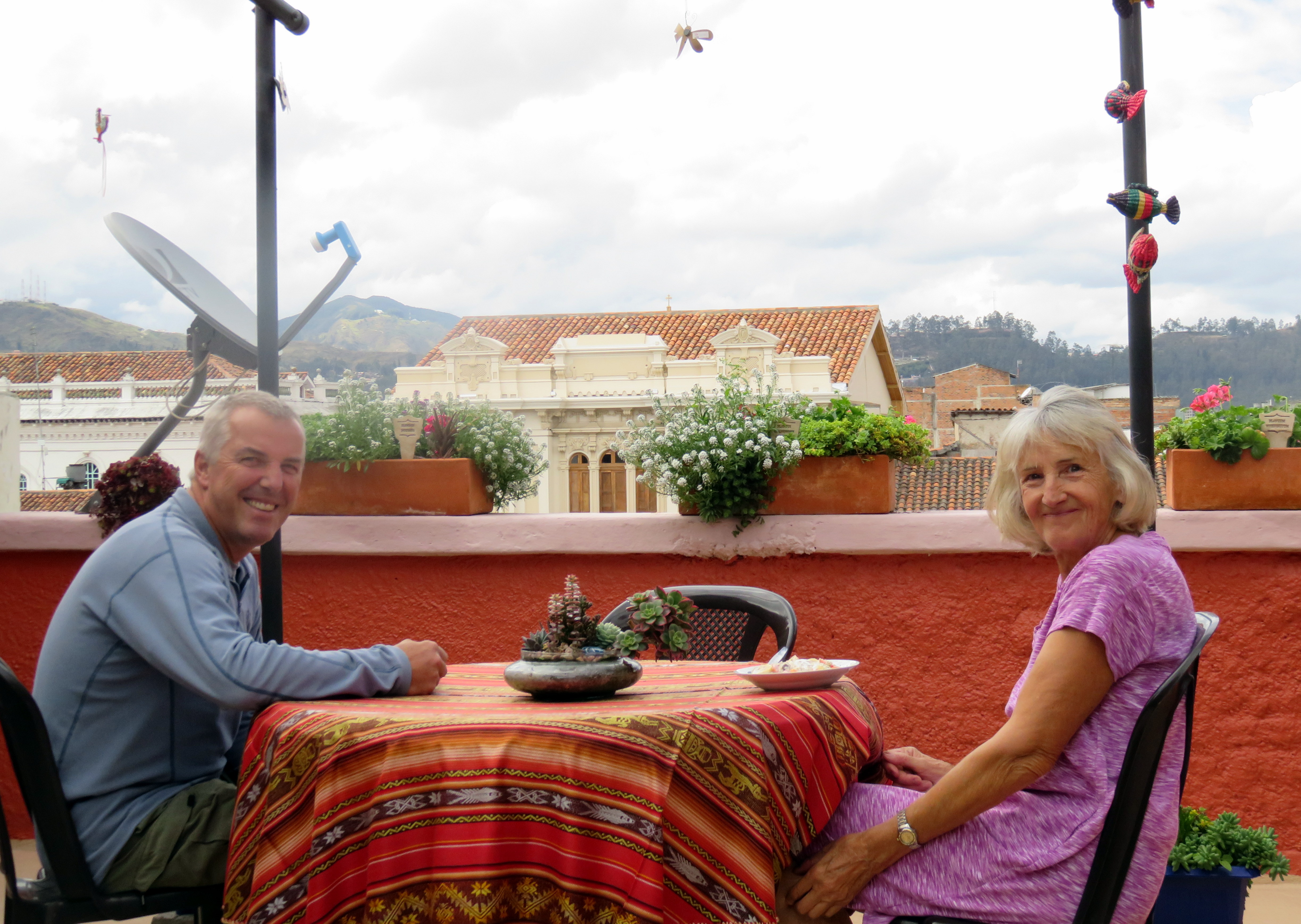
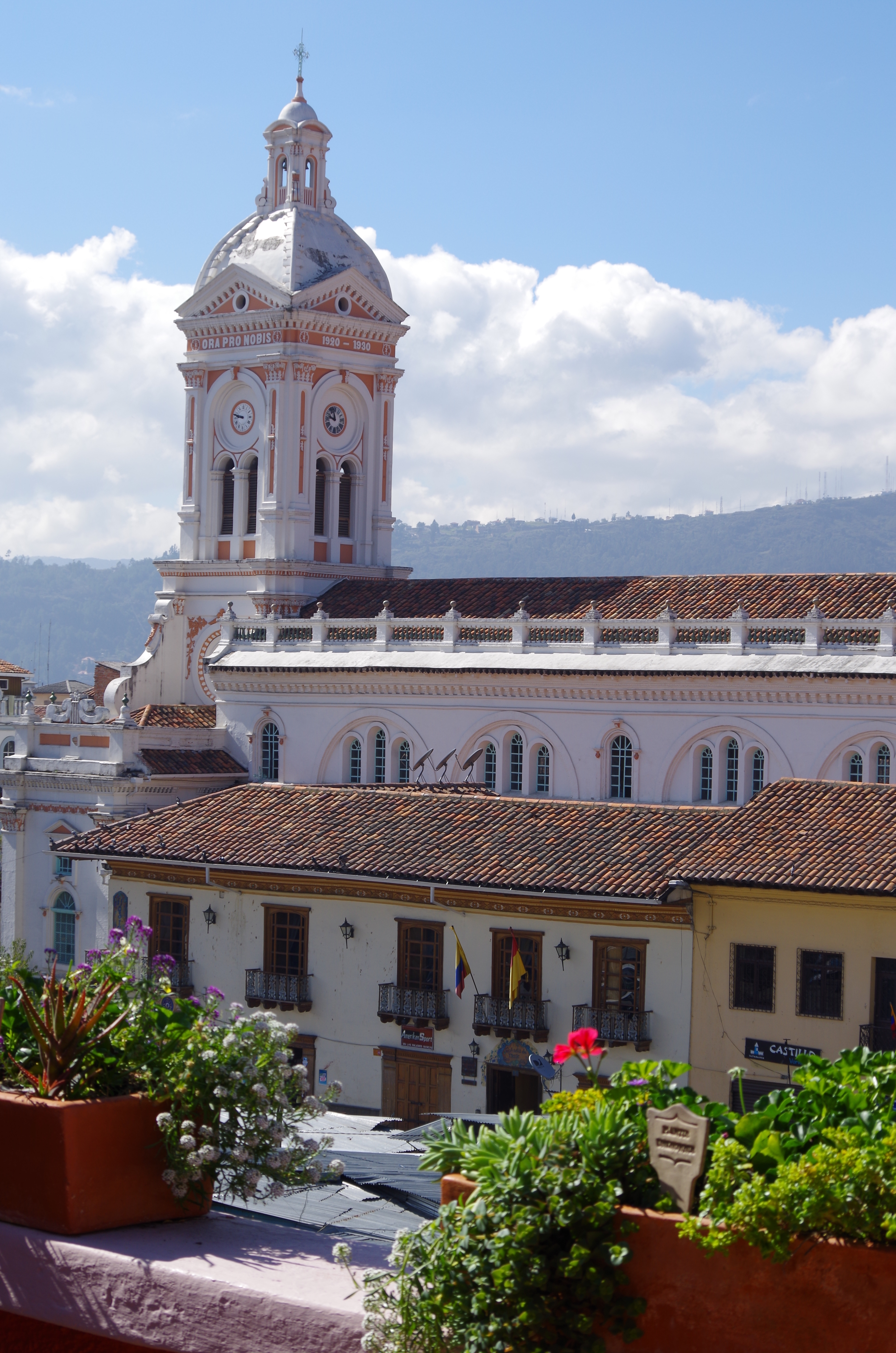
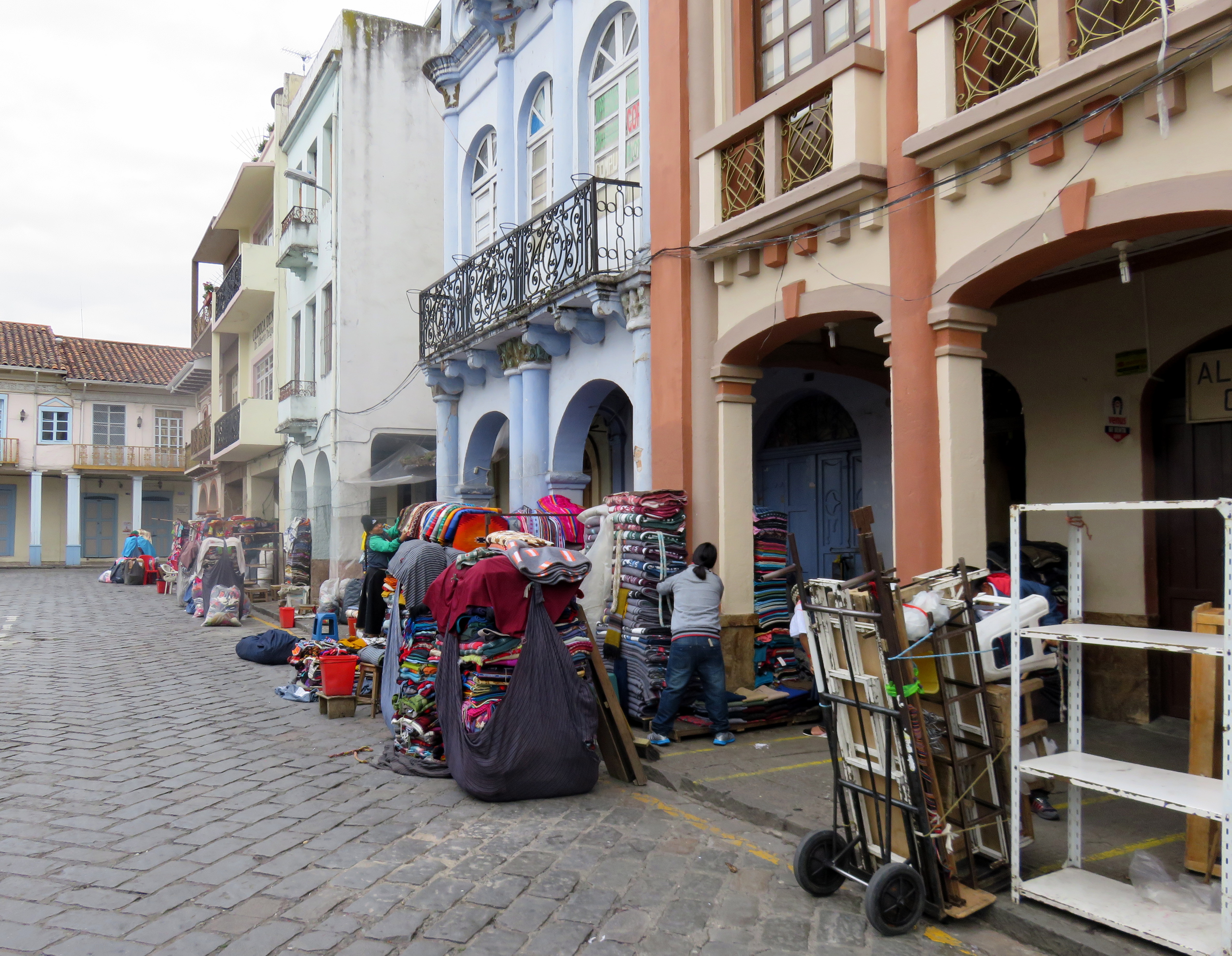
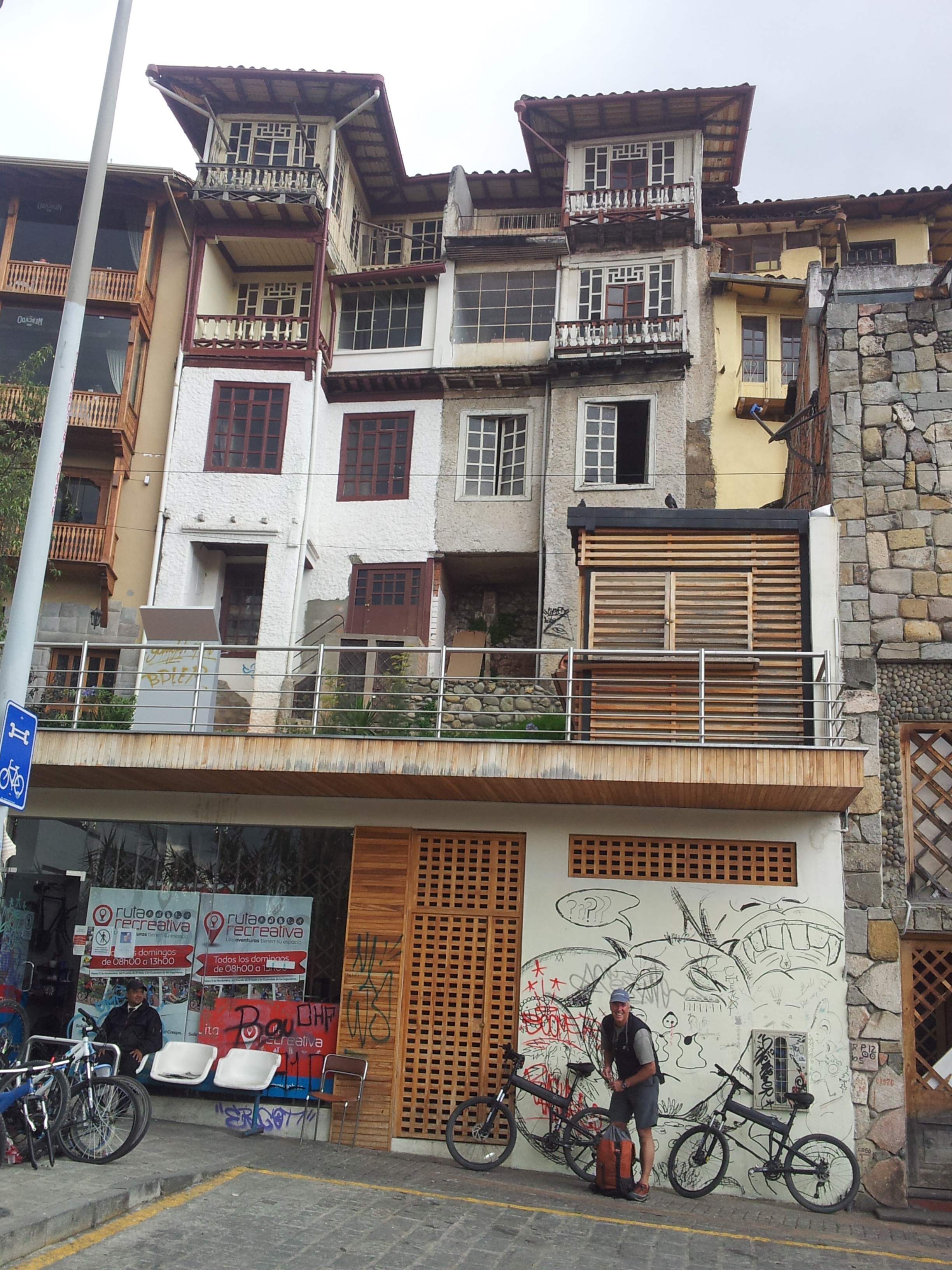
We found a little apartment on the top floor of an old colonial building owned by a dentist, his office is downstairs, he is 85 years old and still fits dentures for the indigenous. It came with a roof top terrace where we ate our breakfast or just went to read or watch the comings and goings down below. Outside the entry, on Plaza de San Francisco, is a daily market, the women in their beautiful outfits sell alpaca shawls and other nice and not so nice items. They are mostly from Otovalo, you can tell by their clothes.

IMG_2706

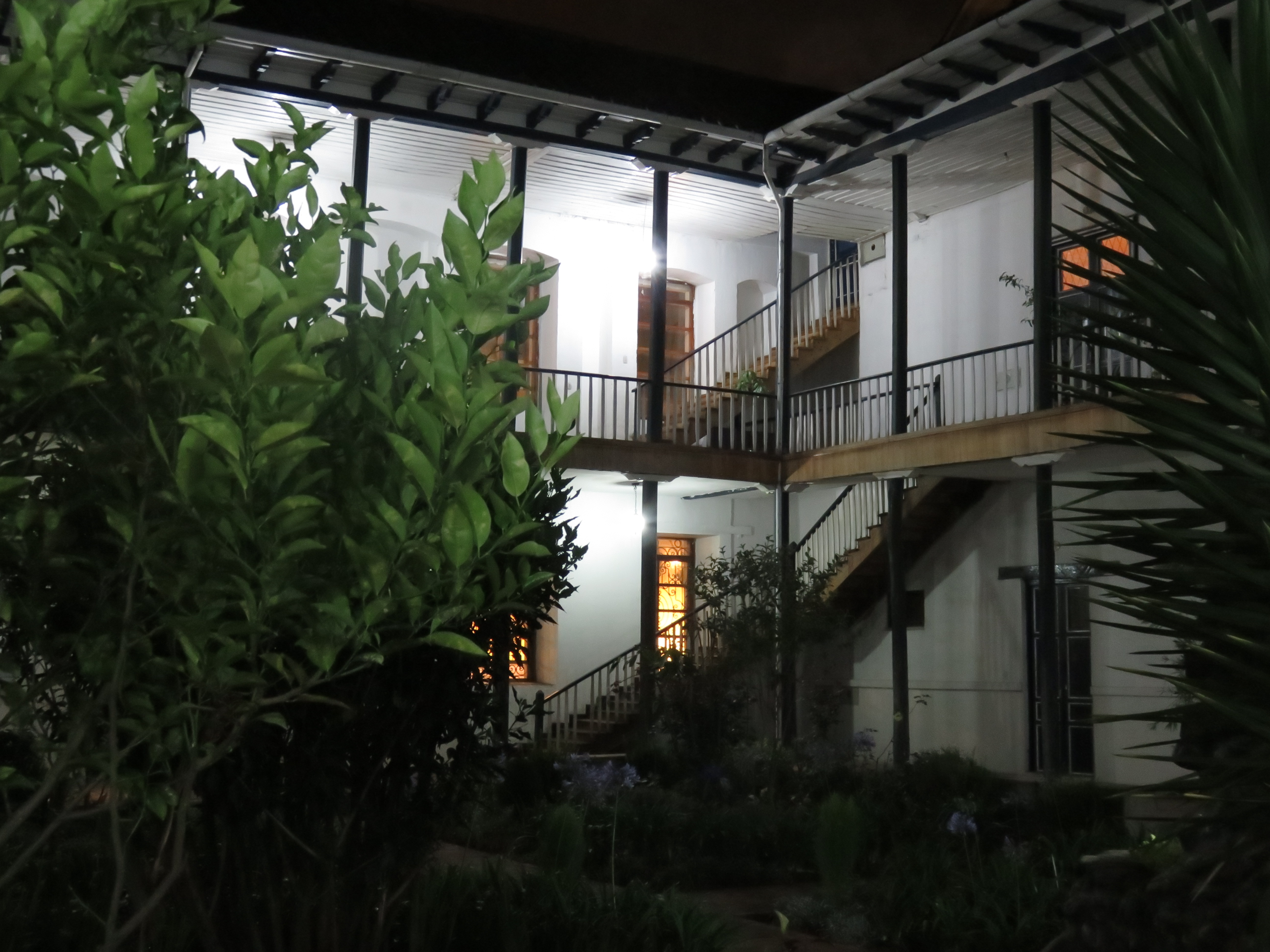
First apartment, top floor of the dental office in Plaza San Francisco

IMGP5231

IMG_2727

In the museum we found a photograph of or “home”.

20151016_143124

We are intrigued by the changing outfits as we move south, skirts, adornments and hats might look the same to us, but the native people here can tell by the clothing which village they are from. Just like we can back home in Austria. So to us, it is fascinating.

At night they store their wares in the building, so it was always interesting when we came home in the evening, we had to pass by their stored items – checking out the table cloths (loved them) and bags stored on the shelves.

IMG_2753

Plaza “Pancho” 7 am.

IMG_2792

Canari women

20151026_132229

We had to vacate the apartment after a week, Dano, the owner came through with another apartment, down by the river. We liked that one too.

IMG_2824

The courtyard of apartment # 2

IMGP5251

Apartment # 2 view!

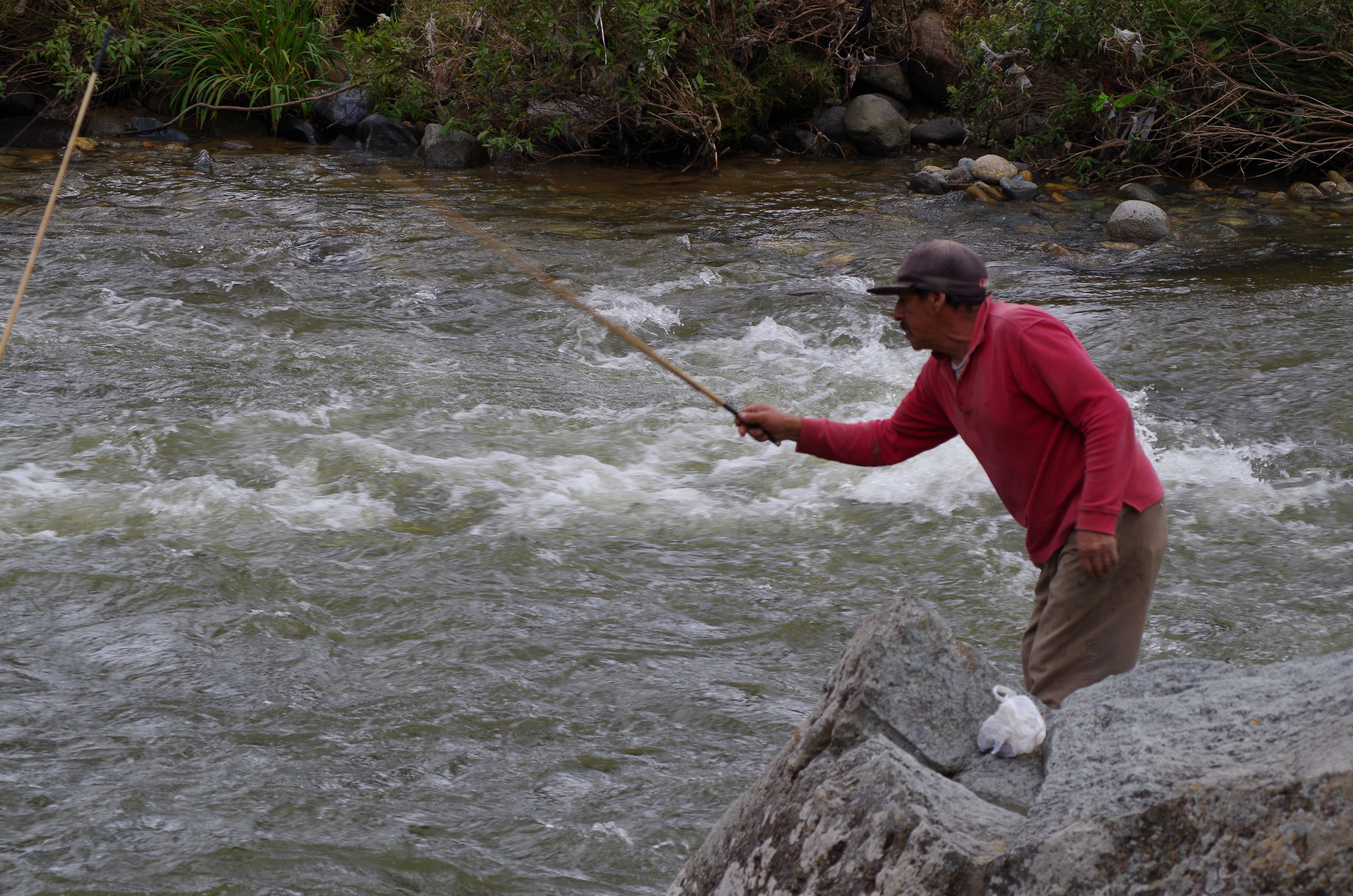
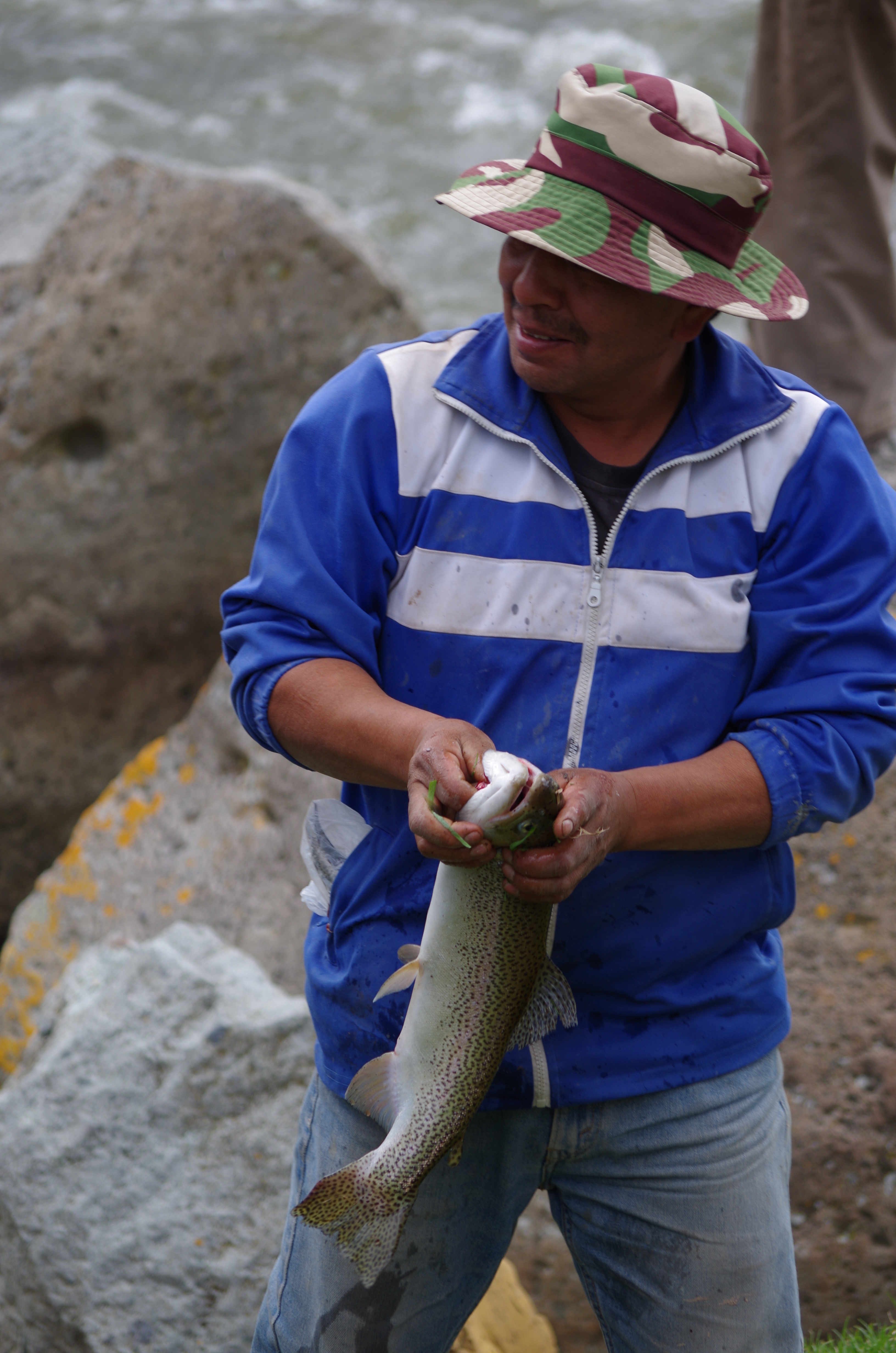
There is always something going on in a City, cultural happenings, fiestas, street musicians. It took us days to visit the churches and museums on foot. Then we got our bicycles out and started to explore more, it has been fun. The two rivers make all the difference, they are mostly green belt with walking and bicycle trails. Thanks to a state of the art sewage treatment plant the rivers are clean and we saw fishermen fly fishing within city limits and catching nice sized trout.

IMGP5241

IMGP5237

A nice trout!

20151022_134019-1

20151022_141053

IMG_2752

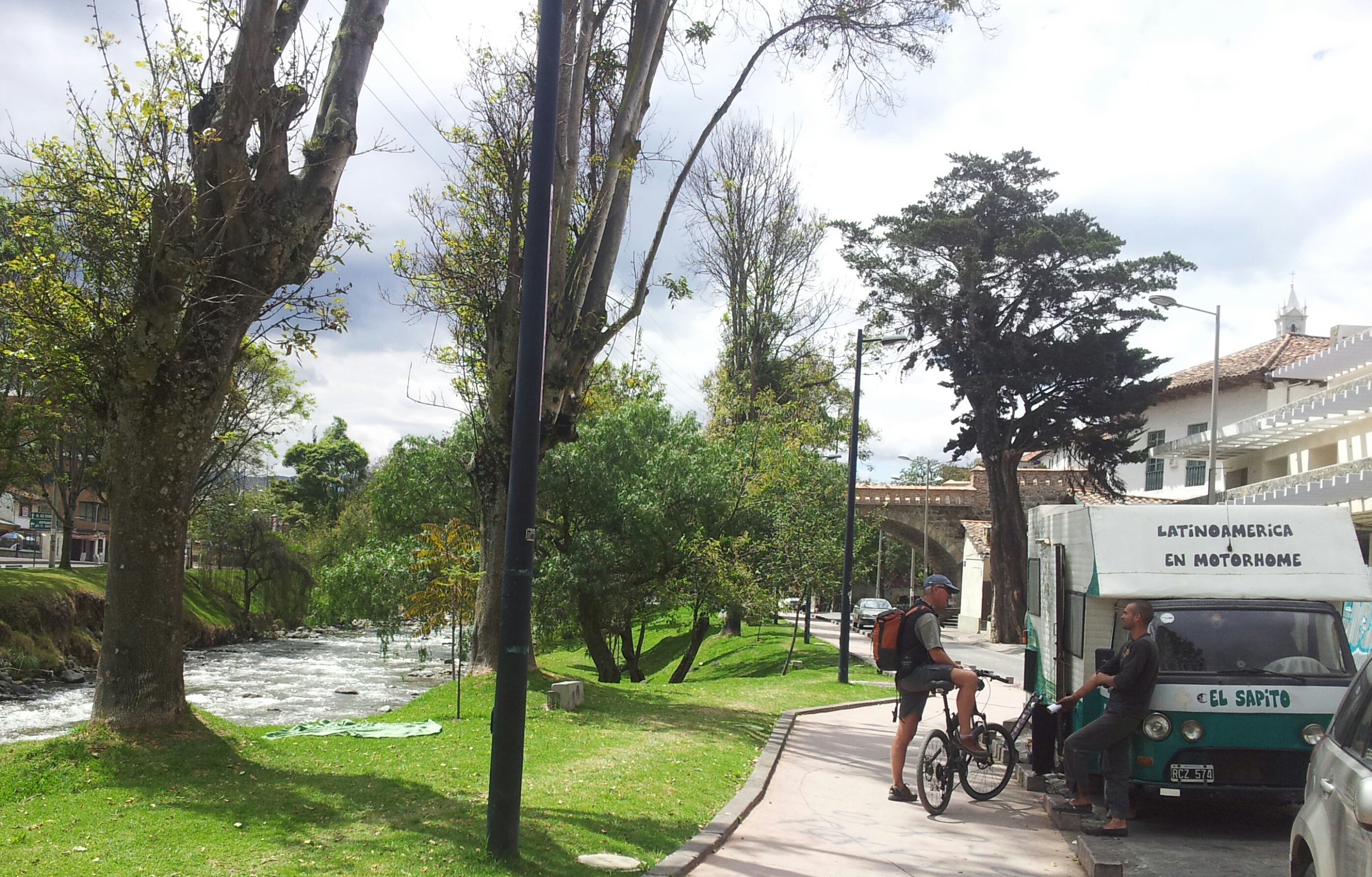
Bulli station!

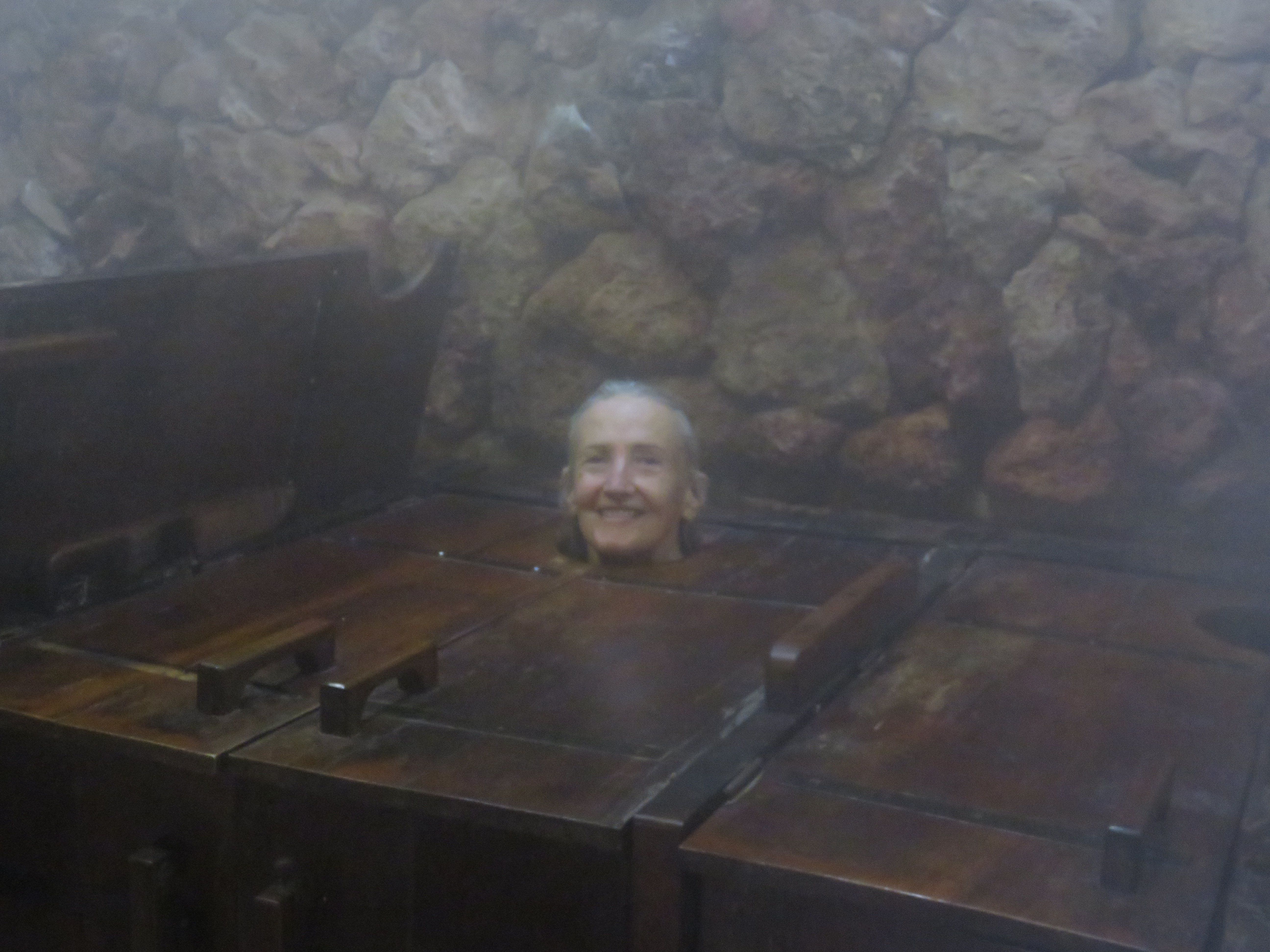
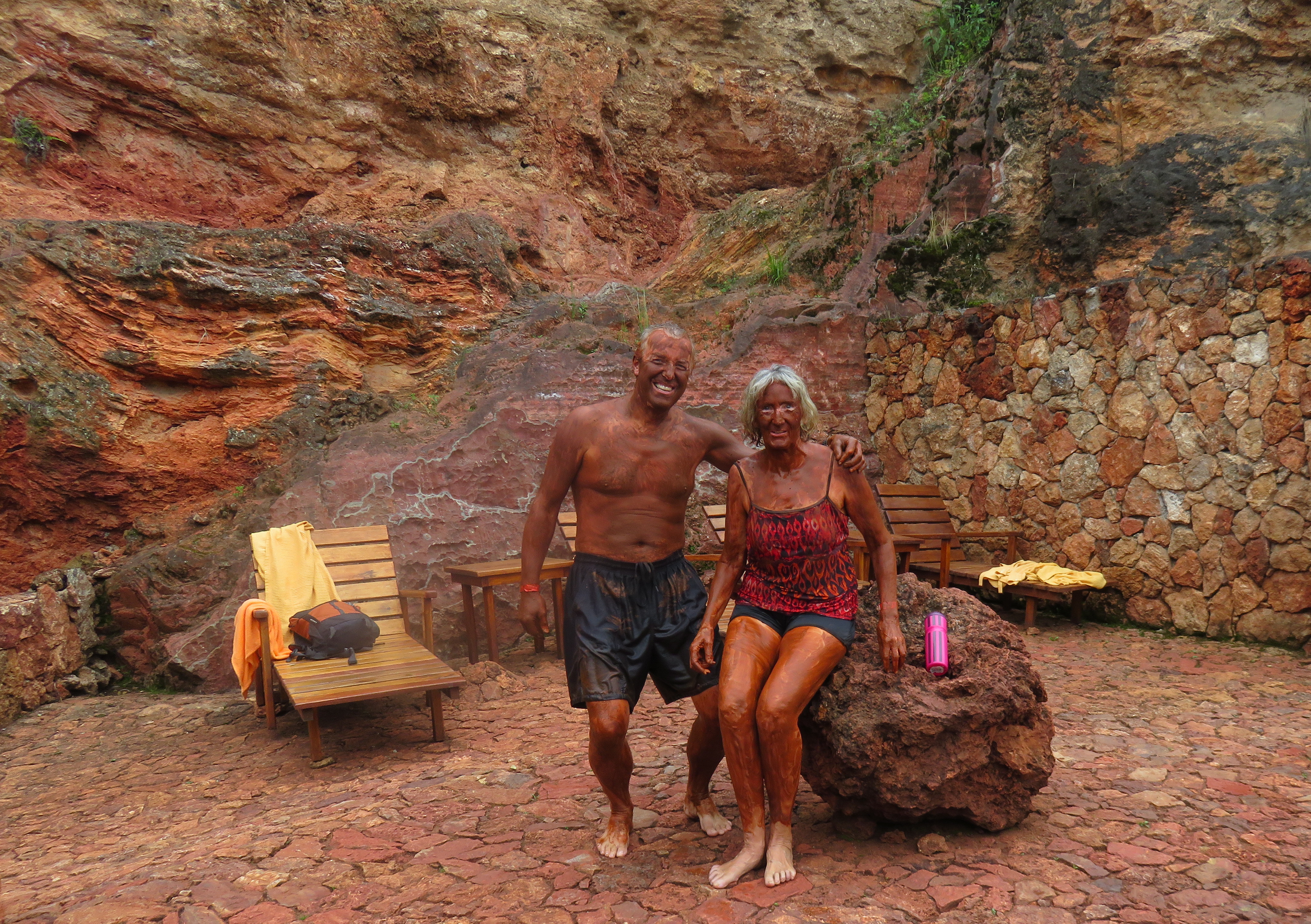
At the edge of town are some hot springs where we went to soak and do the steam/mud/shower/steam/soak/nap/tea routine, spent most of the day there and LOVED it.

                                                                Piedra de Agua


IMG_2759

Magic mud!

IMG_2766

A steam box!

IMG_2764

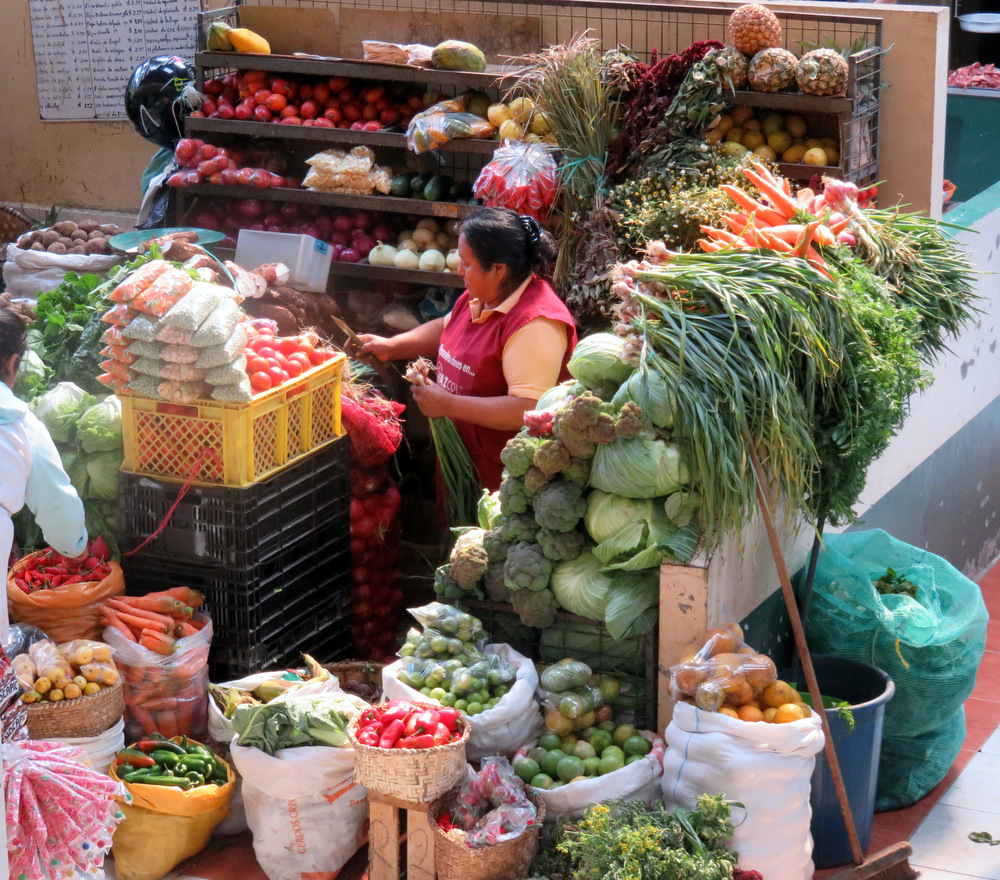
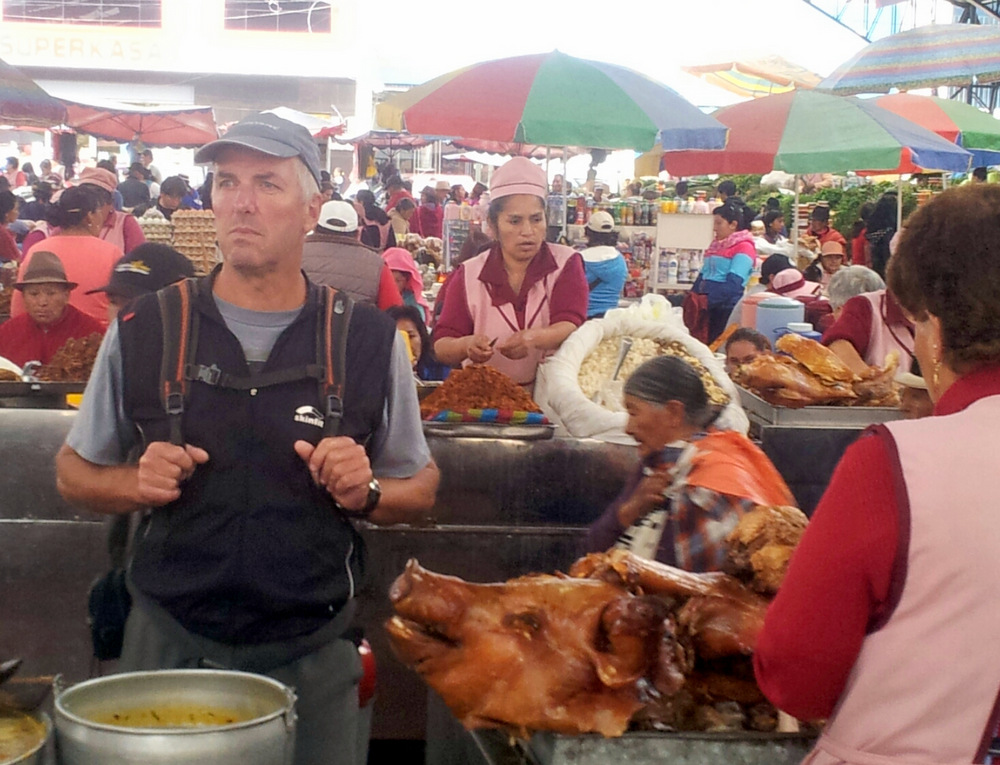
The daily market is huge, and we can find all the food you need just steps away from our little home away from our “home away from home” called camper.

IMG_2632

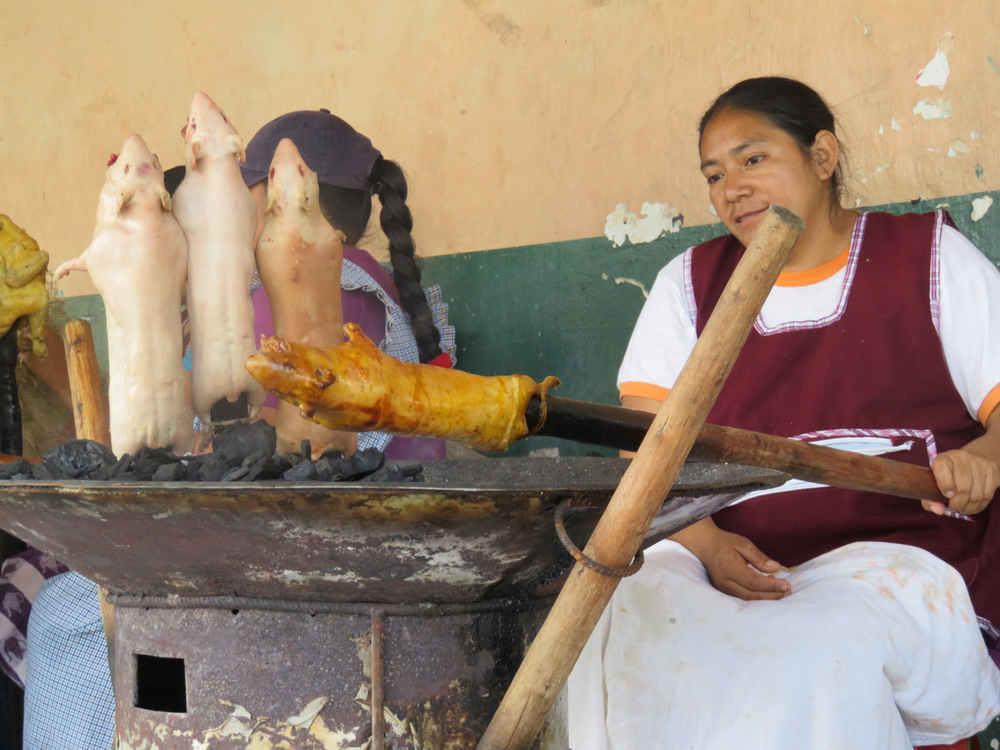
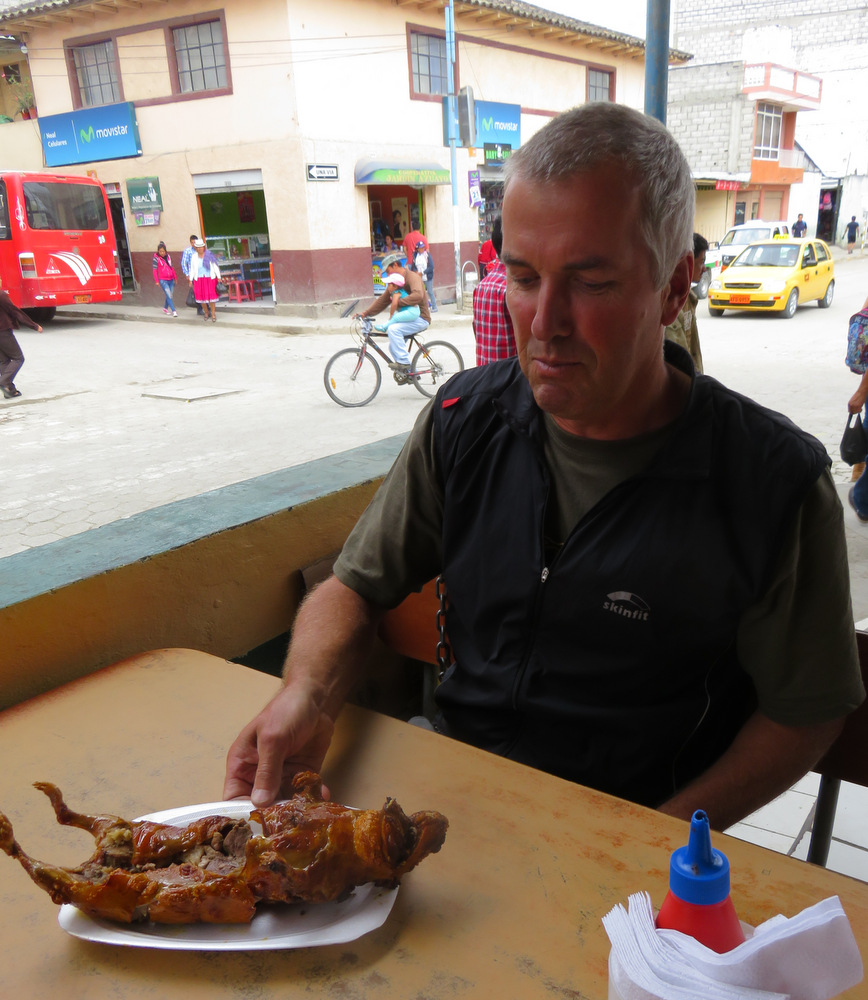
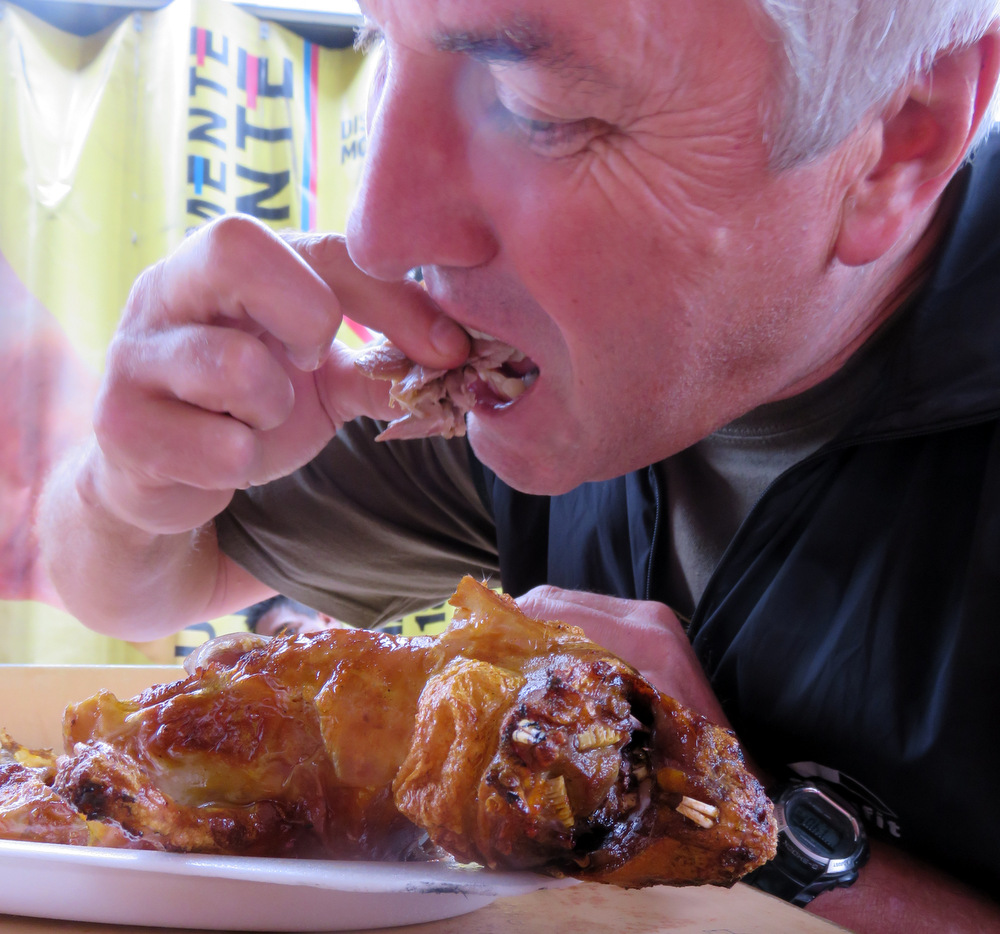
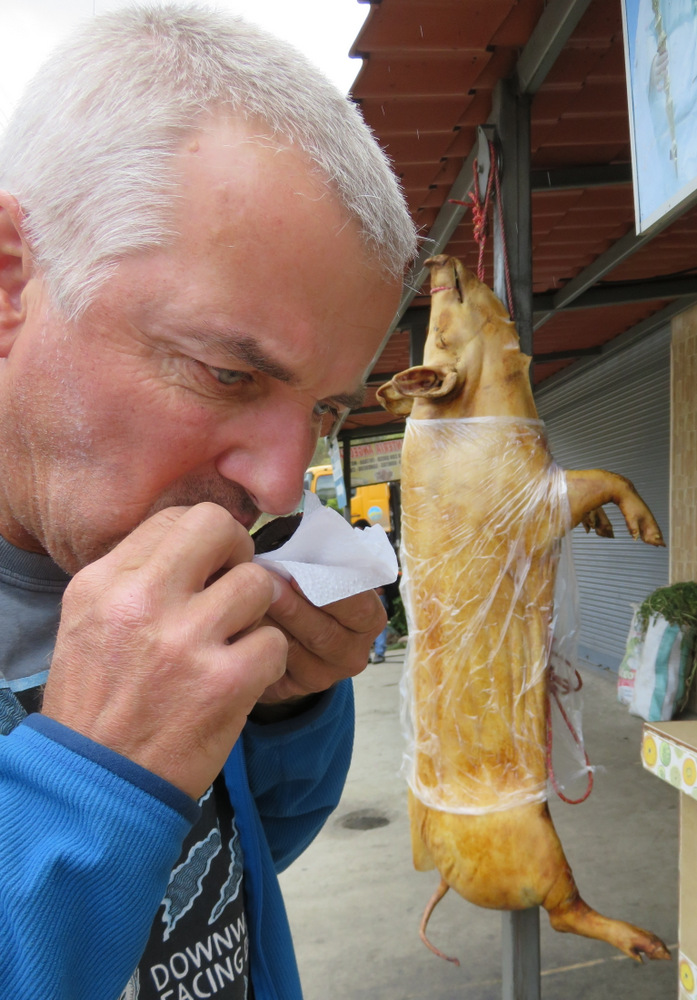
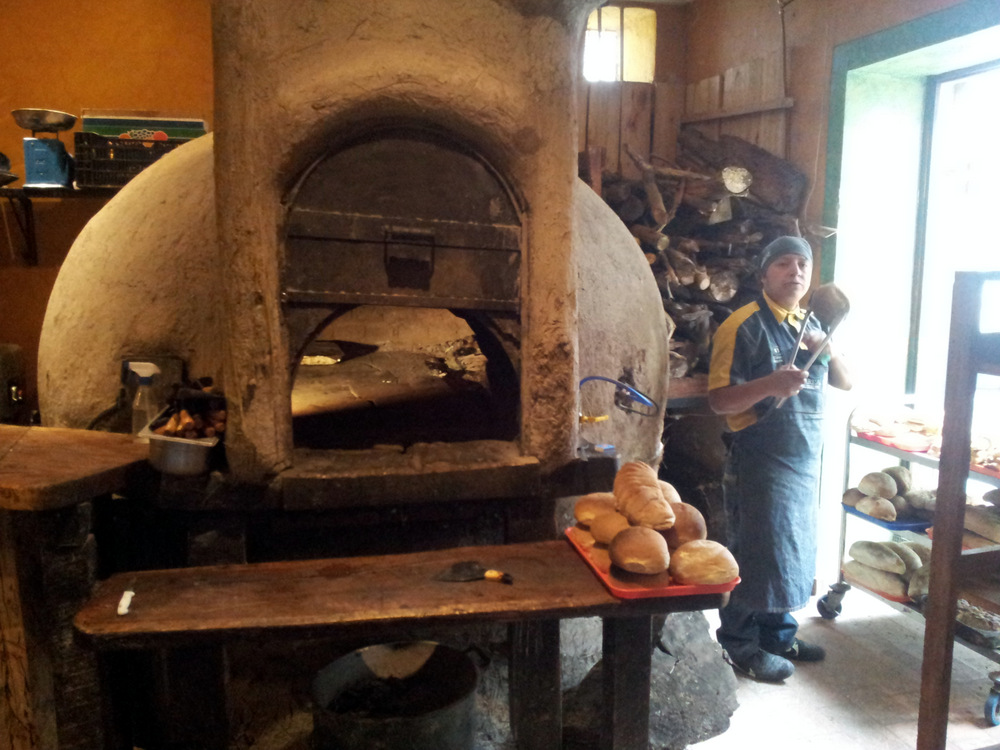
Having an oven has been nice too, makes baking bread a lot easier than doing it with the Cobb grill. Apricots and blueberries are everywhere at the market right now so I made an apricot/blueberry cake today. A little taste from home, Ecuadorian food is not really what we are used to, but we try. Günter even ate a roasted “cuy” (Guinea Pig), I passed.

IMG_2640 IMG_2700 IMG_2704

I am not going to write a Cuenca guide book, but will let the pictures speak for themselves.

We spent Dia de los Muertos and  Independence day on November 3rd  in Cuenca and enjoyed the festivities.

IMG_2742

20151101_150305

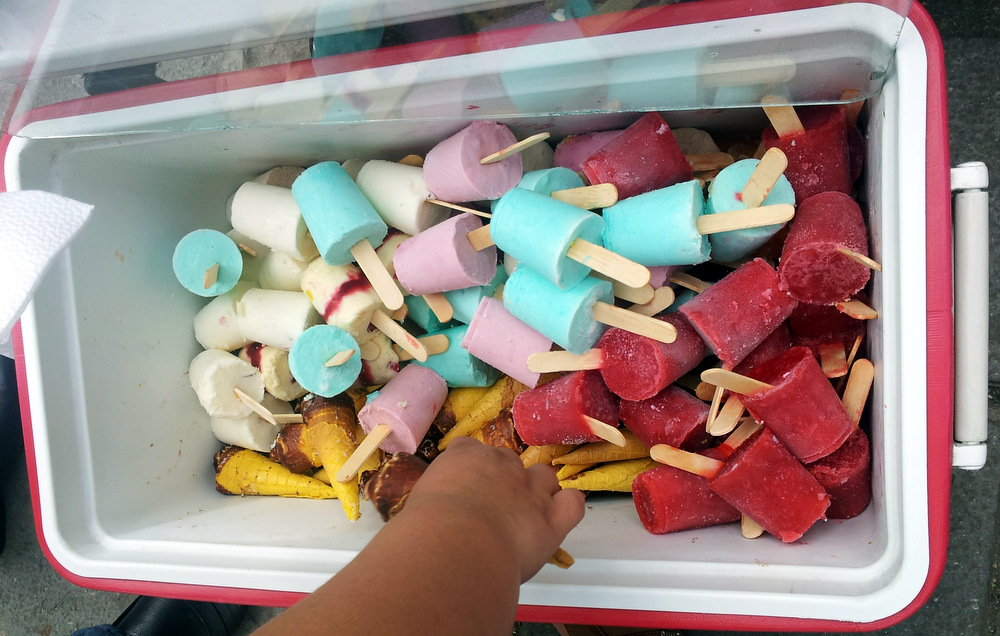
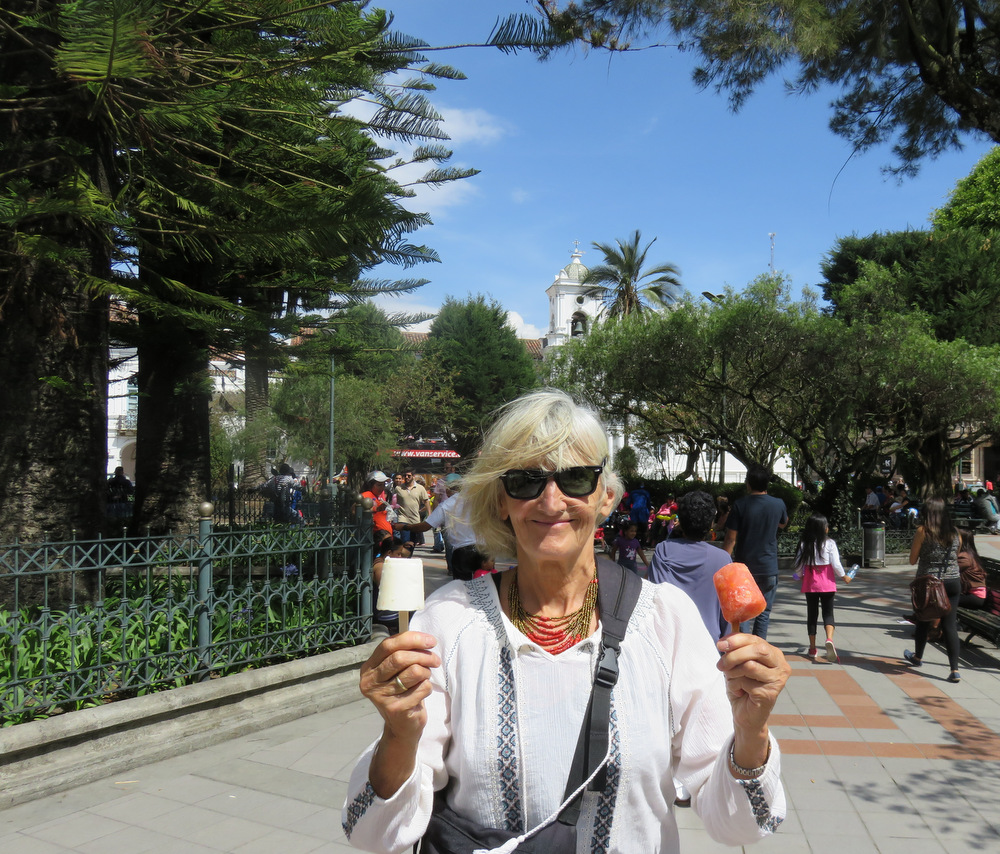
Popsicles, they were really good!

IMG_2880

20151026_130205

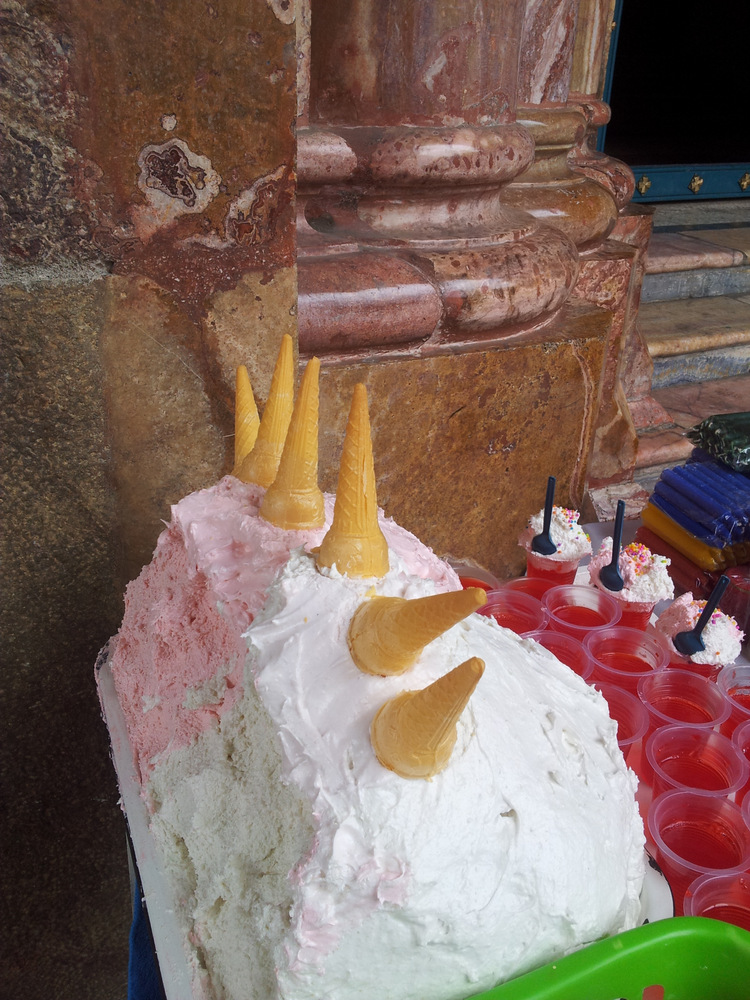
Espumilla, yum!

20151101_140130

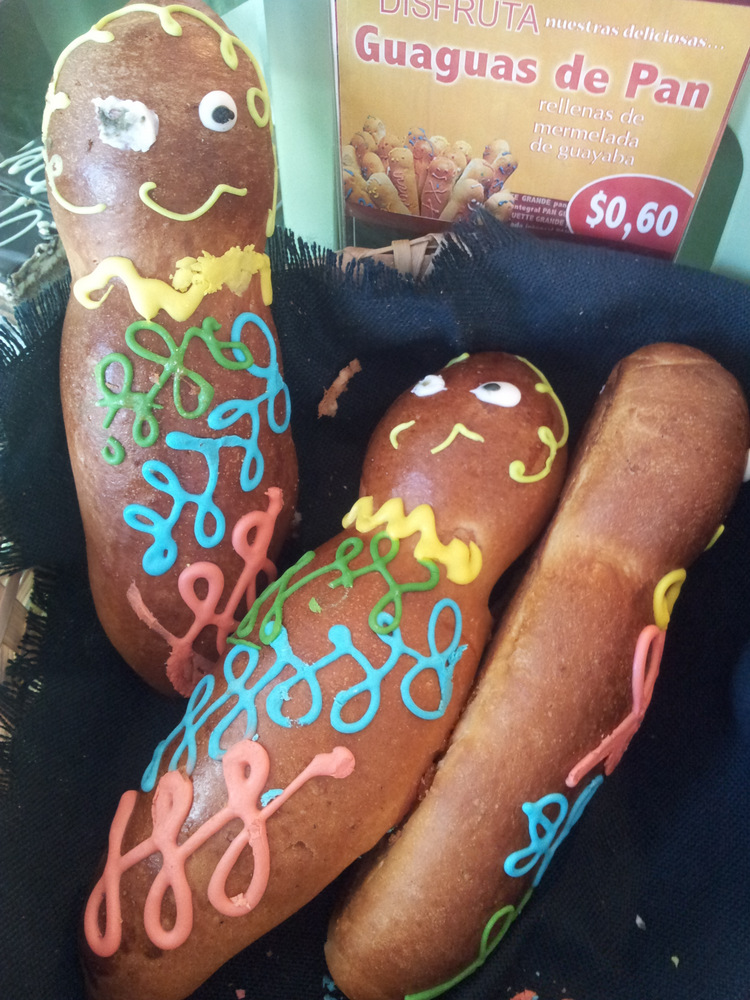
Guaguas and colada morada are only consumed on Dia de los Muertos.

20151009_103812

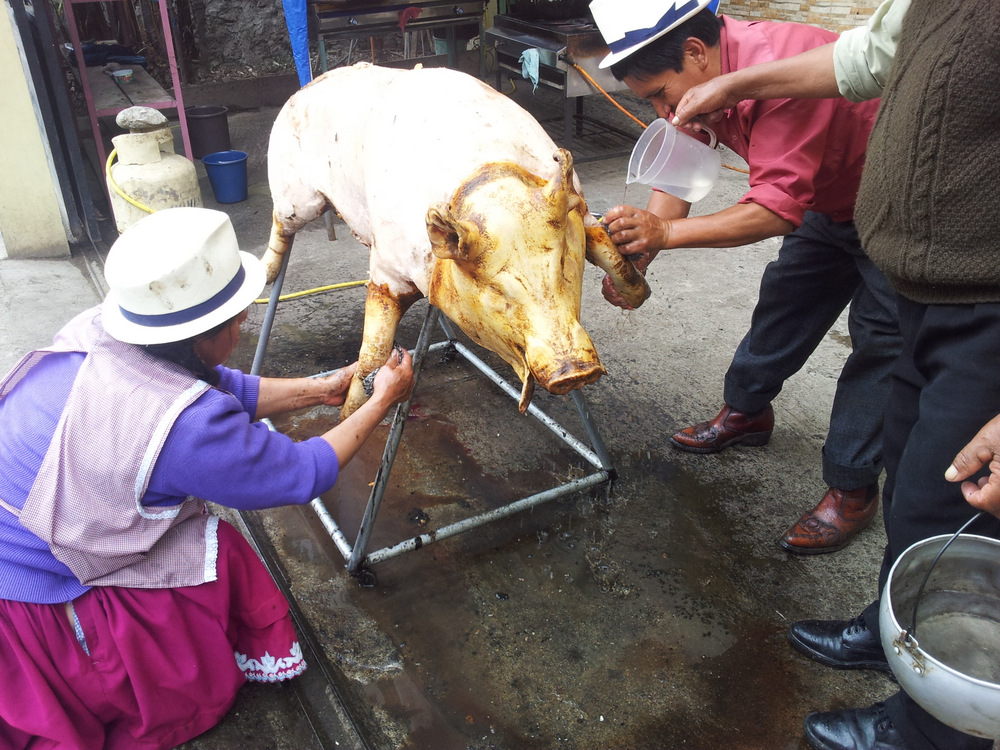
Preparing the pig.

20151008_164717-1

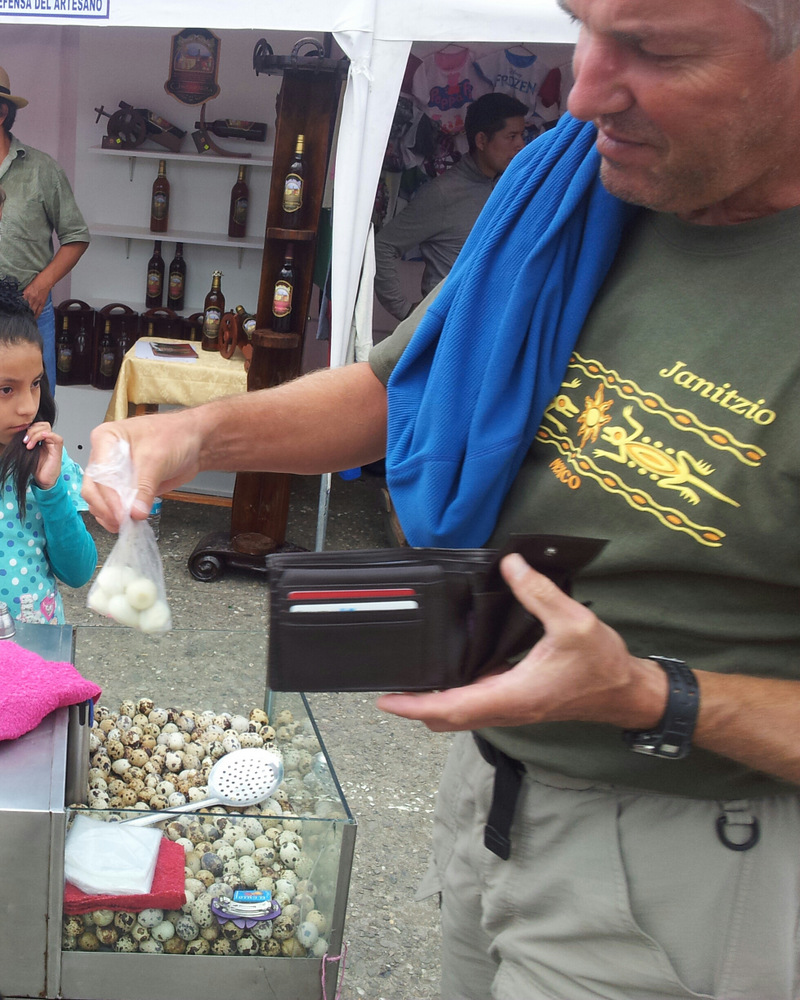
We are both hooked on hot quail eggs with cumin.

IMG_2635 IMG_2631 IMG_2550

20151002_112254-1 20151015_124646

IMG_2897

We would just follow the music and hang out!

IMG_2845

IMG_2879 IMG_2865 IMG_2863 IMG_2852 IMG_2847

IMG_2885

IMG_2821

IMG_2896

IMGP5244

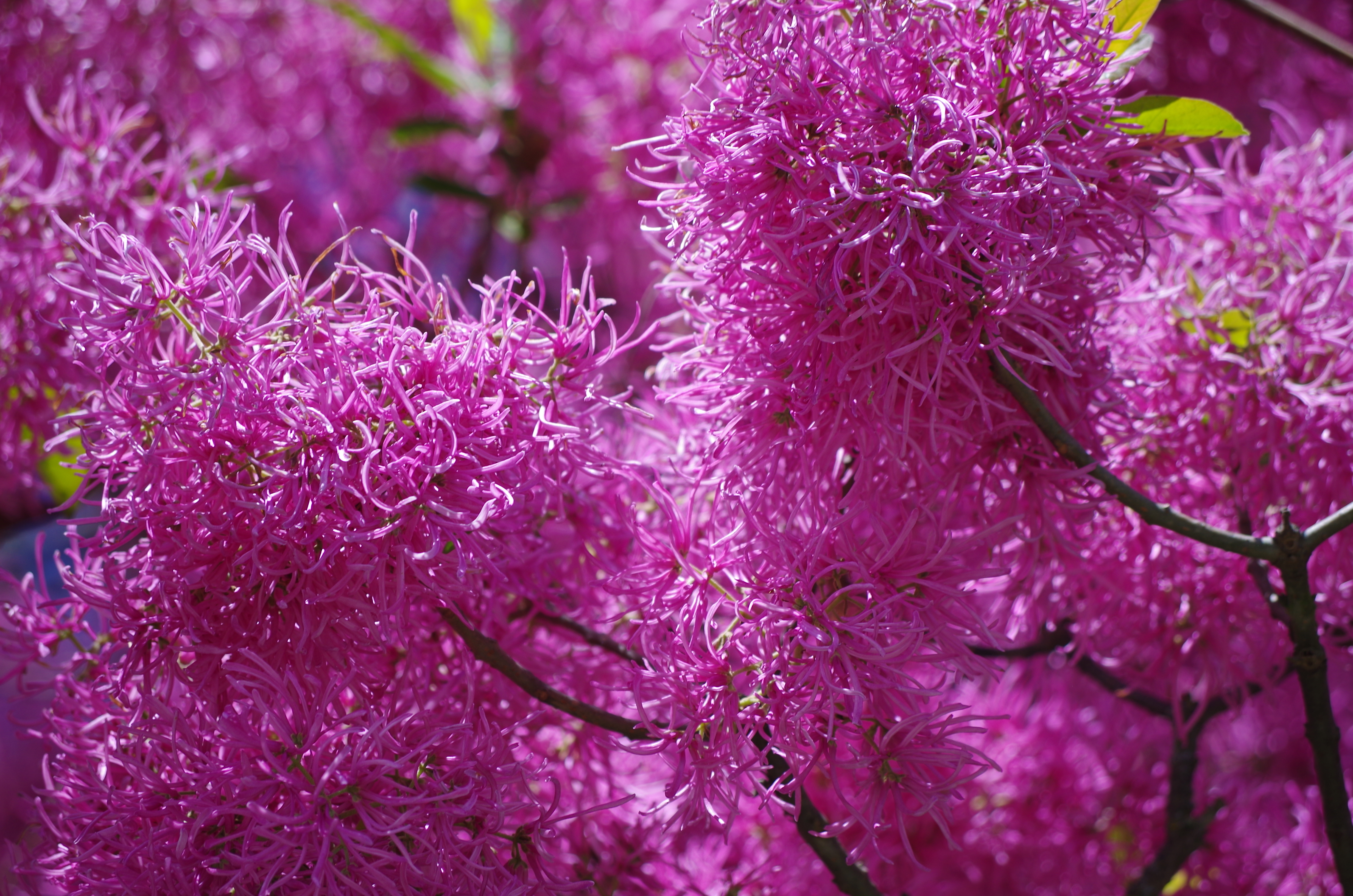
Something always blooms in Cuenca!

Adios Cuenca, ist’s been good to get to know you!

← Back

Thank you for your response. ✨


Posted in Ecuador | 4 Comments

Chimborazo to Cuenca

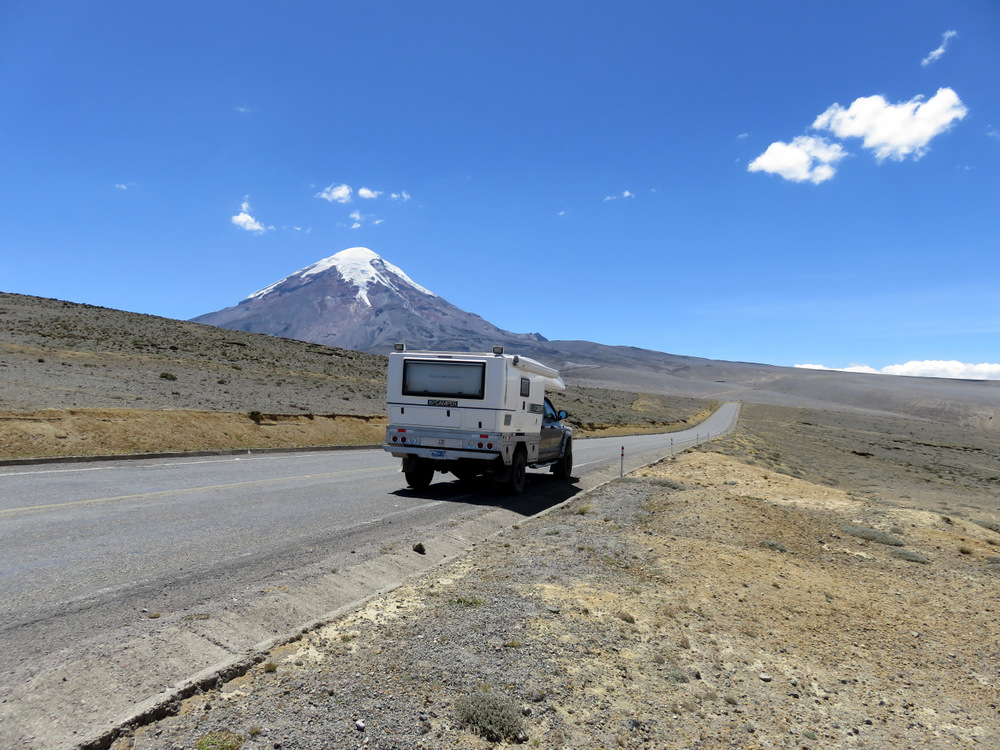
Chimborazo is over 6000 m high and beautiful with its snow-covered peaks. During our stay at Chinipamba it beckoned us every day. Longtime considered as the highest mountain on the planet, Chimborazo was dethroned by the Himalayan and Peruvian peaks. Nevertheless, considering the geometry of the Earth, this summit is known as the farthest point from its center, that’s what a plaque at the park entrance says.

IMG_2420

Up up and away.

IMG_2426

IMGP5134

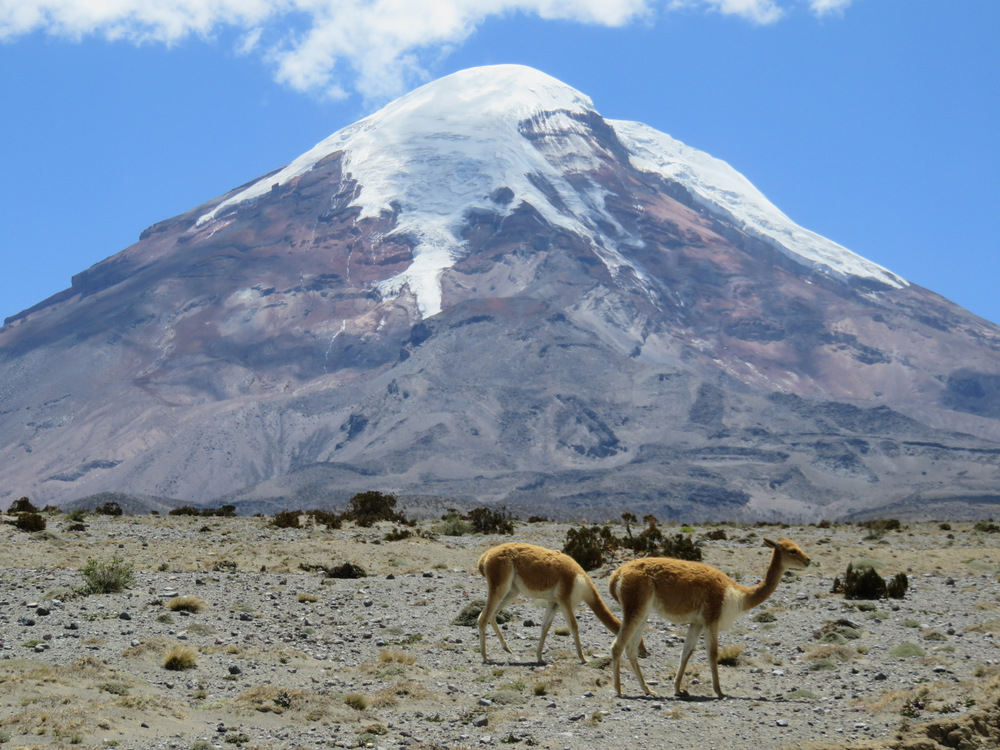
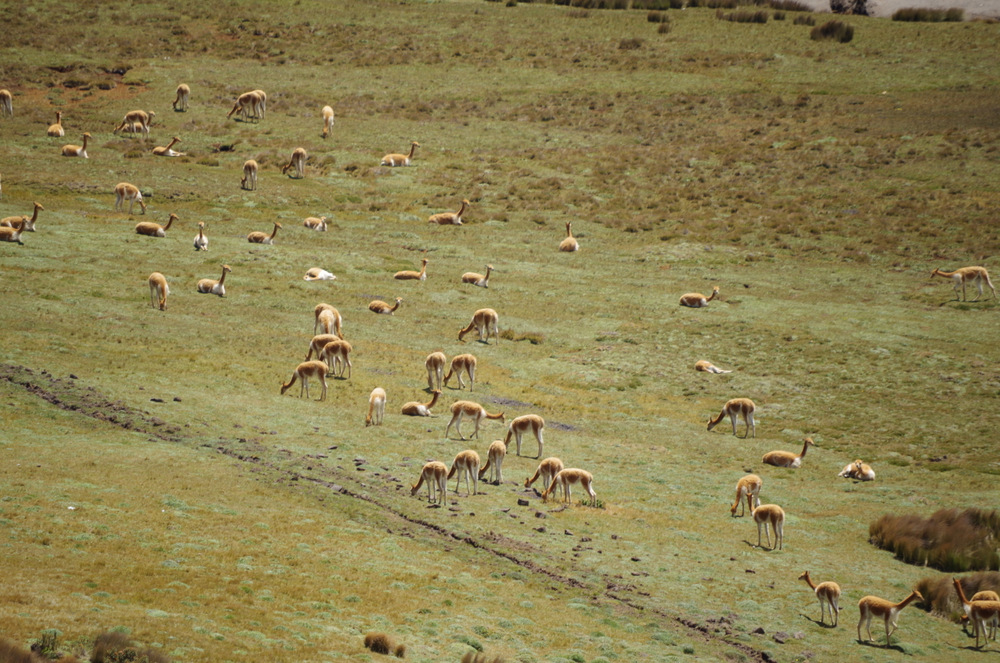
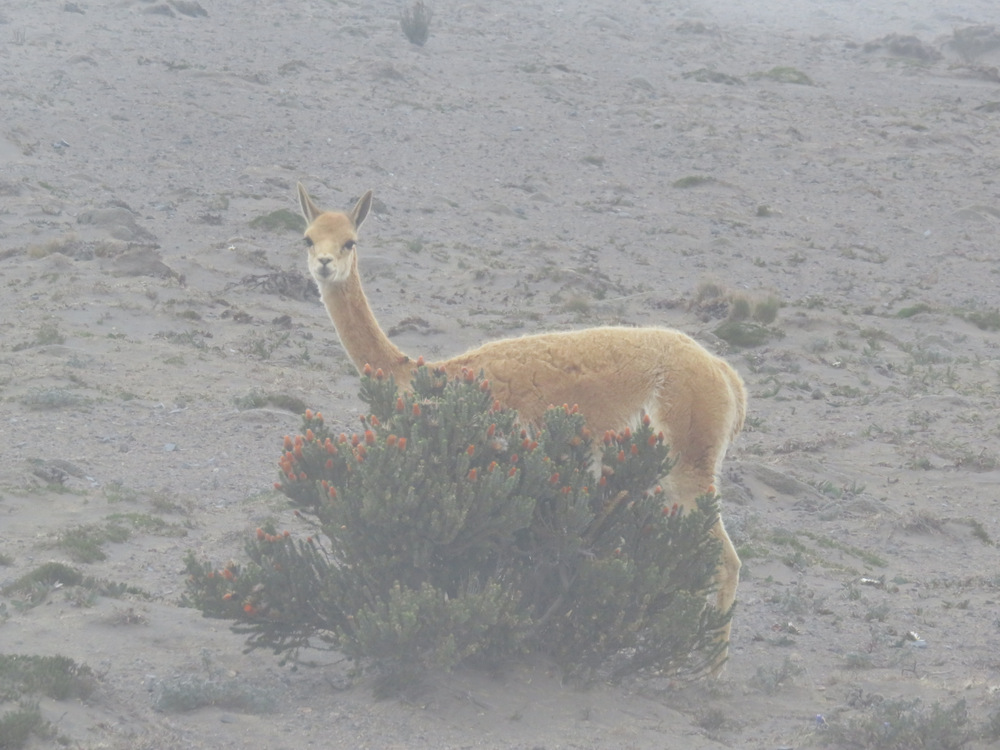
A herd of vicuña.

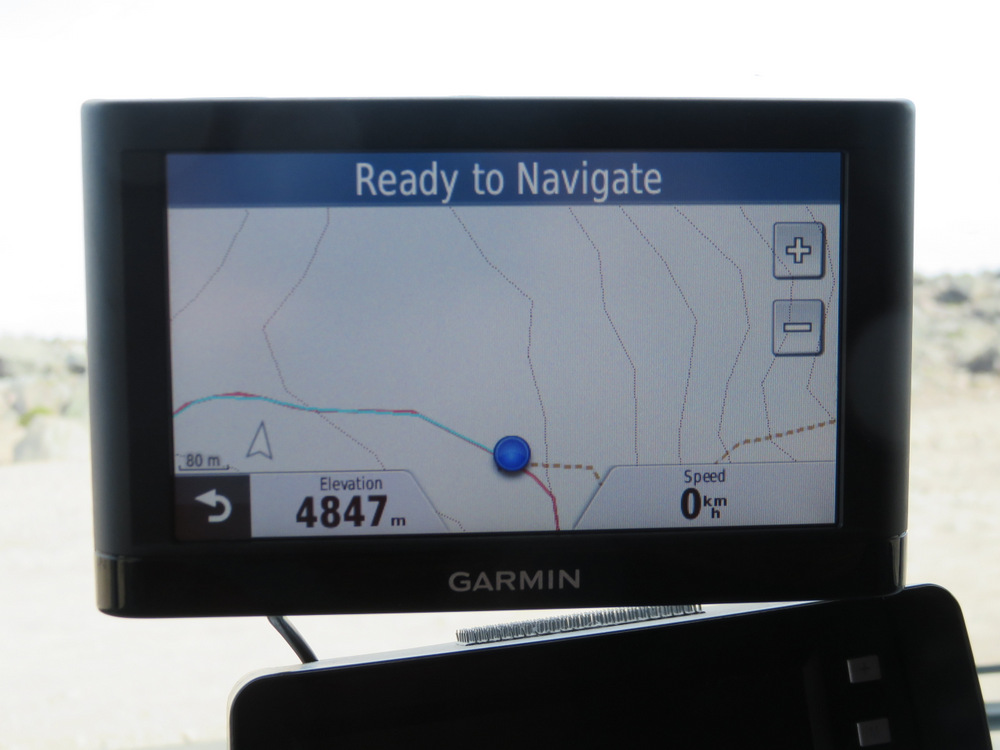
Not that we had any plans to climb it, but we wanted to hike to the first refugio (Carrel) and since it is at around 4800 m it required the acclimatization.

So we spent a night at the park entrance and then took off the next morning.

IMG_2435

We didn’t sleep too well at that altitude.

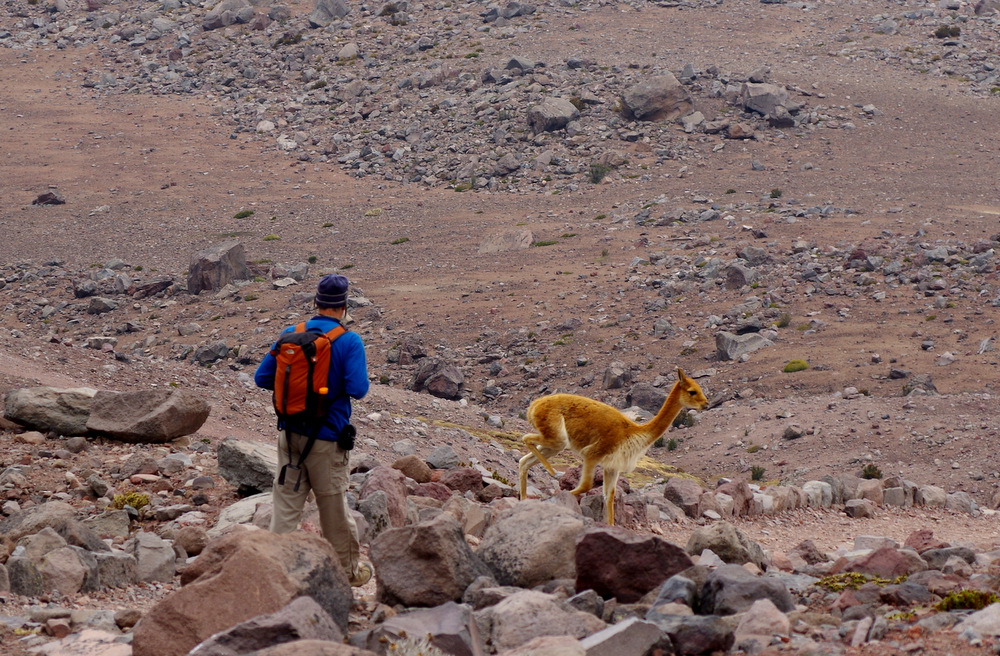
It doesn’t seem far when you go up, but the slow pace makes it a longer hike than expected. Günter went up to the lake while I crawled up the trail with my body calling for more oxygen. I was also enthralled by the hundreds of vicuñas that can be seen poking around in the area. They had been hunted to extinction in Ecuador and were imported  again from Peru, Bolivia and Chile in 1980. They are a protected species of the Andes.

IMG_2438

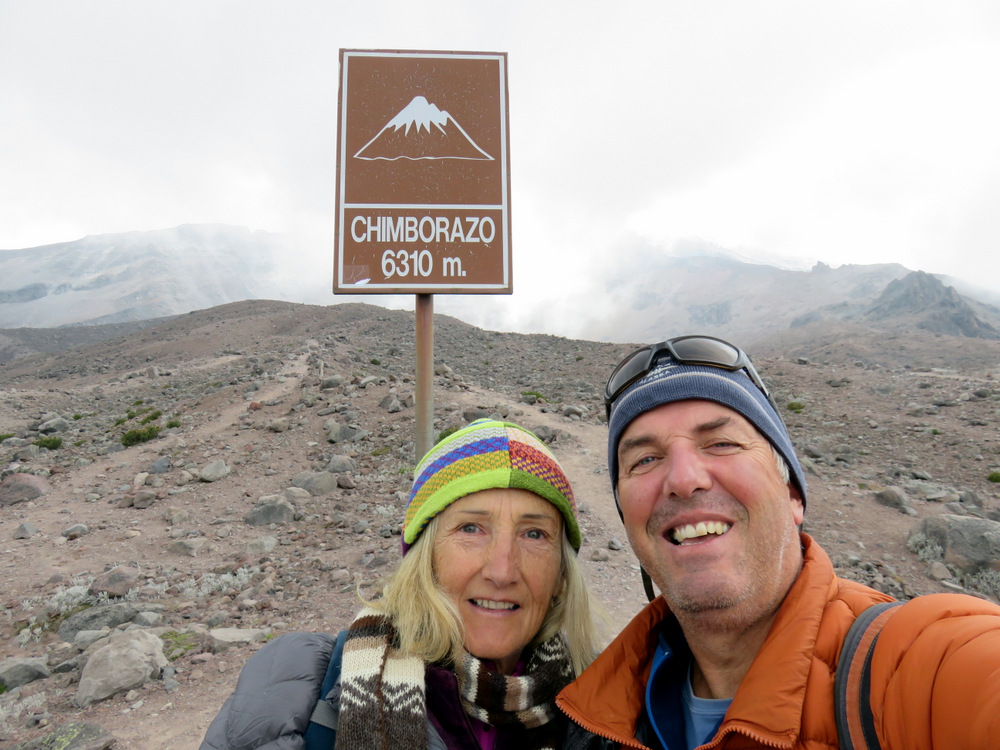
No, we were not up there at 6310 m, this picture was taken near the 5000 m level.

IMGP5148

IMG_2431

Foggy

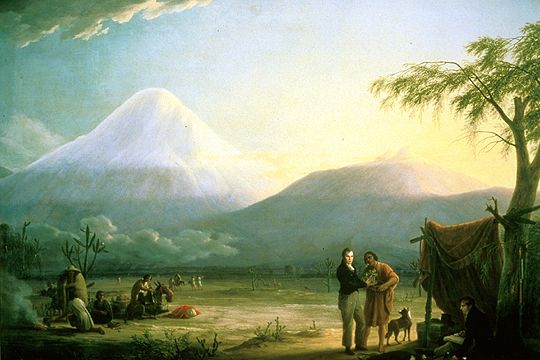
Here the name Alexander von Humboldt cropped up again, he did amazing work during the years he spent in South America. In 1802 he and a French climber made it to the 5883 m level of Chimborazo, but had to turn around just short of scaling the peak. The Italian J.A Carrel and British climber E. Whymper eventually were the first to reach the top.

Humboldt-Bonpland_Chimborazo

Alexander von Humboldt at Chimborazo

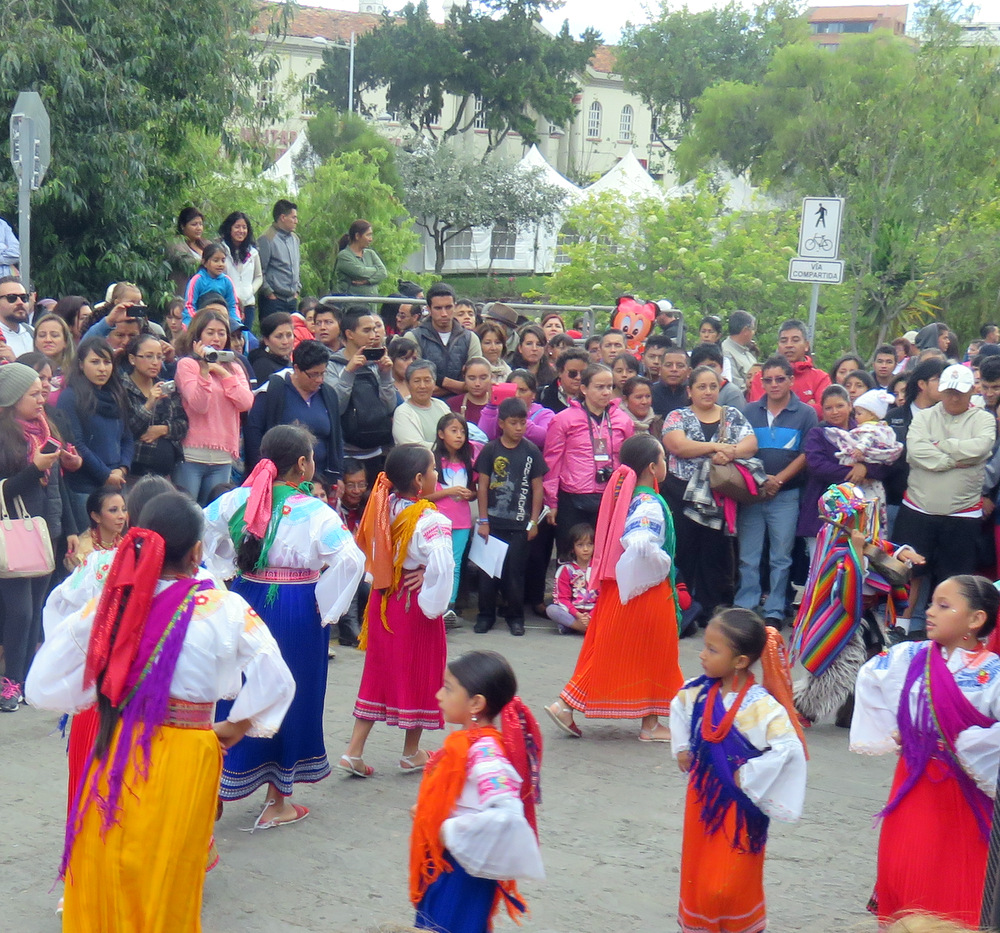
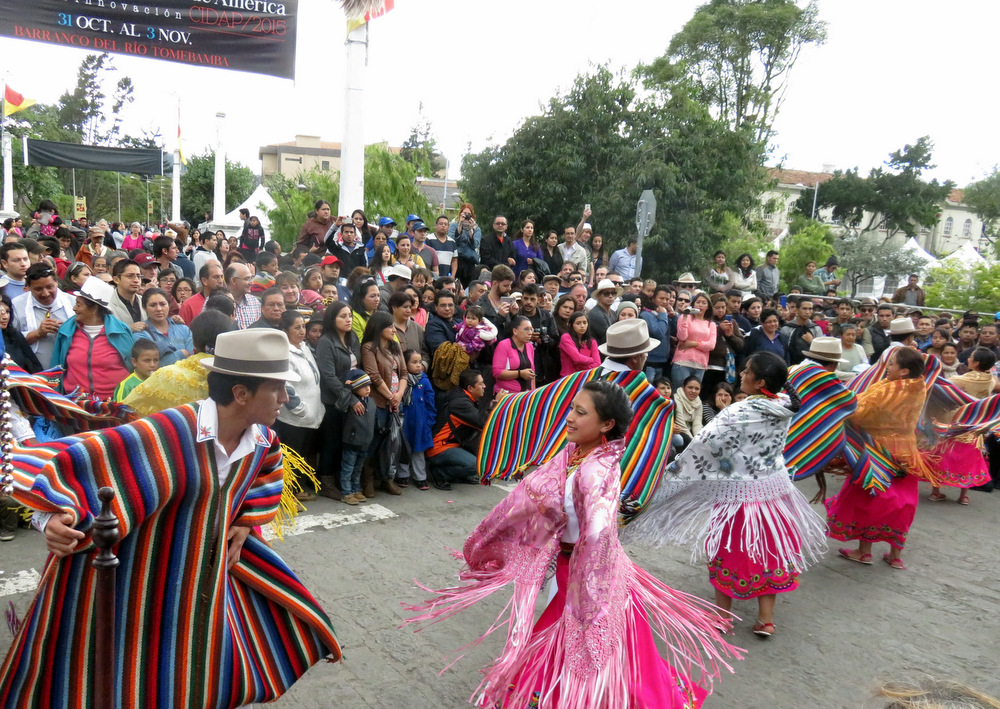
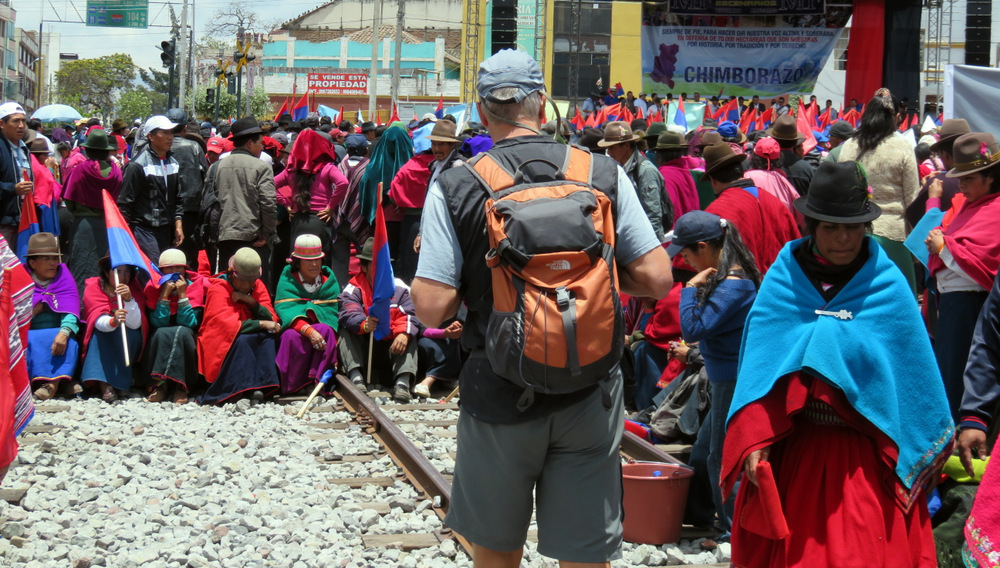
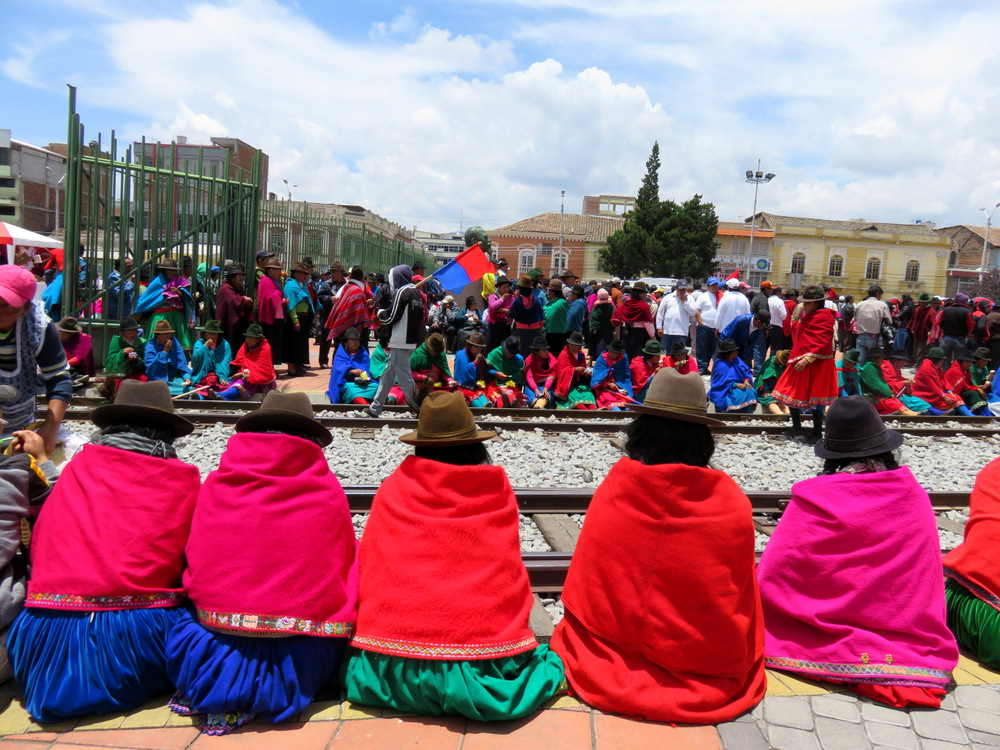
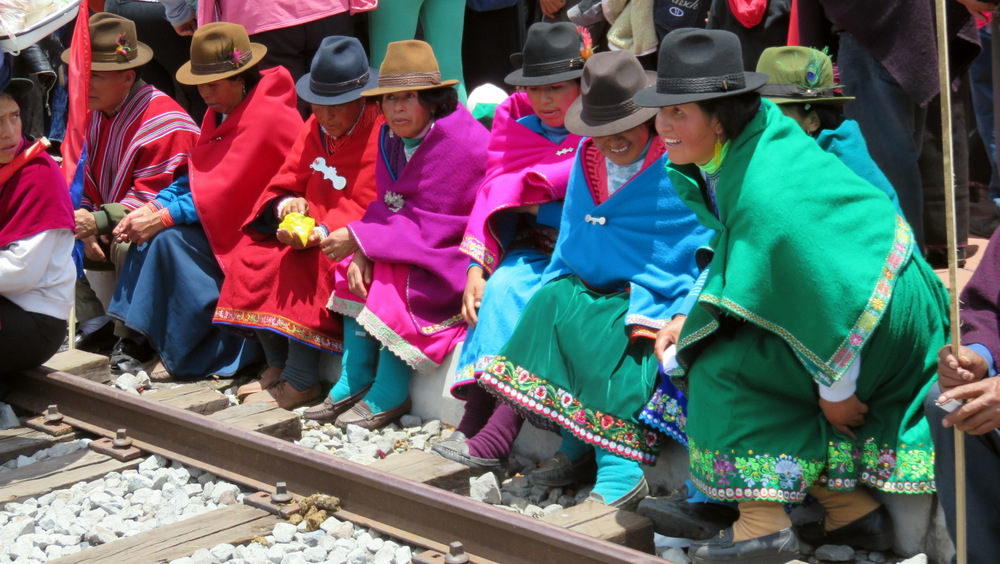
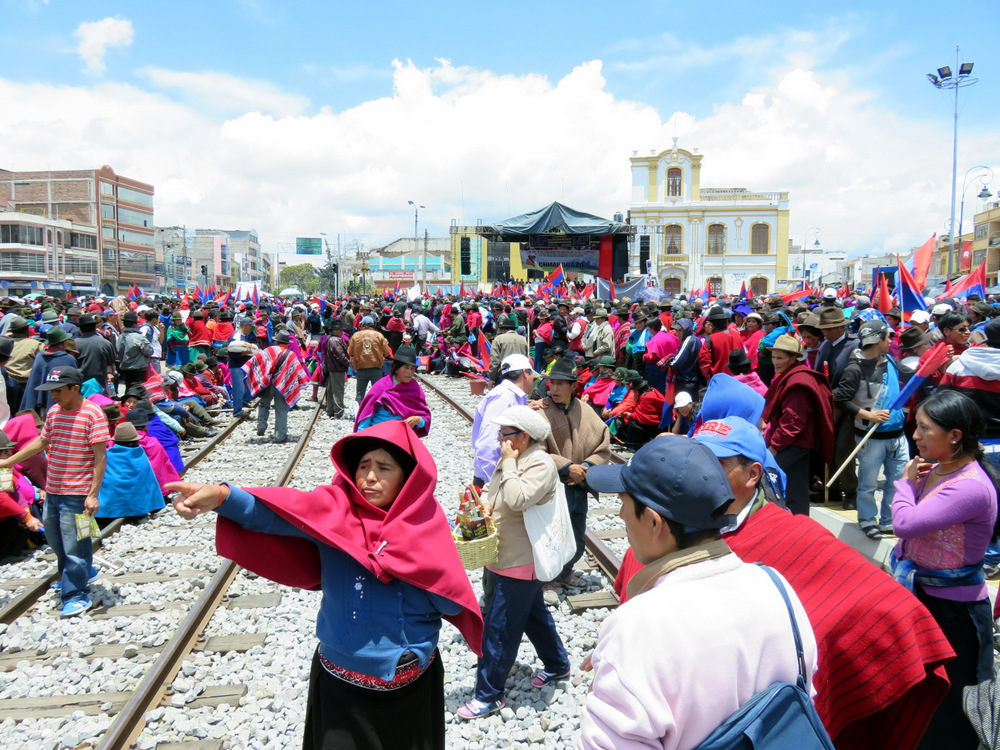
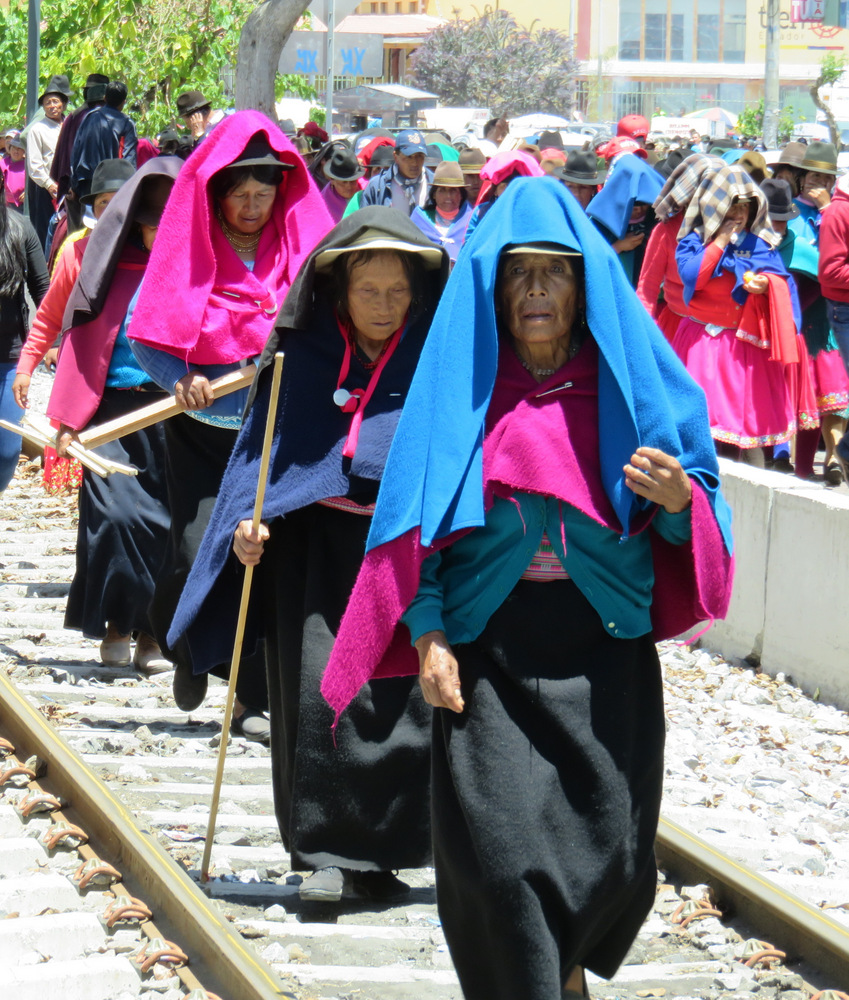
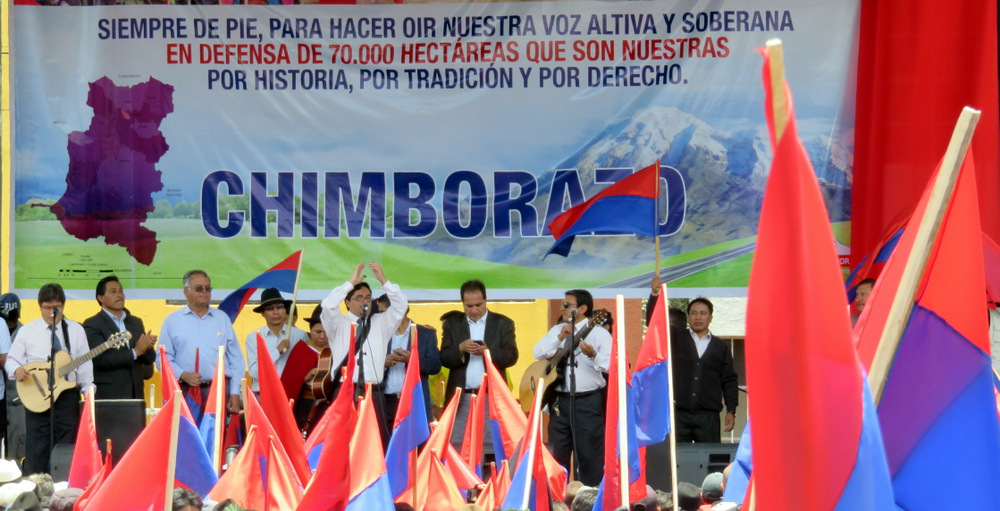
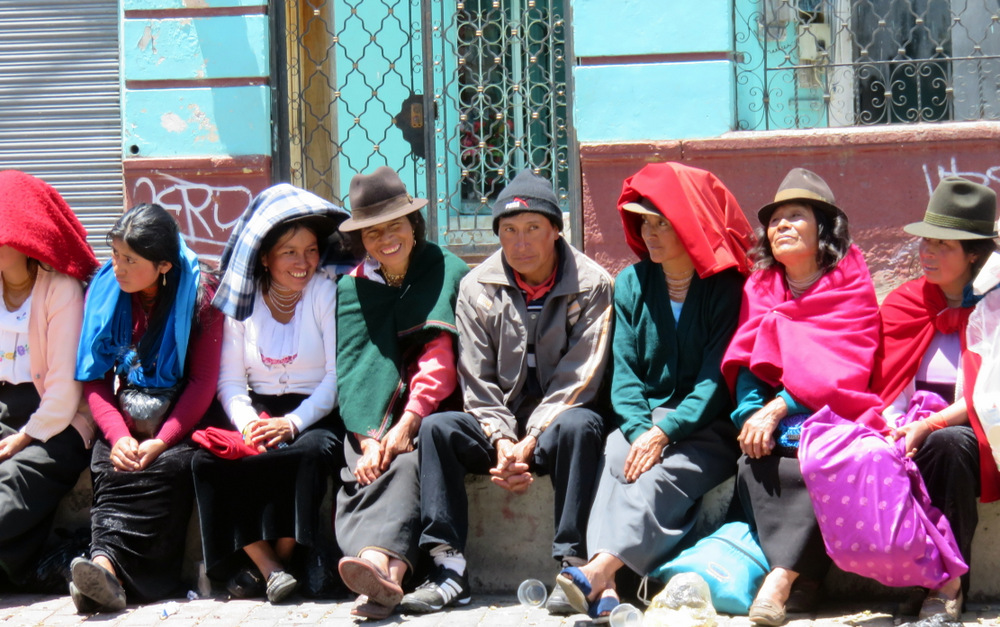
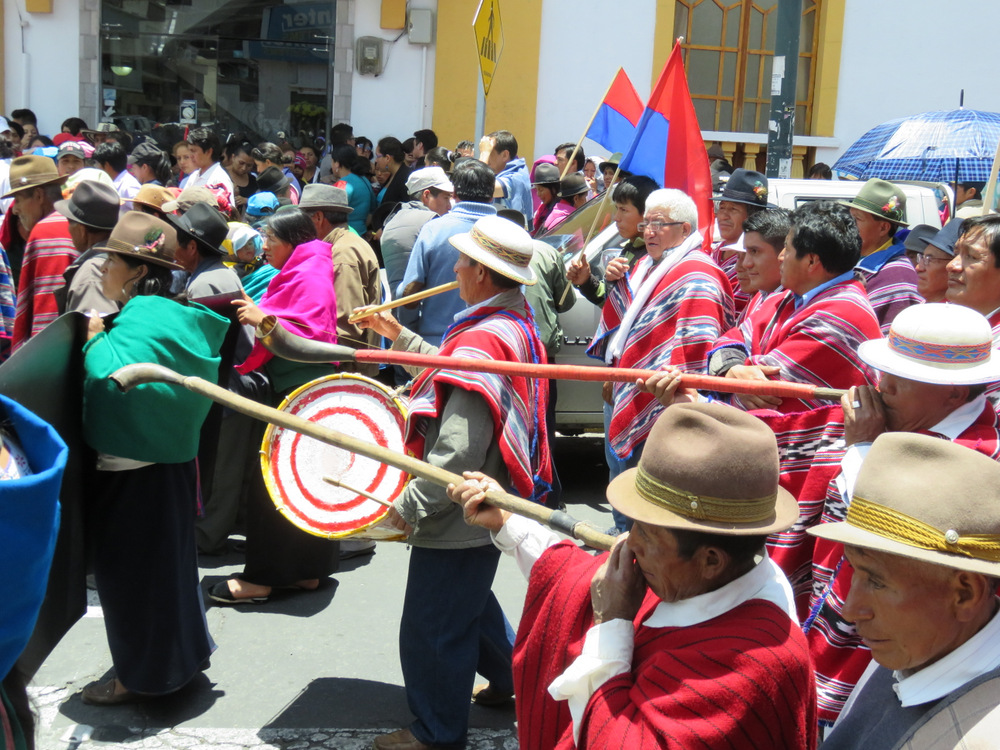
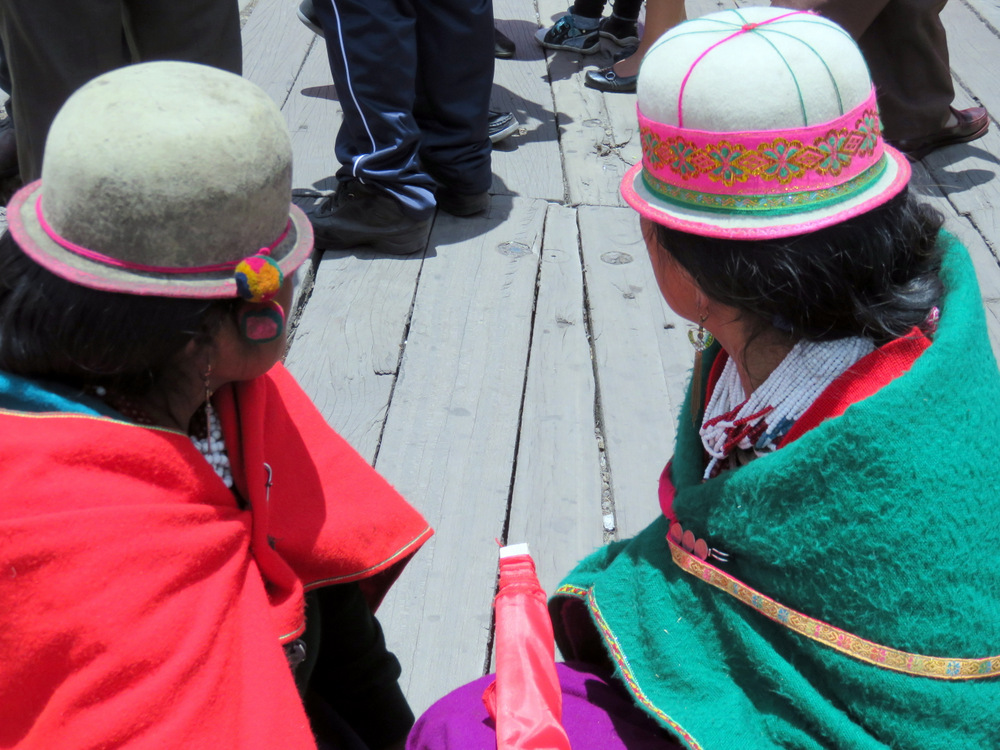
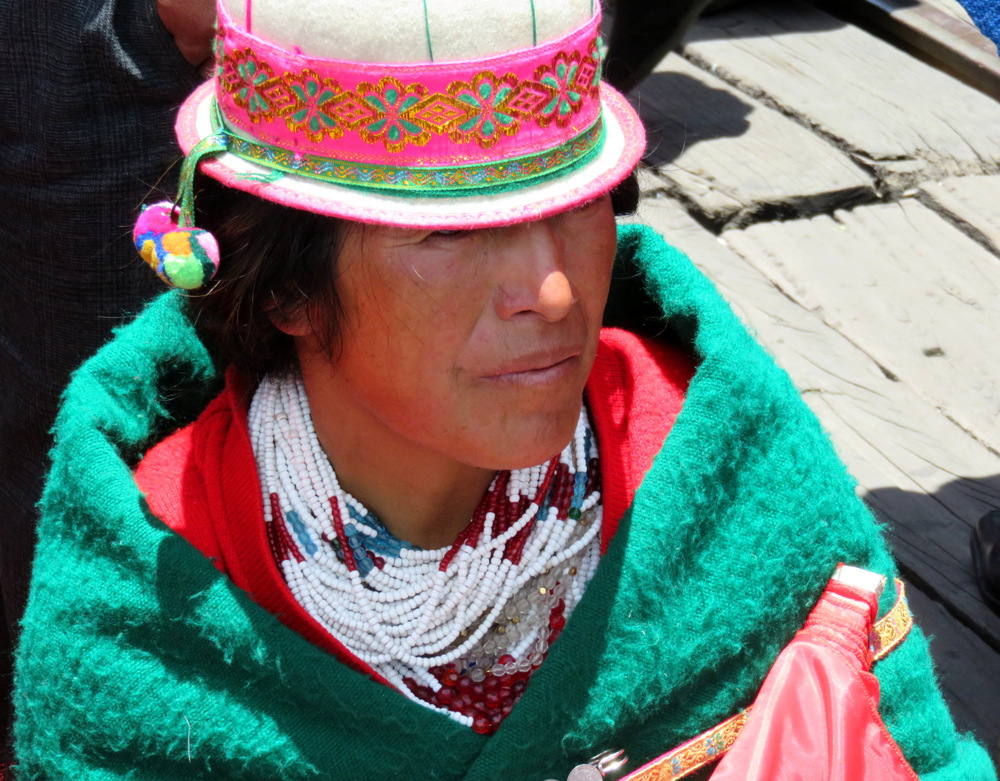
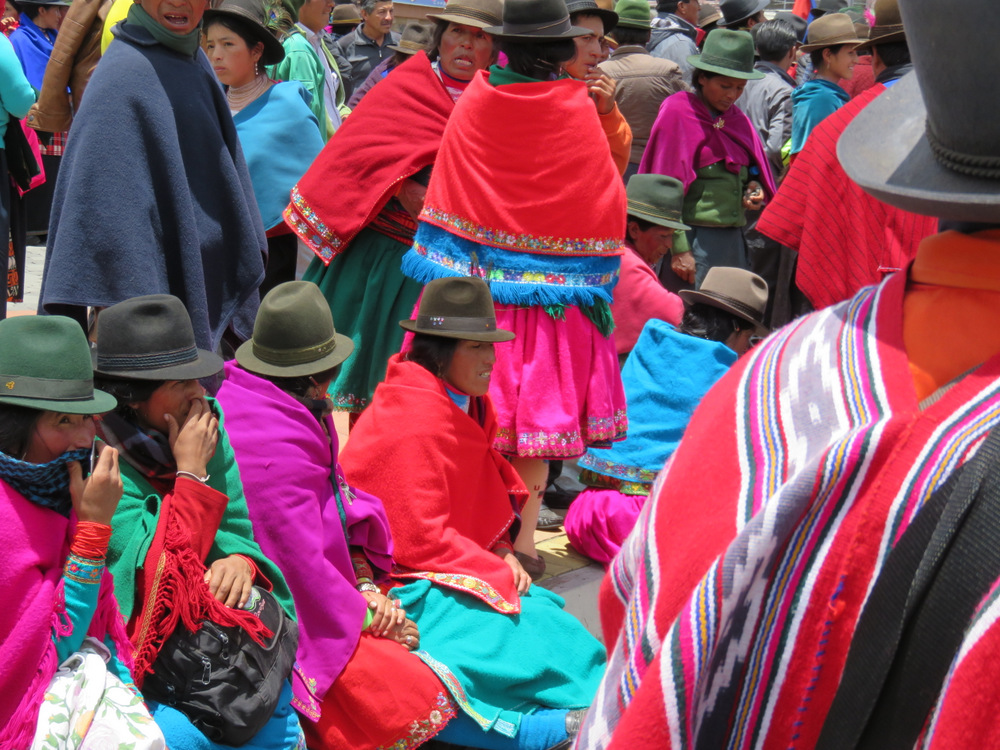
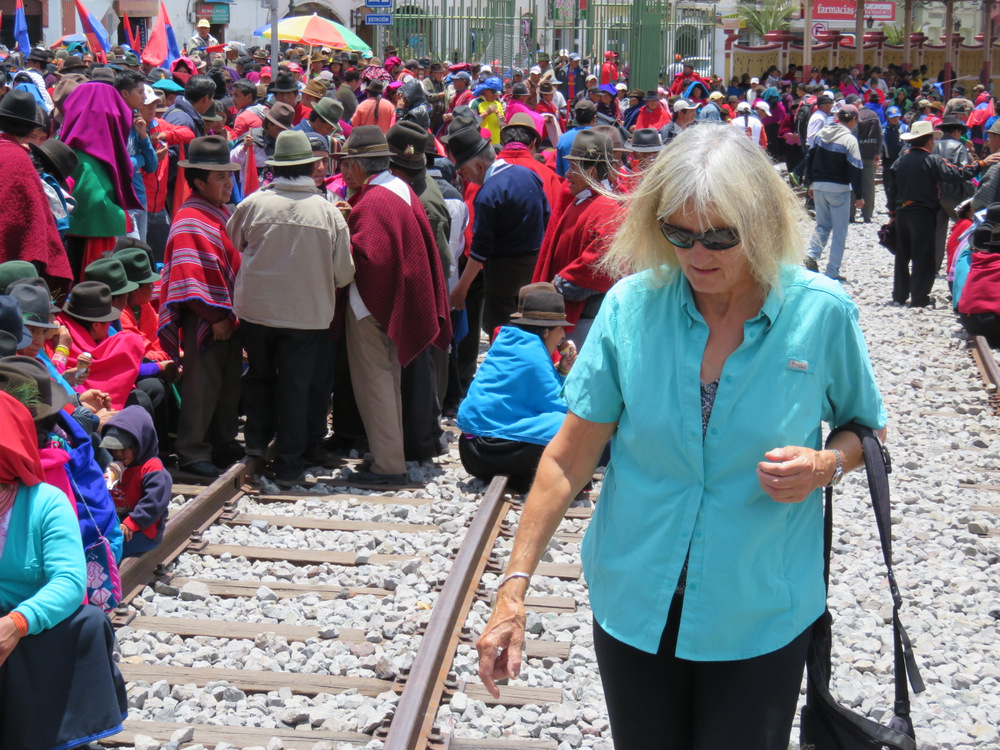
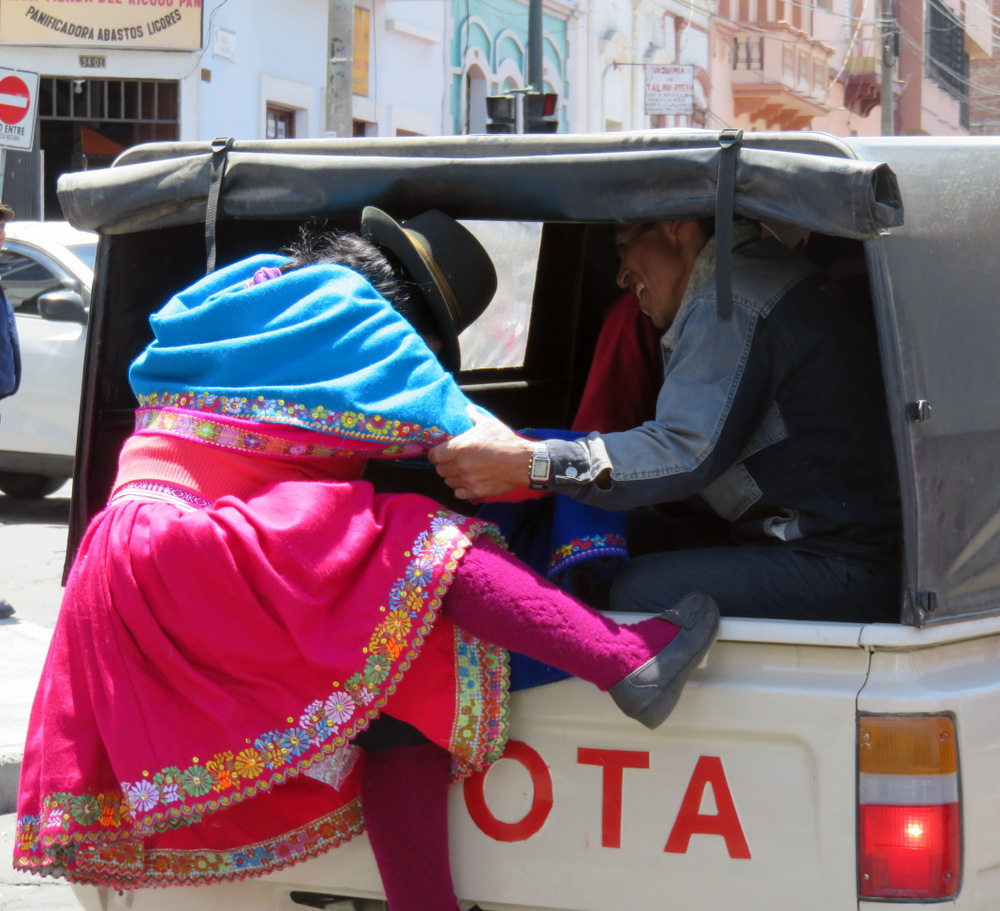
When we came back down there were several people headed up the trail, it seems to be quite popular. We had enough of the cold and thin air and went to Riobamba. A laid back town, nice to just walk around. On day two we did just that and heard music coming from the area of the train station, we followed the music and suddenly were confronted with an incredible sight. A sea of colours, people, dressed in the native costumes, from all the areas of Chimborazo province. On the stage were politicians holding fiery speeches, the band was playing local music and the people were cheering. We read in the paper the next day that there were over 30 000 people at this demonstration. It was great for us to be able to see so many people from different mountain towns. Their outfits, colors and hats changed by town and area. White alpaca felt hats with baubles, or gold bands, short brim, wide brim, dark felt fedoras with peacock feathers or flower pins.

IMG_2480

A woman’s pride and joy is the pin that holds the shawl together.

IMG_2475

We used to call that a “sit in”…..

IMG_2486

IMG_2477

IMG_2514

They do not like the sun in their face, note the long straight skirts, different from the other towns skirts.

IMG_2498

IMG_2521

The guy is the only one not laughing 🙂

IMG_2506

IMG_2494

Alpaca felt hats.

IMG_2493

IMG_2483

IMG_2497

IMG_2518

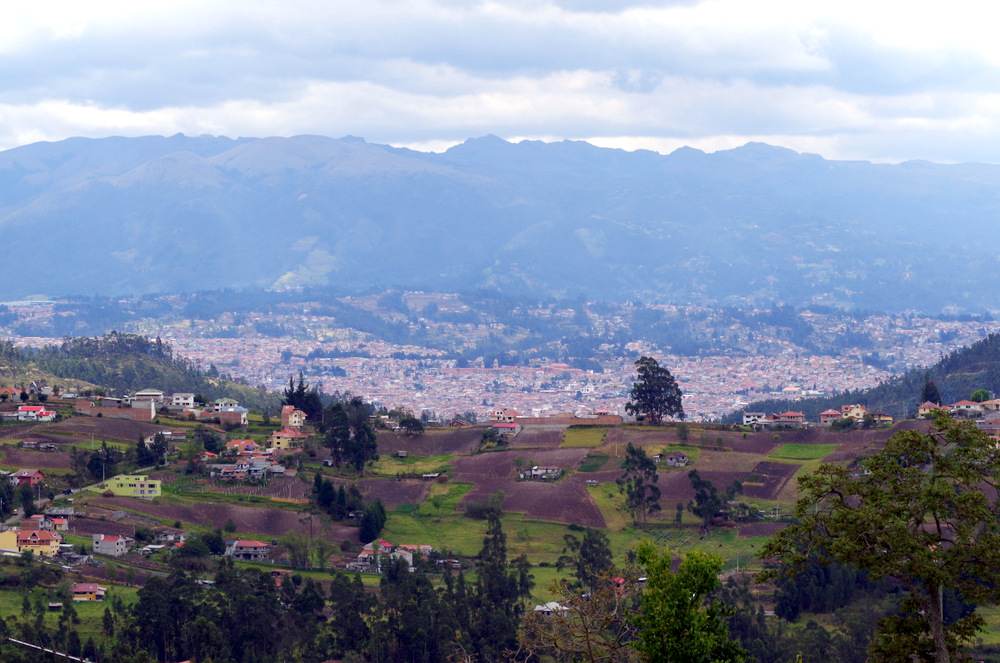
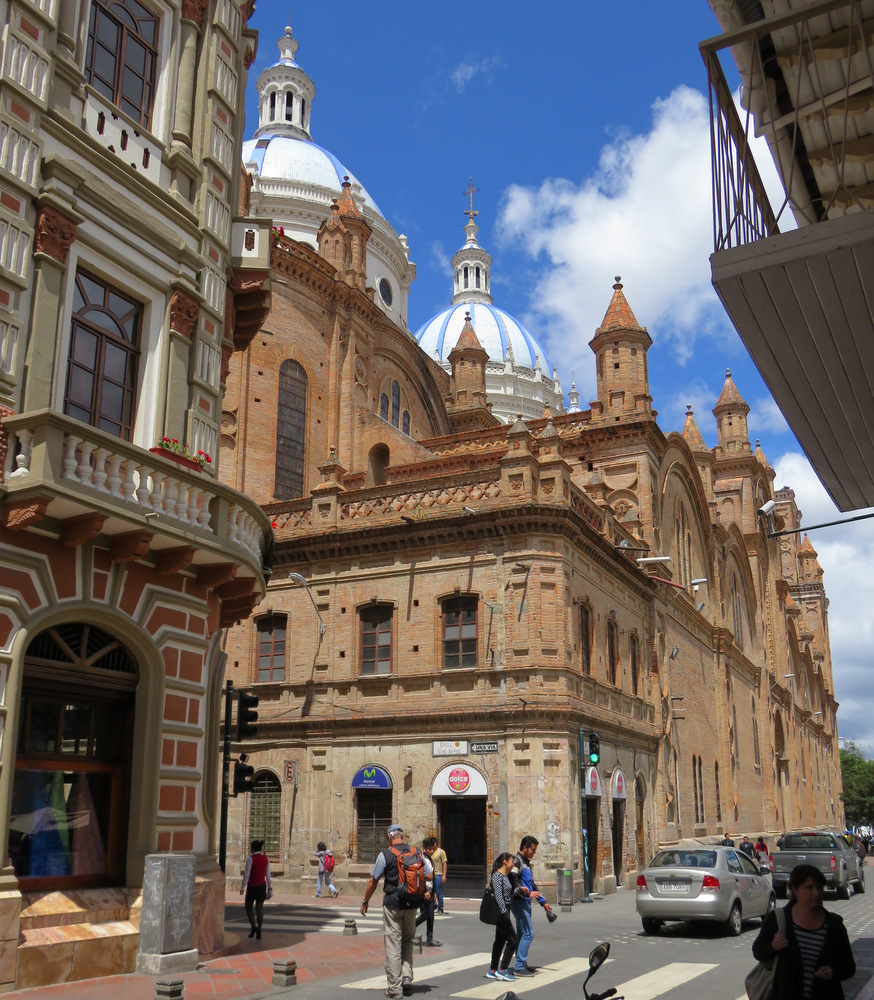
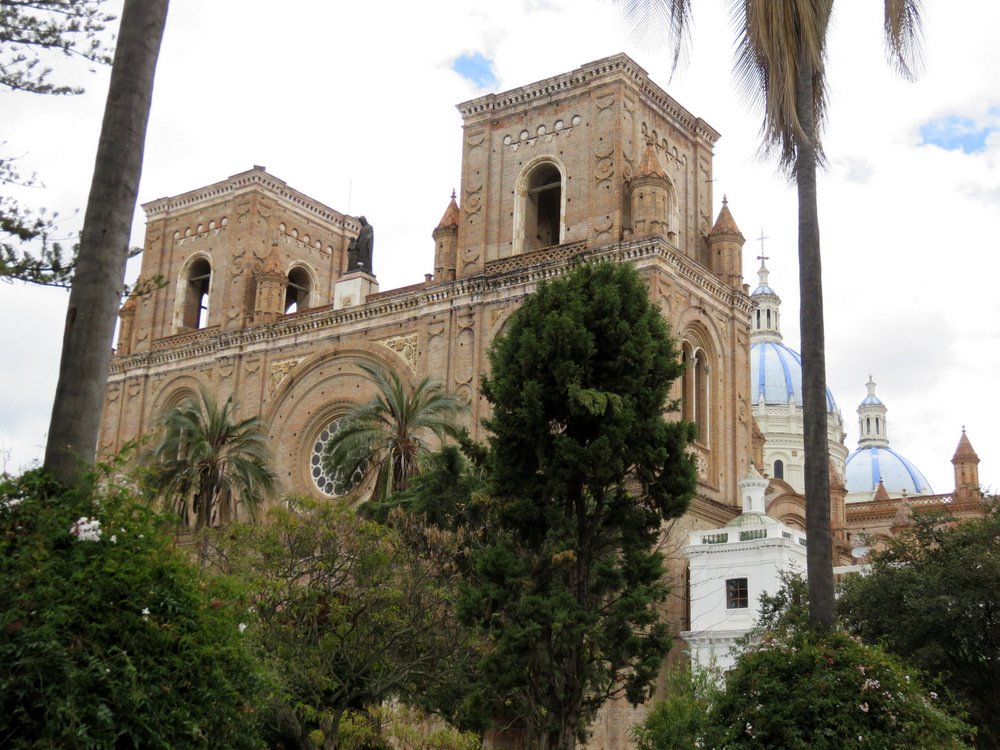
Cuenca is a beautiful colonial town and has it all. Great weather, nice restaurants and a tree-shaded river to go for walks. It has thermal pools at the edge of town where you can get pampered, great hiking trails in the hills surrounding the town. And it has “Gringolandia”, an area that is very popular with North American Expats. We met three of them in a coffee shop and got some insight into expat life here. It sounds some of them are now moving to Colombia and Bolivia, the new “hot spots” for foreign retirees.An adventurous bunch those baby boomers (we are boomers too, I keep forgetting).

IMGP5191

Cuenca

IMG_2594

IMG_2585

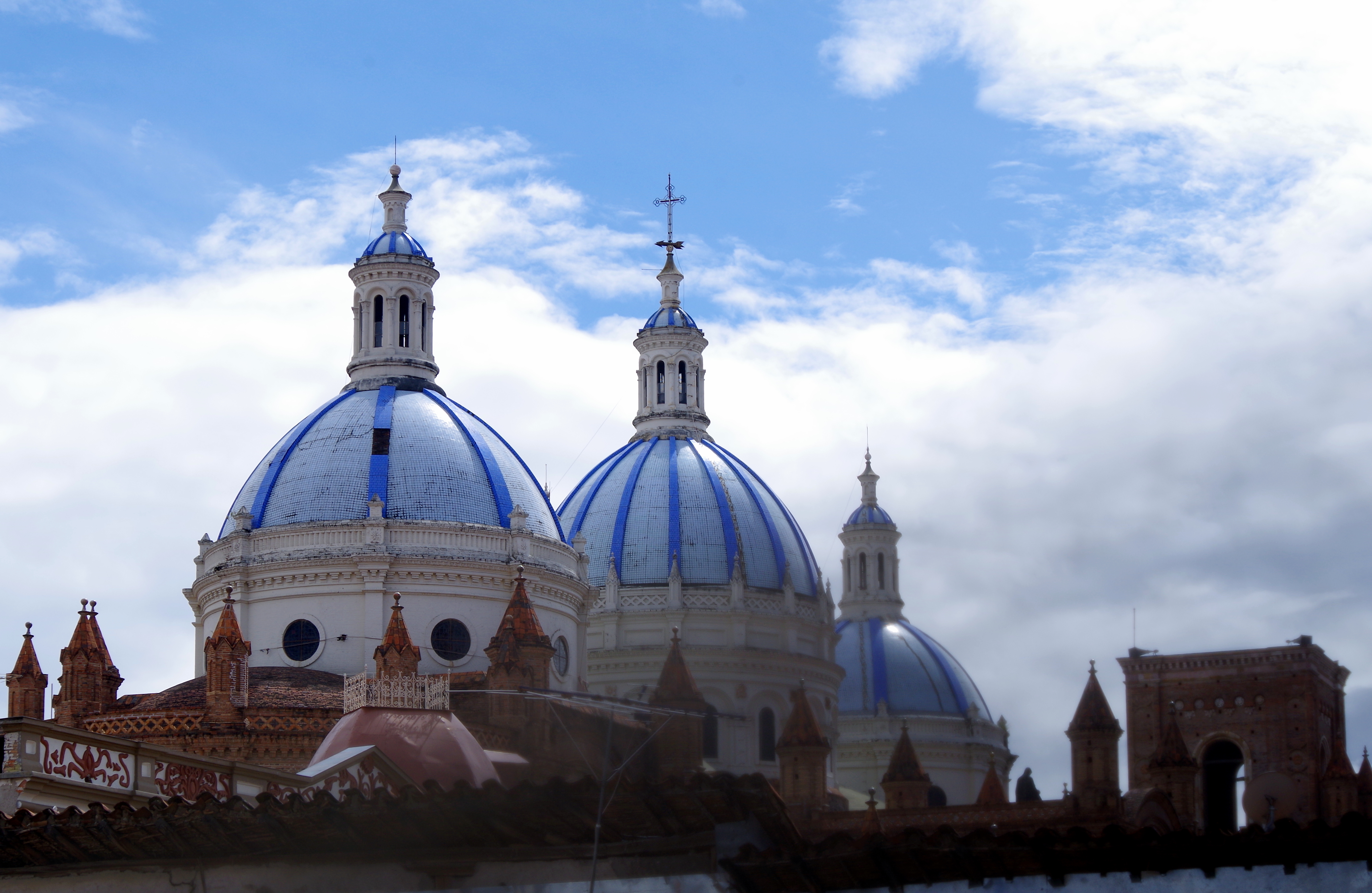
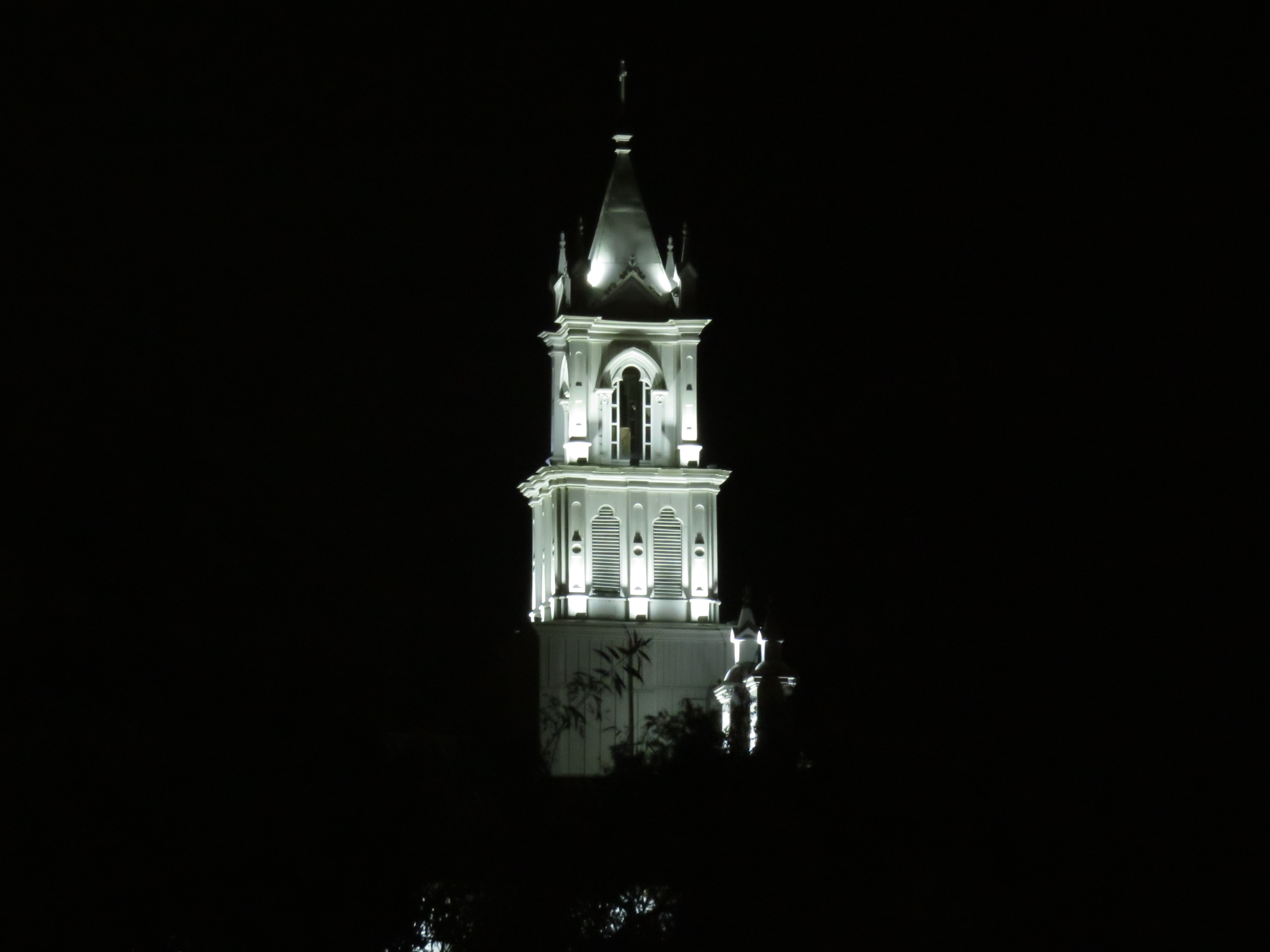
The cathedrals towers were never finished, Germany donated the bells to these towers in 1880. The bells where too heavy, the towers never finished (because of a miscalculation by the architect) and the bells are now ringing in a town near the coast.


IMG_2602

Saint Marcus chapel, religious order of the Oblate.

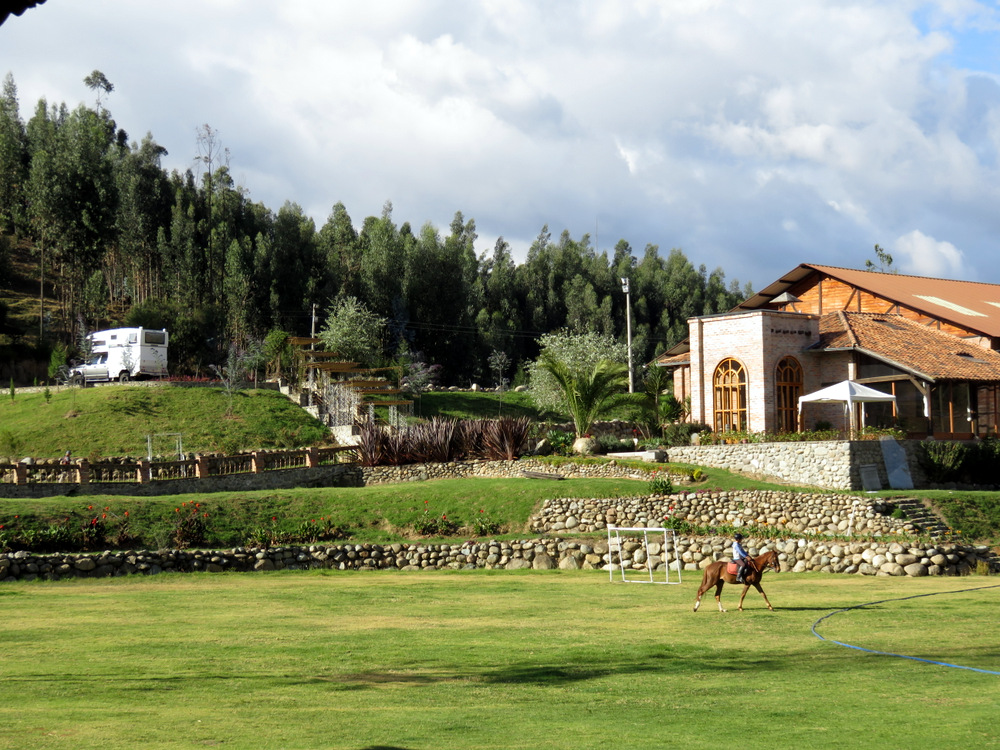
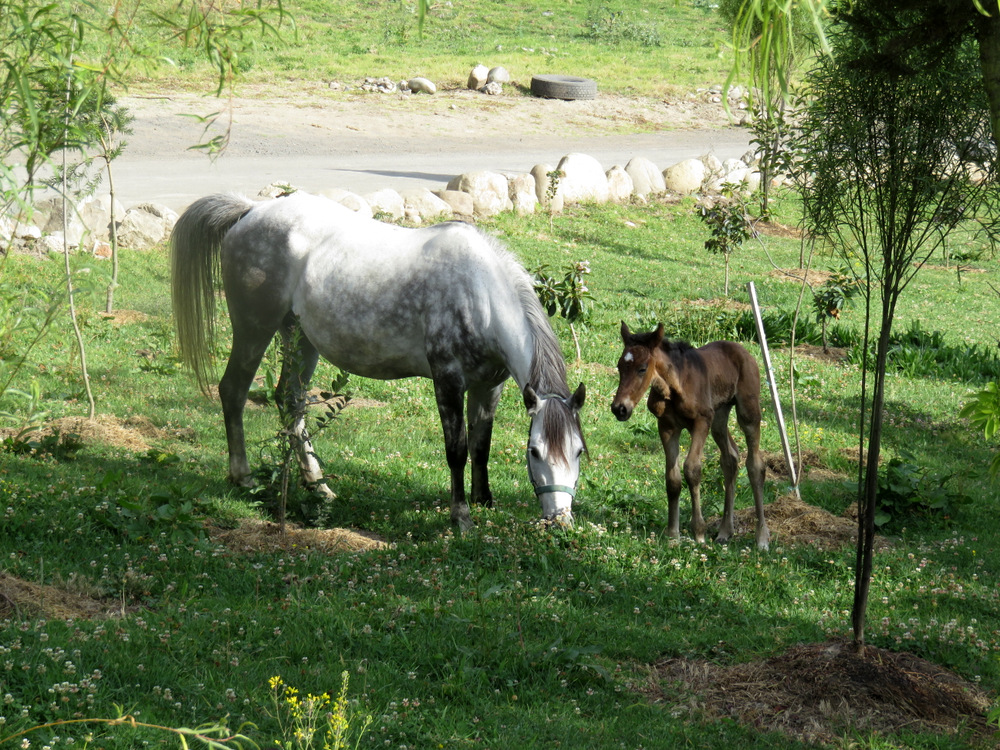
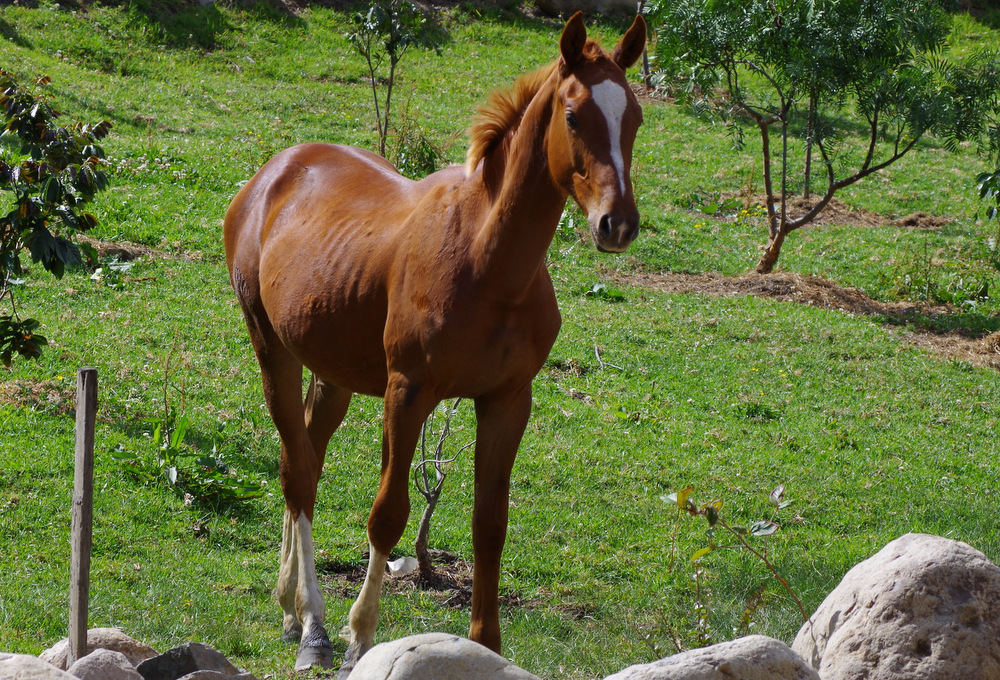
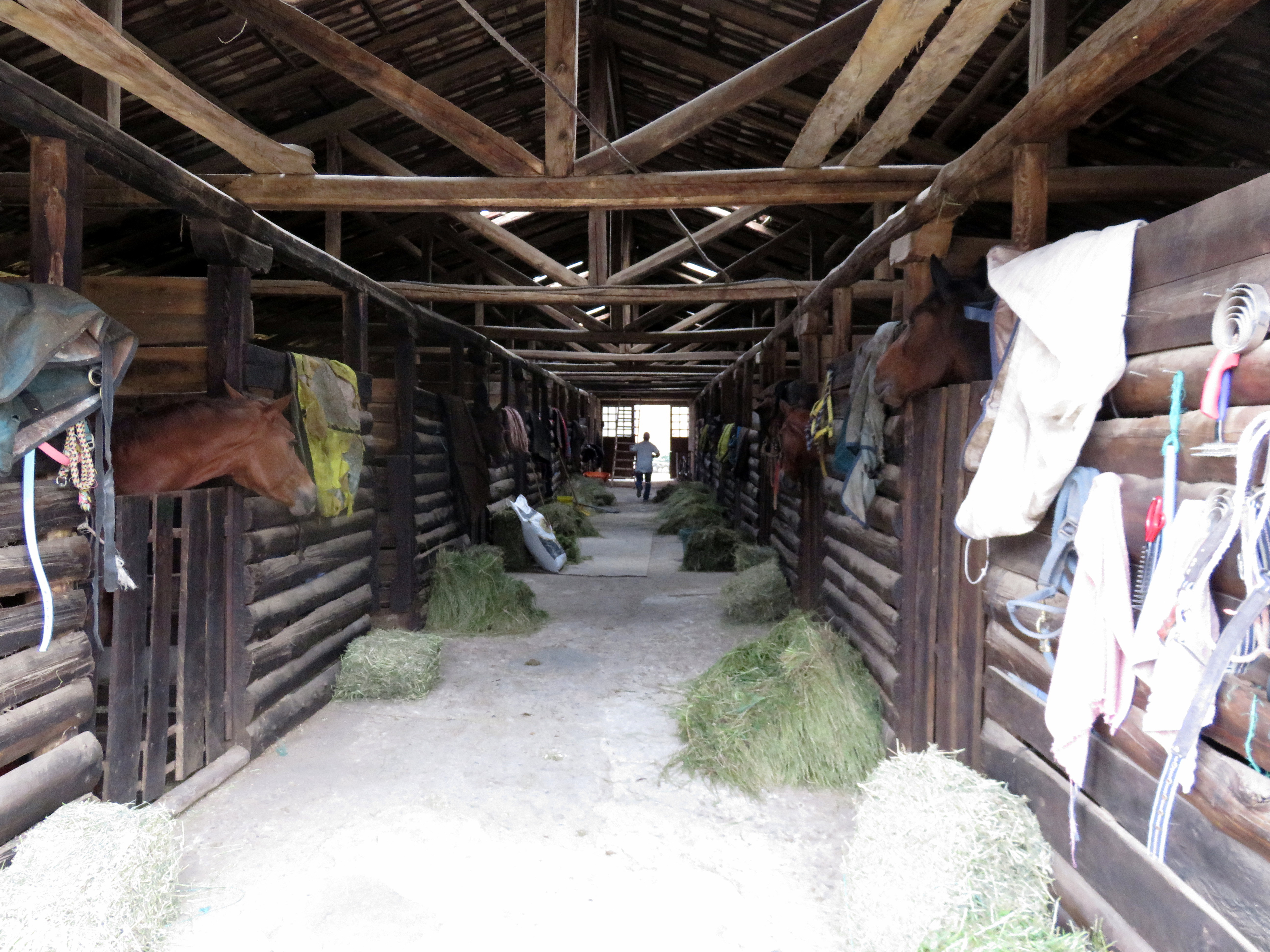
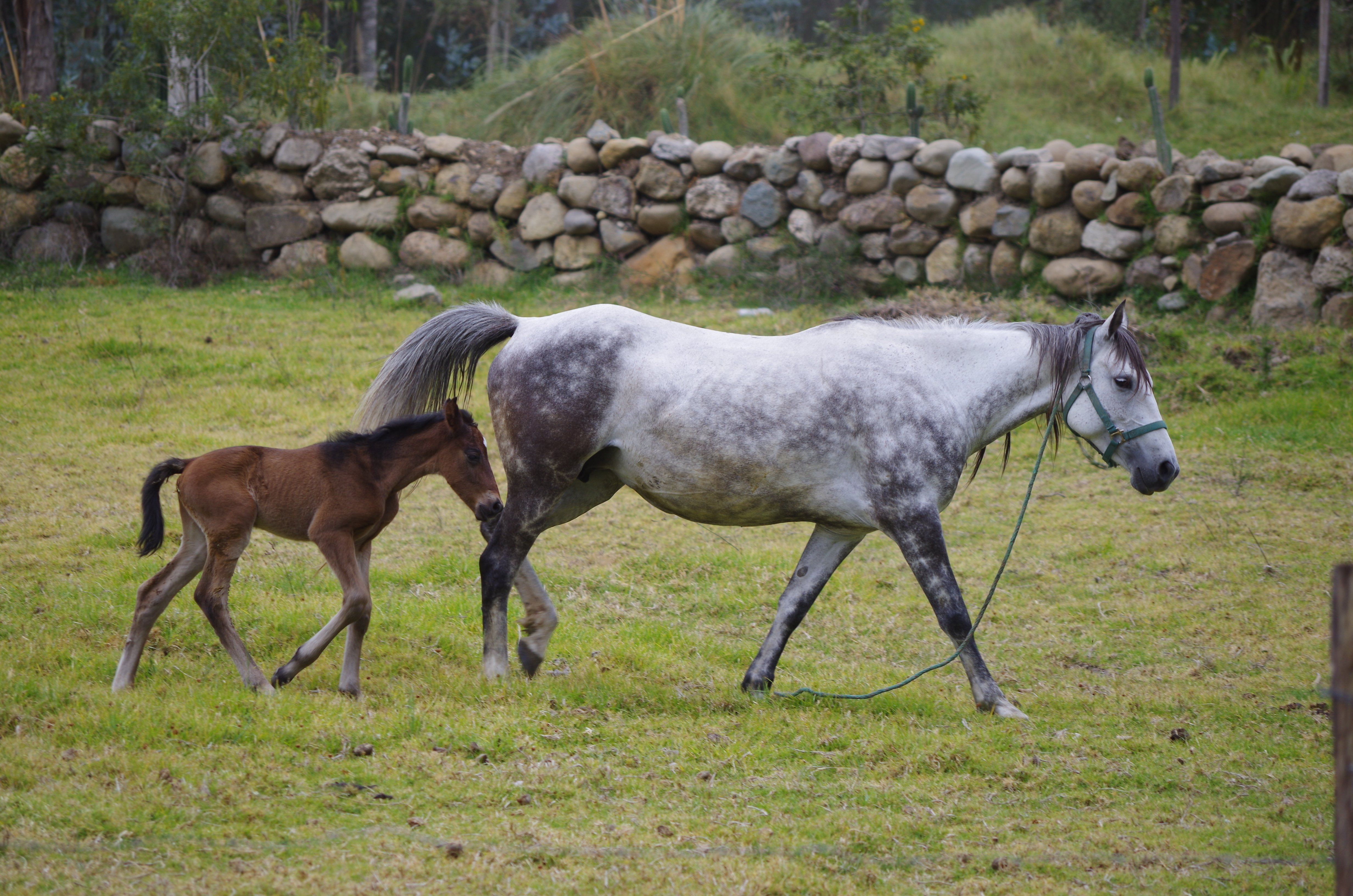
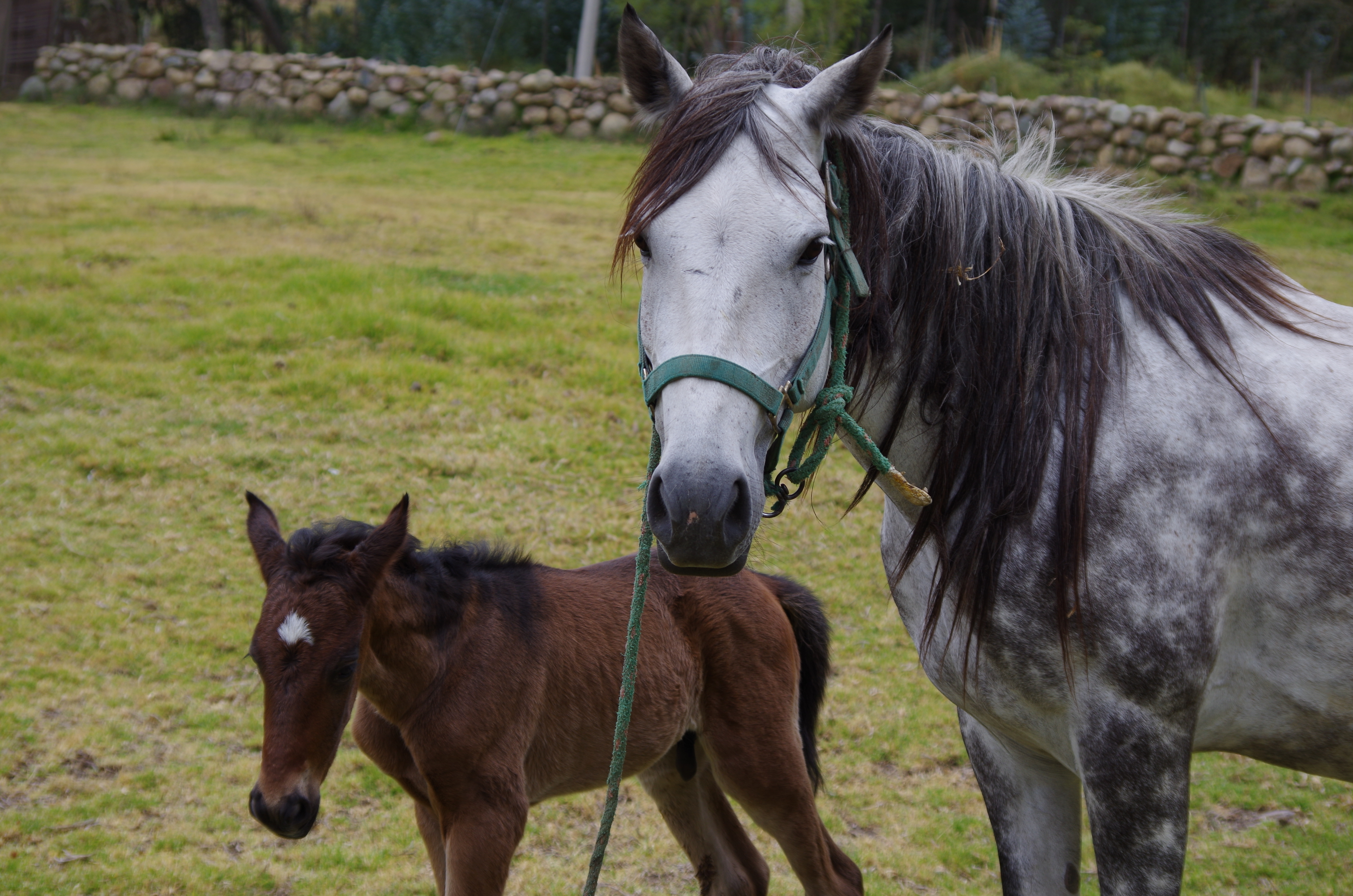
We camped at a hacienda near Cuenca, Hosteria Caballo Campana is a colonial family-run Hacienda hidden in the forests. They breed horses and have beautiful stables and arenas. The owners were very welcoming and nice. I loved waking up to the smells and sounds of horses, could have hung out longer.

IMG_2604

IMG_2615

Three hours old and ready for the world.

IMGP5183

He liked to nuzzle me.

IMG_2610 IMGP5184 IMGP5185

← Back

Thank you for your response. ✨


Posted in Ecuador | Leave a comment